
Key takeaways
- Choosing between a dog nail grinder vs nail clippers is less about finding the “best” tool and more about choosing the grooming routine your household can actually maintain. A clipper removes nail length quickly and quietly, while a grinder sands…
Choosing between a dog nail grinder vs nail clippers is less about finding the “best” tool and more about choosing the grooming routine your household can actually maintain. A clipper removes nail length quickly and quietly, while a grinder sands the nail down gradually and can leave a smoother edge. The right option depends on your dog’s nail thickness, tolerance for sound and vibration, your confidence level, and where you plan to groom.
For many homes, the practical decision is also about storage and cleanup. A clipper can fit in a drawer and work without batteries, cords, or dust. A grinder takes more space and needs charging, but it may be easier to control when you are worried about cutting too far. In 2026, both categories are widely available at modest prices, so comfort and consistency matter more than buying the most expensive tool.
Our top picks
 Whisper Quiet Dog Nail Grinder Safe &
- Product Group: Pet Products
- Binding: Misc.
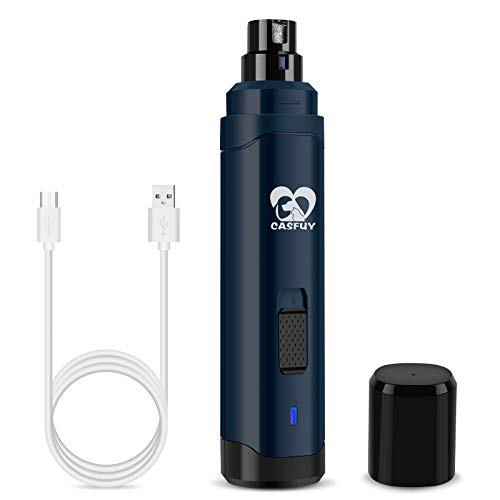 Casfuy Dog Nail Grinder Upgraded
- Product Group: Pet Products
- Binding: Health and Beauty
| Product | Key specs | Amazon rating | |
|---|---|---|---|
| Whisper Quiet Dog Nail Grinder Safe & | Product Group: Pet Products Binding: Misc. | 4.8★ | Check price |
| Casfuy Dog Nail Grinder Upgraded | Product Group: Pet Products Binding: Health and Beauty | 4.9★ | Check price |
 FiriKer Nail Clippers with Nail File FiriKer Nail Clippers with Nail File | – | Check price | |
 ULYSIA Nail Clippers Set ULYSIA Nail Clippers Set | – | Check price |
As an Amazon Associate we earn from qualifying purchases at no extra cost to you. Ratings are shown as listed on Amazon.
Quick Verdict
Choose dog nail clippers if you want the fastest, quietest, and least expensive option for routine trims. They are especially practical for dogs with small or medium nails, calm temperaments, and owners who already know where the quick—the blood vessel inside the nail—begins.
Choose a dog nail grinder if your dog has thick, dark, overgrown, or splinter-prone nails, or if you want more gradual control. Grinding can reduce the chance of removing too much nail at once, although it still requires care and patience. A grinder is also useful for smoothing sharp edges after clipping.
If you are uncertain, a combination routine often works well: use clippers to remove excess length, then use a grinder briefly to round and smooth the edge.
Side by Side
| Factor | Dog nail grinder | Nail clippers |
|---|---|---|
| Comfort | Gradual filing can feel less startling, but motor noise and vibration may bother sensitive dogs. | Quiet and quick, though the sudden cutting pressure can make some dogs pull away. |
| Durability | Often lasts several years; grinding bands or discs eventually need replacement. | Quality stainless-steel models can last five years or longer with basic care. |
| Price range | About $15 to $60 for household models; premium versions can cost more. | About $6 to $30 for most dog-specific clippers. |
| Maintenance | Clean nail dust, recharge the battery, and replace worn sanding accessories. | Wipe clean, disinfect when appropriate, and keep the cutting edges dry. |
| Space needed | Usually a handheld tool about 6 to 8 inches long, plus a charger and accessories. | Usually about 5 to 7 inches long and easy to store in a drawer or grooming kit. |
| Look | More like a compact electronic appliance, often with a molded grip and charging port. | More like traditional pliers or scissors, with a simple metal cutting head. |
| Resale | Limited resale value once the battery ages or sanding head shows wear. | Better long-term utility because there is no battery to degrade. |
| Best for | Thick, dark, rough, or overgrown nails; gradual shaping; smoothing edges. | Fast trims, small nails, quiet homes, travel, and simple grooming routines. |
| Typical power | Rechargeable models commonly use a small internal battery and draw roughly 2 to 10 watts while operating. | No electricity required. |
Where Dog Nail Grinder Wins
A grinder gives you a slower, more incremental way to shorten a nail. Instead of making one decisive cut, you can file for a few seconds, check the length, and continue. That control is useful for dark nails, where the quick is difficult to see from the outside. It does not eliminate the risk of hitting the quick, but it can make the process easier to monitor.
Grinders are also helpful for thick nails that resist ordinary scissors-style clippers. The rotating abrasive surface gradually reduces material without requiring as much hand strength. If your dog’s nails have rough corners after trimming, a grinder can round them so they are less likely to snag blankets, upholstery, or skin during play.
Noise is the main tradeoff. “Whisper-quiet” is a marketing term rather than a universal performance standard, so expect even a relatively quiet model to produce a faint motor sound. Introduce the tool in stages: let your dog sniff it while it is off, turn it on several feet away, and touch the running grinder to a nail only after the dog remains relaxed.
Most home grinders are small enough to hold in one hand and weigh roughly 4 to 8 ounces, but the weight can feel significant if a grooming session lasts 15 to 20 minutes. Look for two speed settings, a non-slip grip, and a guard or opening that helps position the nail. The Whisper Quiet Dog Nail Grinder Safe & Stress-Free for Sensitive Dogs Cats is listed for under $30, while the Casfuy Dog Nail Grinder Upgraded is listed for under $20. Those prices sit in the accessible range for households that want to try electric filing without making a major investment.
Where Nail Clippers Wins
Clippers win on speed and simplicity. Once you have identified a safe cutting point, one squeeze can remove the unwanted tip. A complete trim may take only a few minutes, and there is no motor noise to desensitize your dog to. That makes clippers a strong choice for dogs that dislike buzzing sounds or for owners who groom in a shared apartment where noise matters.
They are also easier to pack. A clipper often weighs less than 5 ounces, requires no charging, and can travel in a small toiletry bag. There is no nail dust, no replacement grinding band, and no concern about a battery being empty when a nail catches on a blanket.
The limitation is precision. A clipper removes a larger piece at once, so you need to take small cuts—often 1 to 2 millimeters at a time—and inspect the nail after each one. Cutting too deeply can cause pain and bleeding. Keep styptic powder nearby, and ask a veterinarian or professional groomer to demonstrate the safe cutting angle if you are new to at-home trims.
Household nail clippers are not always suitable for dogs. Human clippers such as the under-$10 FiriKer Nail Clippers with Nail File or the $3.99 ULYSIA Nail Clippers Set may be useful reference points for small human nails, but dog nails are shaped and loaded differently. For a dog, choose a tool sized for the animal’s nail diameter and use a purpose-built scissor or guillotine design when appropriate.
Cost Over 5 Years
Clippers usually have the lower five-year cost. A $10 to $25 pair may last the entire period if the cutting edges remain sharp and the tool is stored dry. You might replace it once if the blades become dull, bringing the estimated total to about $10 to $50. A separate nail file may add $3 to $10, but it is optional.
A grinder commonly costs $15 to $60 at purchase. Over five years, plan for one or two replacement sanding bands or grinding heads, typically costing about $5 to $20 total depending on the design. If the rechargeable battery fails outside the warranty period, replacing the tool may be more practical than repairing it. A realistic five-year household budget is therefore about $20 to $80.
Electricity is a minor cost. Even a 5-watt grinder used for 15 minutes every two weeks consumes only about 0.065 kilowatt-hours per year. The bigger costs are replacement parts, storage, and whether the tool helps you avoid professional grooming appointments. Neither option removes the need for occasional veterinary or grooming assistance when nails are severely overgrown or a dog cannot be handled safely.
Which One for Your Home
Small apartment
Start with clippers if your dog tolerates brief handling. They take less storage space, produce no motor sound, and create no visible dust. If your dog has thick nails or you need smoother edges, choose a compact rechargeable grinder and use it during a calm period rather than late at night. A model with two speeds and a protective nail opening is easier to manage in a limited space.
Family with kids and pets
Clippers are easier to secure because they do not have a charging cable or small sanding accessories. Store them in a latched drawer, and keep children away during grooming. A grinder can be worthwhile for a household with multiple dogs of different sizes, but store replacement bands and chargers out of reach. Designate one adult to hold the tool and another to reward calm behavior.
Rental home
Either tool can work, but clippers are the safer choice for protecting floors and furniture from nail dust. If you use a grinder, place a washable mat beneath the dog and wipe nearby surfaces afterward. Smooth nails can help reduce snags and scratches, but no tool guarantees that a dog will not mark flooring or damage trim during normal activity.
Long-term home
A grinder-and-clipper setup offers the most flexibility. Use clippers for efficient length reduction and the grinder for finishing, dark nails, or occasional corrections. If you prefer buying only one tool, choose the grinder for thick or difficult nails and clippers for a calm dog with manageable nail growth.
FAQ
Is a dog nail grinder safer than clippers?
Not automatically. A grinder allows gradual removal, but holding it on one nail too long can create heat or reach the quick. Clippers can be safe when used in small cuts with a clear view of the nail. Your handling technique and your dog’s cooperation matter as much as the tool.
How often should I trim or grind my dog’s nails?
Many dogs need attention every two to four weeks, though growth varies. Listen for clicking on hard floors and check whether the nails touch the ground when your dog stands naturally. Active dogs that walk on pavement may need less frequent trimming than dogs who spend most of their time indoors.
Can I use human nail clippers on a dog?
Human clippers are generally appropriate only for very small puppies or tiny dogs with narrow nails, and even then the fit may be poor. Dog-specific clippers provide better leverage and visibility. Do not assume a low price or included file makes a human nail kit suitable for routine dog grooming.
What should I do if I cut the quick?
Stay calm and apply styptic powder with gentle pressure for several minutes. If bleeding does not stop, the nail is badly split, or your dog appears distressed, contact a veterinarian. For repeated accidents, have a groomer demonstrate the correct cutting point or switch to gradual grinding under professional guidance.



Write Your Review
No reviews yet. Be the first to share your experience!