
Key takeaways
- Choosing between cordless vs corded dog clippers is less about which tool is universally better and more about how, where, and how often you groom. A cordless model gives you freedom to move around a nervous dog, work outdoors, or…
Choosing between cordless vs corded dog clippers is less about which tool is universally better and more about how, where, and how often you groom. A cordless model gives you freedom to move around a nervous dog, work outdoors, or trim in a room without a convenient outlet. A corded model usually offers consistent power, fewer charging concerns, and a lower long-term cost.
The real decision is whether convenience is worth paying for a battery and accepting its eventual replacement. For occasional trims on a small dog, either style can work well. For thick coats, multiple pets, or long grooming sessions, power delivery, heat, maintenance, and handling comfort matter more than the “wireless” label. Here is how the two types compare for a typical home in 2026.
Our top picks



As an Amazon Associate we earn from qualifying purchases at no extra cost to you. Ratings are shown as listed on Amazon.
Quick Verdict
Choose cordless clippers if you value easy movement, groom in different rooms, have a dog that dislikes being tethered near an outlet, or need to make quick touch-ups. They are also useful for shaping paws, faces, and sanitary areas because the lack of a cord makes small movements easier.
Choose corded dog clippers if you groom thick coats, have several dogs, perform full-body trims, or want the most predictable performance for the lowest purchase price. A corded unit can run as long as needed, provided you have a safe outlet and enough cord length.
For many homes, the best answer is not the most powerful or expensive clipper. It is the model that matches your dog’s coat, your grooming frequency, and the location where grooming will actually happen.
Side by Side
| Factor | Cordless dog clippers | Corded dog clippers |
|---|---|---|
| Comfort | Typically 0.5 to 1.5 pounds without a cord; easier to reposition | Often 1 to 2 pounds plus cord drag; continuous power can reduce hand-offs |
| Durability | Fewer cord failures, but batteries and charging ports eventually wear | Proven, straightforward design; cords can crack, kink, or fail over time |
| Price range | About $40 to $200 for home models | About $30 to $180 for home and professional-style models |
| Maintenance | Clean blades and charging contacts; replace the battery when capacity declines | Clean and oil blades; inspect the cord and strain relief |
| Space needed | Small charging area, often roughly 4 by 4 inches, plus storage for accessories | Storage for the clipper and cord; no dedicated charging space |
| Look and handling | Neater, less cluttered appearance and unrestricted movement | More traditional; cord must stay clear of the dog and grooming table |
| Resale | Good if the battery is healthy; value falls quickly when runtime declines | Usually easier to evaluate secondhand because performance is not battery-dependent |
| Best for | Quick trims, mobile grooming, nervous dogs, and homes without a grooming station | Thick coats, multiple pets, frequent full-body trims, and extended sessions |
Where Cordless Wins
The biggest cordless advantage is freedom of movement. You can stand behind a dog, move around a grooming table, or switch sides without dragging a cable across the floor. That can make the process calmer for dogs that startle when a cord brushes their legs. It is especially helpful for quick work around the paws, ears, face, and tail.
Cordless clippers also make sense when the grooming location changes. You may trim a dog in the bathroom one time, on a covered porch the next, and in a laundry room after a muddy walk. A charged tool works in all three places. You do not need to locate an outlet, route a cable away from water, or keep the dog close to a wall.
Look for a stated runtime of at least 60 minutes if you groom a medium or large dog. A small dog may need only 15 to 30 minutes, but thick or matted coats can slow the work. Charging time commonly falls between one and three hours, although specifications vary. A removable battery or a corded backup mode adds useful insurance.
Battery tools can also be easier to store in a compact home. A cordless clipper itself may measure about 7 to 9 inches long and fit in a drawer or grooming box without a coiled cable. The tradeoff is that the charger must have a permanent place, and the battery should not be left neglected for months.
Do not confuse cordless convenience with unlimited power. Battery output can drop as the charge gets low, and inexpensive models may struggle with dense undercoats. Use the correct blade, brush out tangles first, and take breaks if the housing or blade becomes hot.
Where Corded Dog Clippers Wins
Corded clippers are the dependable choice for long sessions. They draw steady power from the outlet, so there is no countdown during a full-body trim and no need to stop while the battery recharges. This is valuable for double-coated breeds, curly coats, and homes with two or more dogs.
They also tend to offer better value at the entry level. The Wahl USA Pet-Pro Corded Dog Grooming Clipper Kit is listed for under $50, putting a recognizable corded kit within reach for occasional home grooming. A professional-style corded clipper can cost roughly $70 to $180, but the basic motor-and-cord design avoids battery replacement costs.
For very thick hair, motor strength and blade compatibility matter more than whether a clipper is marketed for pets. The Sunifier Professional Dog Grooming Clippers for Thick Coat is listed for under $40 and is positioned for dogs, cats, sheep, and horses. That broad positioning is a reminder to check the actual blade, guard, heat, and handling specifications before using any model on a particular coat.
The main drawback is cable management. A cord can catch on furniture, limit your working angle, or worry a dog that is already uneasy. Keep the cable behind you, use a grounded outlet in a dry area, and never let the cord sit where paws can chew or trip over it. A 6- to 10-foot cord is generally more practical than a short one, but additional length also requires more careful management.
Cost Over 5 Years
Purchase price alone does not tell the whole story. A basic corded clipper usually costs about $30 to $80, while a home-use cordless model commonly costs $40 to $150. Higher-end cordless tools can reach $200 or more when they include spare batteries, premium blades, or professional motors.
For a simple five-year comparison, assume one clipper, routine blade oil, and occasional replacement blades. A $45 corded kit might add $10 to $30 in maintenance supplies and $20 to $60 for replacement blades, producing an estimated five-year total of about $75 to $135. A $100 cordless clipper might add similar blade costs, plus $30 to $100 for a replacement battery if its capacity declines during that period. Its estimated total could be about $150 to $230.
These are planning ranges, not guarantees. A cordless battery may last longer with moderate use, while a corded unit may need a cord repair or replacement. If you groom once every few months, the lower-priced corded option often has the strongest value. If cordless movement prevents professional grooming visits, the higher initial cost may pay for itself quickly.
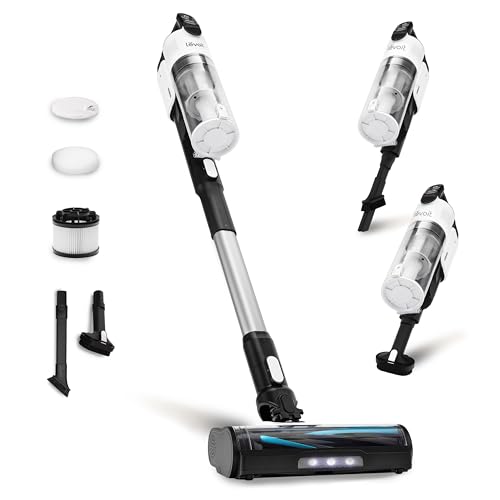
Separate grooming costs from cleanup costs. For example, a KARDV Cordless Vacuum Cleaner is listed for under $100 and includes pet-hair-focused features, while the Levoit Cordless Vacuum Cleaner with anti-tangle pet-hair design is listed at $149. Neither replaces a clipper, but either can help collect loose hair after trimming. Include that kind of cleanup equipment in a household budget rather than treating it as part of the clipper’s operating cost.
Which One for Your Home
Small apartment
Choose cordless if you have limited floor space, no convenient outlet near the bathroom, or neighbors who may notice motor noise. A cordless clipper keeps the grooming area visually simpler and can move easily from a shower mat to a balcony or utility room. If you groom only a small dog, a 30- to 60-minute runtime should be sufficient.
Family with kids and pets
Cordless is usually easier to manage when children, dogs, and cats share the same space. There is no cable for a child or pet to pull while you work. However, a corded model may be the better value if you regularly groom several animals. Store either type in a locked or high cabinet, and keep blades, oil, and guards away from children.
Rental
Renters should choose based on grooming location and outlet access rather than permanent setup. Cordless clippers are convenient if you cannot create a dedicated grooming station or need to groom outside your unit. Corded clippers work well if your rental has a laundry room or bathroom outlet that is safely positioned away from water.
Long-term home
A long-term homeowner who grooms frequently may benefit from owning both styles: a corded clipper for full trims and a cordless tool for detail work. If you want only one, select corded for heavy coats and multiple pets, or cordless for one dog and frequent touch-ups. A small grooming table, washable mat, bright lighting, and a storage drawer can matter as much as the clipper itself.
FAQ
Are cordless dog clippers powerful enough for thick coats?
Some are, but not all. Check for a motor designed for dense coats, compatible wide-tooth or detachable blades, and a runtime that covers the entire session. Brush out mats first; severe matting may require professional help.
Do cordless clippers need more maintenance?
They need the same blade cleaning and oiling as corded models, plus battery care. Keep charging contacts clean, avoid storing the tool completely discharged for long periods, and replace a swollen or damaged battery immediately.
Are corded clippers safer?
Neither style is automatically safer. A corded model must be kept away from paws, teeth, water, and walkways. A cordless model avoids trip hazards but still has sharp, warm blades. Use short passes and check blade temperature frequently.
Can I use human hair clippers on my dog?
It is usually better to use clippers designed for pets. Dog coats can be denser, dirtier, and more tangled than human hair, and pet clippers often offer blades and guards better suited to that work. Follow the manufacturer’s coat and blade guidance before grooming.



Write Your Review
No reviews yet. Be the first to share your experience!