
Best dog shampoo for allergies and itchy skin depends entirely on what the dog is reacting to, because environmental, flea, and contact triggers each respond to a different approach. Bathing helps meaningfully with two of the three, and understanding which one you are dealing with saves months of guesswork.
Our top picks
 Pet Honesty Chlorhexidine Cat & Dog Seasonal
Veterinary-strength formula is made without sulfates or parabens
Aloe-based formula targets itchy and irritated skin
Works for both dogs and cats in one bottle
Medicated formula is more targeted than an everyday cleansing shampoo
Listing does not specify bottle dimensions or weight
 Wahl USA Dry Skin & Itch Relief
Oatmeal formula targets dry skin and itch relief in one wash
pH-balanced formula is alcohol, paraben, and PEG-80 free
Higher-concentrate cleanser means less product used per wash
Coconut lime verbena scent may not suit unscented preferences
24oz bottle may run out quickly with frequent bathing
 Veterinary Formula Clinical Care Antiseptic & Antifungal
pH-balanced formula is designed to be paraben and soap free
Suitable for use on both dogs and cats over 12 weeks
Twice-weekly use schedule tapers to weekly for maintenance
Requires a 5 to 10 minute soak for full effect
Spot-checking a small area first is recommended


 Douxo S3 PYO Medicated Dog Shampoo with
3% chlorhexidine formula targets bacterial and yeast skin infections
Free from soaps, sulfates, parabens, and phthalates
Ophytrium ingredient is included to help soothe irritated skin
6.7 fl oz size is smaller than many comparable shampoo bottles
Medicated formula suits specific conditions, not everyday washing
As an Amazon Associate we earn from qualifying purchases at no extra cost to you.
As an Amazon Associate we earn from qualifying purchases.
By Laura Simmons
Allergies are diagnosed by a veterinarian. Shampoo removes allergens from the coat and soothes skin, but it does not identify or treat the underlying cause. If itching persists for more than a few weeks, a veterinary assessment will get you further than any shelf will.
🛒 Best Price Today on Amazon
Prime members get fast, free shipping on everything above, plus member-only deals. New members get a 30-day free trial — cancel anytime.
Start 30-Day Prime Free Trial →See Today’s Amazon DealsHow to Match the Best Dog Shampoo for Allergies and Itchy Skin to the Trigger
Owners tend to shop for a shampoo before working out what they are treating, which is why the category has such a high abandonment rate. Four questions narrow it down quickly, and the answers change which bottle is worth buying more than any brand comparison does.
Environmental Allergens: Where Bathing Genuinely Helps
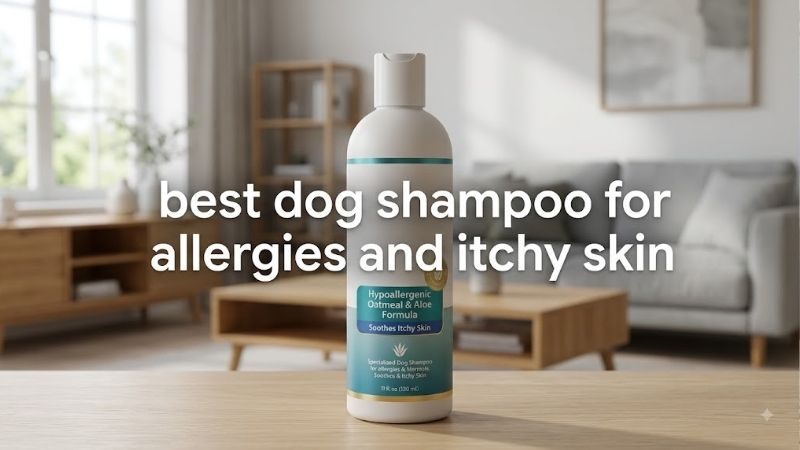
The best dog shampoo for allergies and itchy skin earns its place here: pollen, dust, mould, and grass allergens sit on the coat and on the skin, and a dog absorbs some of them through the skin as well as inhaling them. Washing physically removes that load, which is why frequent bathing during pollen season is a standard part of managing atopic dogs.
This is the one situation where the shampoo itself matters less than the frequency. A gentle, soap-free formula used weekly, or even twice weekly through a bad stretch, removes more allergen than an expensive bottle used once a month ever will. Frequency is the variable owners most often underuse.
Choose something safe for that frequency. Formulas labelled for use as often as necessary without drying the skin exist precisely for this pattern, and both Vet’s Best shampoos carry that guidance alongside a note that they will not affect topical flea and tick treatments. Compatibility with a spot-on treatment is worth checking on any label before you buy.
Flea Allergy: Where the Shampoo Is Not the Answer
Flea allergy dermatitis is caused by a reaction to flea saliva, and a single bite can trigger days of intense itching. No shampoo prevents that, and washing a dog does not clear an infestation because most of the flea population lives in carpets and bedding rather than on the animal.
The answer is a veterinary-recommended preventive plus household treatment, with a soothing shampoo used alongside for comfort rather than as the strategy. Check the shampoo will not strip your spot-on treatment, since soap-based formulas frequently do exactly that. Read both labels before timing the next bath.
Contact and Product Reactions: Simplify Everything
Some dogs react to something you are applying rather than to anything outdoors. Fragrance is the usual suspect, followed by essential oils, which is why formulas containing tea tree, citronella, or lavender are worth avoiding while you are still narrowing things down. Natural formulas are not automatically the gentler option.
Run a proper elimination trial: one fragrance-free shampoo, no conditioner, no sprays or wipes, for four full weeks. Reintroduce one product at a time afterwards, spaced a fortnight apart. Changing several things at once is why most owners never identify the trigger. One change at a time is the only interpretable method.
Itch complaints peak from March through May with pollen and again in early autumn, and demand for these products rises with them. Buying ahead of allergy season avoids the price bump, and discounting is usually deepest around Prime Big Deal Days in early October. Restocking ahead of pollen season is a small, reliable saving.
When the Skin Has Already Broken Down
Skin that has been itchy for weeks often develops a secondary bacterial or yeast problem, which is why a dog can smell yeasty and keep scratching after the original trigger has passed. That layer needs an antimicrobial formula on veterinary advice, not another soothing wash. Smell is usually the clue that this stage has been reached.
Hot spots, hair loss, ear problems, or itching that returns within a day of every bath all point past the shampoo aisle entirely. Take a list of what you have already tried to the appointment, because that history genuinely narrows the possibilities faster. A phone note through the season is enough of a record.
Top Picks: Six Shampoos Matched to Different Triggers
The six below cover frequent allergen washing, elimination trials, and vet-directed medicated use. The table lists what each formula is for before the individual assessments, and every entry ends with the drawback that matters most for an allergic dog. No single best dog shampoo for allergies and itchy skin covers all three trigger types.
| Product | Key Points | Size | Best For |
|---|---|---|---|
| Vet’s Best Allergy Itch Relief | Oatmeal, d-limonene, tea tree | 16 oz | Weekly allergen washing |
| Vet’s Best Hypo-Allergenic | Soap-free, aloe, vitamin E | 16 oz | Sensitive skin baseline |
| earthbath Hypo-Allergenic | Fragrance free | 16 oz | Elimination trials |
| Wahl Dry Skin & Itch Relief | Oatmeal, 24 oz value | 24 oz | Frequent bathing on budget |
| Douxo S3 PYO Medicated | 3% chlorhexidine | 6.7 fl oz | Vet-directed antimicrobial |
| Curaseb Medicated Shampoo | Chlorhexidine, ketoconazole | 16 oz | Yeast plus bacteria |
Vet’s Best Allergy Itch Relief Dog Shampoo
As a best dog shampoo for allergies and itchy skin driven by pollen or grass, this is built for exactly that pattern: it washes allergens off the coat, is labelled for use as often as necessary without drying the skin, and will not affect topical flea and tick treatments. Oat kernel meal and aloe handle the soothing.
The formula contains tea tree, citronella, and lavender oils plus a herbal fragrance blend, which makes it a poor choice during an elimination trial and unsuitable for cats entirely. The scent is also medicinal enough that some owners will not use it indoors. Try a small bottle before committing to a routine.
Vet’s Best Hypo-Allergenic Dog Shampoo
The gentler bottle from the same brand, soap-free and built on aloe vera and vitamin E, is the better weekly wash for a dog whose skin reacts to the Allergy formula’s botanical load. It carries the same guidance on frequency and flea treatment compatibility.
It is a cleanser rather than a treatment, so a dog with an active flare will see limited change. It also carries a light fragrance rather than none, which rules it out if you are running a strict elimination protocol over the next month. Light fragrance is still fragrance for testing purposes.
earthbath Hypo-Allergenic Fragrance Free Shampoo
The best dog shampoo for allergies and itchy skin during an elimination trial is this one, because removing fragrance entirely takes out the ingredient most likely to be causing a contact reaction. Soap-free and plant-derived, it rinses quickly and leaves the coat soft despite the deliberately minimal ingredient list.
The complete absence of scent disappoints owners who want a fresh-smelling dog, and it costs more per ounce than most alternatives. Very modest lather also tempts overuse, which empties a 16 oz bottle faster than the price would suggest. Use half what instinct suggests and work it in longer.
Wahl USA Dry Skin & Itch Relief Shampoo
When a dog needs bathing weekly through pollen season, cost per bath becomes the deciding factor, and at 24 oz this is comfortably the most economical option here. The oatmeal formula suits general dryness and the coconut lime verbena scent is fresher than most.
The bottle is bulky over a tub, and the fragrance is stronger on application than the label suggests. For a dog with genuinely reactive skin, a fragrance-light formula is safer, so this suits mild seasonal itching rather than a diagnosed contact sensitivity. Value and sensitivity rarely point at the same bottle.
Douxo S3 PYO Medicated Shampoo
A 6.7 fl oz clinical formula with 3 percent chlorhexidine, this is what a veterinarian may recommend once itching has produced a secondary bacterial problem. Used as directed with proper contact time it is far more targeted than anything else in this comparison.
It is drying, clinical in scent, and expensive per ounce, and it does nothing about the underlying allergy. Buying it speculatively for a dog with ordinary seasonal itching usually damages the skin barrier further rather than helping. Medicated washes are prescriptions, not upgrades.
Curaseb Medicated Shampoo
As a best dog shampoo for allergies and itchy skin that has become infected, chlorhexidine paired with ketoconazole covers both the bacterial and the yeast side of a chronically itchy dog’s skin, which is often why the smell and the scratching persist after the original trigger has gone. The 16 oz bottle is well sized for a full course.
It needs the same patient contact time, is drying with repeated use, and leaves a clinical scent on the coat for a day or two. Like every medicated formula it belongs on veterinary advice rather than as the next speculative purchase. Ask before buying rather than afterwards.
Frequently Asked Questions
These questions come up most often from owners several months into an itching problem, particularly around bathing frequency and whether shampoo can ever be the whole answer. The answers below assume a healthy adult dog already following a veterinary-approved plan.
How often should I bathe a dog with environmental allergies?
Weekly is common, and twice weekly during a bad pollen stretch, using a formula labelled safe for that frequency. Physically removing allergens is one of the few things an owner can do at home that makes a measurable difference to an atopic dog. Weekly bathing is genuinely worth the effort here.
Can shampoo cure my dog’s allergies?
No. It removes allergens from the coat and soothes irritated skin, which improves comfort meaningfully, but the underlying reaction continues. Managing an allergic dog usually needs a veterinary plan that may include diet work, medication, or immunotherapy alongside bathing. Bathing supports that plan rather than replacing it.
Should I avoid essential oils?
While you are still identifying a trigger, yes. Tea tree, citronella, and lavender are common in natural anti-itch formulas and can themselves cause contact reactions. They should never be used on cats, and dogs that have reacted before are better on a fragrance-free formula. Essential oils are a common and overlooked trigger.
What if bathing makes the itching worse?
Usually that means residue or over-drying. Rinse for twice as long, particularly on the belly and armpits, and extend the interval between baths. If it continues, stop and speak to your veterinarian rather than working through more bottles. Two variables explain almost every case of this.
See More:
- Best smelling dog shampoo and conditioner
- Best dog mite shampoo
- Hartz Groomer’s Best Soothing Oatmeal Dog Shampoo
- Best professional dog nail grinder
- Best cat brush medium hair
Final Thoughts
The best dog shampoo for allergies and itchy skin is the one matched to the trigger: a frequent-use formula for environmental allergens, a fragrance-free wash for elimination trials, and a medicated bottle only on veterinary advice. Frequency matters more than price on an atopic dog.
Write Your Review
No reviews yet. Be the first to share your experience!