

Best dog shampoo for itching skin is decided on the back of the bottle rather than the front. Two products promising relief can contain completely different actives, aimed at completely different problems, and buying the wrong one wastes a fortnight your dog spends scratching. This guide reads the label first, then names four options.
As an Amazon Associate we earn from qualifying purchases.
By Laura Simmons, professional dog groomer and pet care writer
Reading the Label
Marketing on the front of a bottle tells you almost nothing useful, because every itch product claims to soothe. The back panel tells you what the shampoo actually does, and there are only three things worth checking there. Get those three right and choosing the best dog shampoo for itching skin becomes a fairly straightforward exercise.
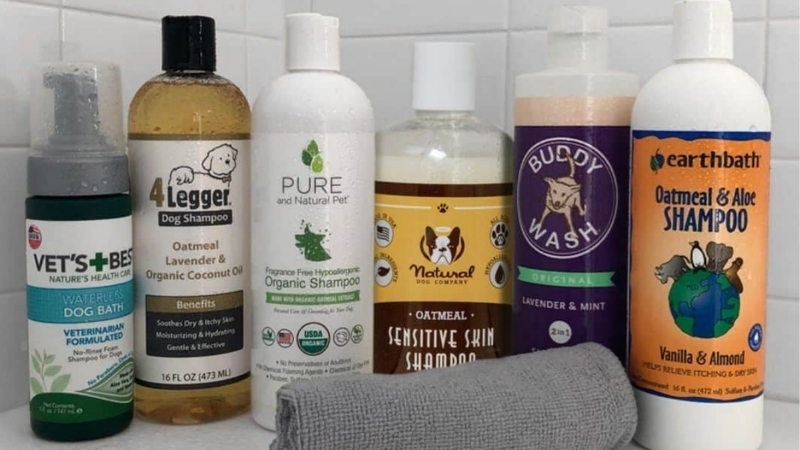
The Active Ingredient
Colloidal oatmeal, aloe and glycerin are soothing agents. They calm irritation and hold moisture in the skin, but they kill nothing, so they suit allergy flare-ups and dryness rather than infection. Most gentle products are built on this base, and for a great many itchy dogs it is genuinely enough on its own without anything stronger.
Chlorhexidine, ketoconazole and miconazole are antimicrobials, aimed at bacterial or yeast overgrowth. They belong on a dog your vet has actually diagnosed, not on a hunch, because using them on plain allergic skin dries it out further and can make the scratching noticeably worse across a fortnight, which is a common and expensive mistake.
Soap-Free or Detergent
Soap-free and sulphate-free are worth looking for, particularly on a dog you will be bathing weekly during a flare-up. Harsh detergents such as sodium lauryl sulphate lift dirt efficiently and strip the skin barrier while doing it, which is the last thing an already irritated dog needs from a bath it is only tolerating in the first place.
Fragrance is the other common irritant, and heavily perfumed products are a poor choice for reactive skin however pleasant they smell in the bottle. If your dog seems to itch more in the days after a bath rather than less, the shampoo itself is the first suspect rather than the pollen count, and an unscented product is the obvious test.
Contact Time
Every medicated shampoo carries a stated contact time, usually around five to ten minutes, and it is the single instruction owners most often ignore. Ketoconazole and chlorhexidine need that long sitting against the skin to do anything at all, and a rushed two-minute wash simply rinses them back down the drain without achieving anything at all.
Soothing oatmeal products are more forgiving but still benefit from a few minutes on the coat. Plan for a warm room, something for your dog to chew and a timer, because the difference between a wash that works and one that does nothing is usually those extra few minutes on the coat rather than the brand printed on the front of the bottle.
Four Options Worth Considering
The four below map onto the label categories above rather than competing directly. One is a vet-brand soother for flare-ups, one an antimicrobial for diagnosed infection, one an enzymatic option for reactive dogs, and one a plain fragrance-free wash. Any best dog shampoo for itching skin shortlist needs that spread.
| Shampoo | Active | Drawback |
|---|---|---|
| Epi-Soothe | Oatmeal, soap-free | No antimicrobial action |
| Curaseb | Chlorhexidine, ketoconazole | Drying with overuse |
| Zymox | Enzyme system | Slow, no lather |
| Vet’s Best Hypo | Fragrance-free base | Soothes very little |
Epi-Soothe
Virbac’s Epi-Soothe is the oatmeal shampoo most vets reach for when a dog is itchy but not infected. It is soap-free, spreads easily through a dense coat and rinses cleanly, and the colloidal oatmeal genuinely takes the edge off a seasonal flare-up without stripping anything from a skin barrier that is already fragile and working hard to recover.
It has no antimicrobial action whatsoever, so a dog with a yeasty smell or crusting spots needs something else entirely alongside a veterinary appointment. It also costs noticeably more than supermarket oatmeal shampoos, and the difference sits almost entirely in the quality of the base rather than in any dramatic active ingredient on the panel.
Curaseb
Curaseb pairs chlorhexidine with ketoconazole, which covers both the bacterial and the yeast side of a secondary infection. When a vet has confirmed one of those is present, this is the category of product that changes things, usually with visible improvement inside two or three weeks of properly timed use rather than anything immediate.
It is drying on repeated use, and on skin already raw from scratching that trade can go badly. Give it the full contact time, then alternate with a moisturising wash rather than using it as the everyday bottle. This is treatment rather than maintenance, and the best dog shampoo for itching skin afterwards is a gentler one.
Zymox
Zymox uses an enzyme system rather than a conventional antimicrobial, which suits dogs that have reacted badly to medicated shampoos in the past or that need frequent washing without the drying. There are no harsh detergents in it at all, and it is unusually gentle on skin that is already inflamed and broken from scratching.
It barely lathers, which unsettles owners used to foam, and it works gradually rather than dramatically, so several washes are needed before anything is obvious. It is also not a replacement for a diagnosed treatment plan, and a dog that is getting steadily worse on it needs the vet rather than yet another bottle from the shelf.
Vet’s Best Hypo
Vet’s Best Hypo-Allergenic is about as plain as a wash gets: no fragrance, no dyes and a mild base designed to clean without provoking anything. For a dog that reacts to almost every product tried so far, that plainness is the entire point of the product rather than a shortcoming to be quietly apologised for on the label.
Being neutral is also its limit. It does not soothe actively, it will not touch yeast, and a genuinely dirty coat needs two rounds of washing rather than one. Treat it as the safe baseline you can bathe with regularly rather than as the best dog shampoo for itching skin that has already become properly established and infected.
Getting the Bath Right
Technique decides results as much as the bottle does, and most disappointing results come down to the same three mistakes. These questions come up in nearly every conversation about scratching, whichever best dog shampoo for itching skin you have finally decided to put in the bathroom cupboard at home.
How often should I bathe?
Weekly is common during a flare-up and often actively prescribed, provided the product is gentle enough to tolerate it. Between flare-ups, every three or four weeks suits most dogs. Frequent bathing with a harsh product creates exactly the dry, itchy skin that you were trying to treat in the first place, which owners rarely connect.
Am I rinsing properly?
Probably not, if your dog has a thick or double coat. Residue trapped against the skin irritates for days afterwards and is one of the most common causes of post-bath scratching. Rinse until the water runs completely clear, then rinse the whole coat through again, paying particular attention to the belly, the armpits and behind the ears.
When is shampoo not enough?
Book a veterinary appointment for broken or bleeding skin, patchy hair loss, a distinct smell, or scratching that has not improved after two or three weeks of sensible bathing. Shampoo supports a diagnosis rather than replacing one, and chronic itching usually needs something that the bathroom simply cannot supply on its own.
See more:
- Best rated cat nail clippers
- Best cat nail trimmer
- Best scent dog shampoo
- Best cat nail scissors
- Best cat nail clipper
Final Thoughts
The best dog shampoo for itching skin is whichever one matches the active ingredient to the actual problem: oatmeal for allergy and dryness, an antimicrobial only for a properly diagnosed infection, and a plain base for reactive dogs. Read the back panel of any best dog shampoo for itching skin, respect the contact time, and rinse thoroughly.
