
Key takeaways
What's inside
Best dog shampoo for allergy skin is usually the one with the shortest ingredient list rather than the longest. Bathing cannot treat an allergy, but the right formula removes allergens from the coat and avoids adding new irritants, which is a meaningful part of a wider management plan.
As an Amazon Associate we earn from qualifying purchases.


As an Amazon Associate we earn from qualifying purchases.
🛒 Best Price Today on Amazon
Prime members get fast, free shipping on everything above, plus member-only deals. New members get a 30-day free trial — cancel anytime.
How to Choose the Best Dog Shampoo for Allergy Skin Safely
Allergies in dogs come from fleas, food and the environment, and the skin looks similar in all three cases. Shampoo has a genuine role in rinsing pollen and dust off the coat and soothing irritated skin, but it never replaces working out what the dog is actually reacting to.
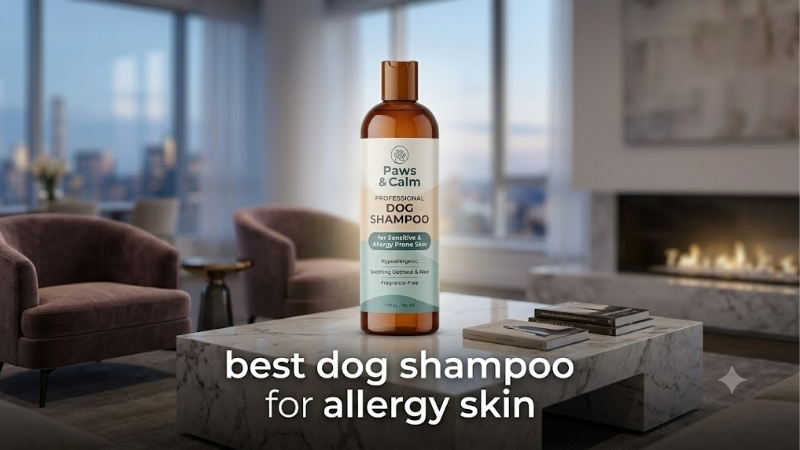
What Bathing Can and Cannot Do
Environmental allergens sit on the coat and skin, and regular bathing physically removes a proportion of them before the dog absorbs or licks them. For pollen-sensitive dogs through spring and summer, that mechanical rinsing is often the most useful thing a shampoo does at all.
What it cannot do is treat the underlying reaction. Flea allergy needs parasite control, food allergy needs a proper elimination trial, and environmental allergy usually needs a veterinary plan, so a shampoo works alongside those approaches rather than instead of any one of them.
Beware of any product implying otherwise. Bottles promising to cure allergies or eliminate itching are overselling themselves, and chasing them tends to delay the diagnosis that would actually help. A gentle wash plus a veterinary appointment is a better first month than six bottles.
Hypoallergenic and Limited-Ingredient Formulas
Labels in this category are loosely regulated, so the best dog shampoo for allergy skin is identified by reading the ingredient list on the back rather than by trusting the word hypoallergenic printed across the front of the bottle, which carries no formal definition at all.
Fragrance-free is the single most useful label here, since added scent is a common irritant and adds nothing for the dog. Dye-free and sulfate-free follow closely behind, and a soap-free surfactant base cleans without stripping the coat oils that a compromised skin barrier needs.
Shorter ingredient lists genuinely help when you are trying to isolate a trigger. Colloidal oatmeal, aloe and ceramides are widely tolerated, while botanical extracts and essential oils are more variable, and tea tree in particular is not appropriate for cats sharing the household.
Frequency, Water Temperature and Rinsing
How often you bathe changes the result as much as which product you use, and the best dog shampoo for allergy skin is one gentle enough to use weekly during the months when pollen counts are at their highest, without leaving the coat drier at the end of the season than it was at the start.
Allergic dogs are often bathed more often than average, sometimes weekly during pollen season, and that is reasonable with a gentle soap-free product. Use cool or lukewarm water rather than hot, since heat increases itching and makes an already irritated coat considerably less comfortable.
Rinse thoroughly and then keep going, because residue sitting against inflamed skin is an obvious source of further irritation. Dry properly as well, particularly in dense coats, since damp skin under a thick ruff creates exactly the conditions that lead to hot spots developing.
Working With Your Veterinarian
Medicated washes containing chlorhexidine, ketoconazole or miconazole have a real place when secondary infection is involved, but they belong in a plan rather than in a speculative purchase. Your vet can tell you which one fits, at what frequency, and for how long to continue.
Keep notes on what you use and how the skin responds over a few weeks. That record is genuinely useful at an appointment, and it prevents the common situation where an owner has tried eight products, cannot remember which helped, and starts the whole process again from scratch.
Top Picks: Five Gentle Shampoos for Sensitive Skin
The best dog shampoo for allergy skin keeps the ingredient list short and the fragrance absent. These five span fragrance-free everyday bottles through to veterinary-line products, and each entry names a genuine limitation alongside the situation it suits best in practice.
| Shampoo | Type | Notable feature | Best for |
|---|---|---|---|
| Earthbath Hypo-Allergenic | Gentle | Fragrance free, soap free | Frequent bathing, unknown triggers |
| Vet’s Best Hypo-Allergenic | Gentle | Oatmeal and aloe base | Mild seasonal irritation |
| Veterinary Formula Hypoallergenic | Gentle | Minimal ingredient list | Elimination-style testing |
| Pro Pet Works Oatmeal Shampoo | Gentle | Almond oil, no added scent | Dry, reactive coats |
| Douxo S3 Calm Shampoo | Veterinary line | Skin barrier support | Vet-directed management |
Earthbath Hypo-Allergenic Fragrance Free
For most households this is the best dog shampoo for allergy skin to begin with, purely because it removes as many variables as possible while you and your vet work out what the dog is actually reacting to, and it costs little enough to use weekly.
This is the sensible starting point when you do not yet know what the dog reacts to. It is soap free, fragrance free and dye free, it rinses cleanly out of thick coats, and the gallon size makes weekly bathing through pollen season affordable rather than an expensive commitment.
It cleans gently, so a genuinely dirty dog needs two washes and it will do nothing for a secondary infection. That is the correct behaviour for a baseline product, but it does mean persistent itching needs escalating to your veterinarian rather than to a stronger bottle off the shelf.
Vet’s Best Hypo-Allergenic Shampoo
Oatmeal and aloe in a mild base cover the common case of a dog that is itchy through spring and summer without any other symptoms. It lathers reasonably, rinses without much effort and sits at a price that suits bathing more often than a typical four to six week schedule.
There is a light scent to it, which is worth knowing if fragrance is one of the things you are trying to rule out. It is also a comfort wash rather than a treatment, so a dog scratching hard enough to break skin needs a veterinary appointment rather than a different shampoo.
Veterinary Formula Clinical Care Hypoallergenic
The appeal here is the short ingredient list, which makes it useful when you are trying to isolate what a dog reacts to. Fewer components mean fewer variables, and that matters during the weeks when you and your vet are working through possibilities methodically rather than guessing.
It is functional rather than luxurious, and the coat feels clean rather than conditioned afterwards. Dogs with genuinely dry coats may need a gentle conditioner following the wash, applied and rinsed thoroughly so nothing is left sitting against skin that is already irritated.
Pro Pet Works Oatmeal Shampoo
When fragrance itself is part of the problem, this is a useful option. Oatmeal and almond oil in a formula without artificial colours or added scent suits dogs with reactive skin, and the conditioning element means many owners skip a separate rinse-out product entirely.
Nut-derived oils are worth noting for households with human allergies, and availability is less consistent than the larger brands. It is also priced above supermarket options, which is a consideration if you are bathing a large dog weekly through an entire pollen season.
Douxo S3 Calm Shampoo
Douxo sits in the veterinary range and is regularly used as part of a managed plan for allergic skin. The formula targets the skin barrier rather than simply cleaning the coat, and it is designed for repeated use across a course rather than an occasional bath when things flare.
It is the most expensive option here, and buying it without a diagnosis is a costly guess. Ask your veterinarian whether it suits your dog’s situation, since the benefit comes from using the right product at the right frequency for the specific problem that has been identified.
Frequently Asked Questions
Four questions come up constantly from owners of itchy dogs, and one of the answers involves a phone call. The best dog shampoo for allergy skin is part of a plan rather than a plan on its own, and the answers below cover the parts that a bottle alone will never handle.
How often can I bathe an allergic dog?
Weekly is reasonable during pollen season with a gentle soap-free product, and some veterinary plans recommend more often than that. Use cool water, rinse thoroughly and dry properly, and reduce the frequency again once the season passes and the skin has properly settled down.
Will shampoo stop my dog itching?
It can reduce itching by removing allergens from the coat and soothing the surface, but it does not treat the underlying allergy. Itching that continues for more than a couple of weeks, or comes with redness, hair loss or open skin, needs a proper veterinary assessment.
Is oatmeal shampoo the same as hypoallergenic?
Not necessarily. Oatmeal is a soothing ingredient and appears in plenty of scented, sulfate-containing formulas, whereas hypoallergenic usually implies fragrance-free and a shorter ingredient list. Read the label rather than relying on the word oatmeal on the front of the bottle.
Could my dog be reacting to the shampoo itself?
It happens, and fragrance is the most common culprit. If itching worsens in the day or two after a bath, switch to a fragrance-free product, rinse for longer than feels necessary, and mention the pattern at your next veterinary appointment since it narrows things usefully.
See More:
- Dog grooming shears best
- Best dog clippers for poodles
- Best dog clippers for doodles
- Best dog brush for poodle
- Best dog brush for great pyrenees
Final Thoughts
The best dog shampoo for allergy skin is fragrance free, soap free and short on ingredients, used with cool water and a very thorough rinse. Bathing removes allergens and soothes the surface, but the diagnosis is what actually solves the problem, so involve your veterinarian early rather than late.





Write Your Review
No reviews yet. Be the first to share your experience!