

Best dog nail scissors are not simply a shrunken version of a plier, they are a different tool built for a different job entirely. Thin puppy nails, toy-breed claws and dewclaws that have curled round all need a narrow blade you can actually see past. Five scissor-style trimmers are compared below, each with its real limit stated.
As an Amazon Associate we earn from qualifying purchases.
By Laura Simmons, professional dog groomer and pet care writer
Why Scissors
Scissor trimmers get dismissed as beginner tools, which rather misreads what they actually do. Their advantage is reach and visibility rather than raw power, and on a thin nail that is precisely the trade you want to make. The best dog nail scissors solve three specific problems a full-size plier handles badly.
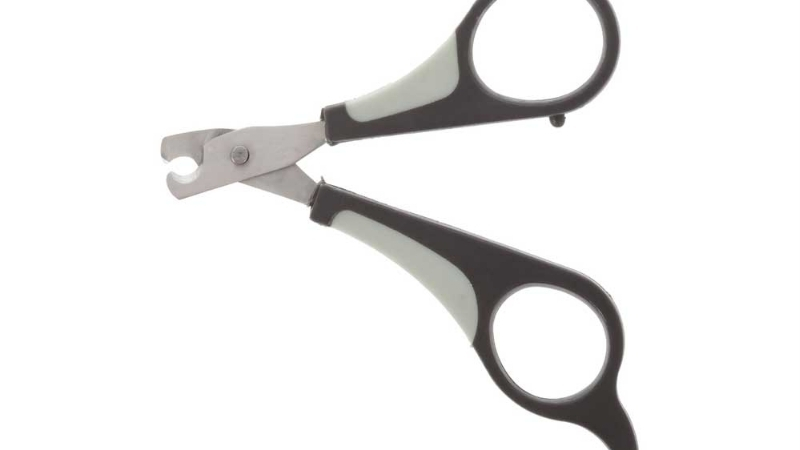
Thin Nails
Puppy nails and toy-breed claws are thin enough that a heavy plier does not so much cut them as fold them over. The jaws are wider than the nail itself, so you lose sight of the target and end up guessing at depth on something only a few millimetres across, which is precisely how most accidents happen.
A narrow scissor blade sits either side of a thin nail without swallowing it whole. You can see the tip, judge the angle and remove exactly the amount you intended to. On a Yorkshire terrier or a twelve-week-old puppy, that visibility is worth considerably more than any amount of raw cutting force at all.
Dewclaws
Dewclaws sit higher up the leg, never touch the ground and therefore never wear down at all. Left alone they curl round until they press into the skin, which is painful and eventually needs a vet. Reaching one means getting a narrow blade into a tight space without pinching any of the surrounding flesh.
Fine scissor tips manage that where a bulky plier head simply cannot be angled into position. Many households end up owning a plier for the main claws and the best dog nail scissors they can find purely for dewclaws, because there is no single tool on the market that covers both of those jobs at all comfortably.
Limits
The same narrowness that makes these tools precise makes them useless on a retriever. Ask a scissor trimmer to part a thick weight-bearing claw and the blades flex apart, the cut goes ragged and the nail splits along its layers, which hurts the dog and takes several weeks to grow out again properly.
Treat the size rating on the packet as a hard ceiling rather than a gentle suggestion. A tool sold for cats and small dogs means exactly that. Buying the best dog nail scissors for a large breed is really a category error rather than any kind of bargain, however sharp the blades themselves may happen to be.
Best Dog Nail Scissors
The five trimmers below all use a scissor or angled-blade action and are sized for thin nails. They cover puppies, toy and small breeds, dewclaws on larger dogs, and the tidying up left over after a plier has done the heavy work. Each of the best dog nail scissors here has its honest weakness named.
| Model | Suits | Drawback |
|---|---|---|
| Millers | Dewclaws | No guard |
| Safari | Puppies | Stop |
| GripSoft | Nervous | Plastic body |
| Boshel | Budget | Light |
| Republique | Thin | Softens |
Millers small
Millers Forge makes a small-pet version of the tool that built its reputation, and the same qualities carry across: Japanese stainless blades that meet precisely, a pivot that stays tight, and a cut that parts a thin nail cleanly instead of compressing it first. Groomers keep one on the table for dewclaws.
There is no guard and no safety stop, so the depth of every cut rests on your own judgement. The handles are plain and slim, which is what makes them precise but also what makes them slippery in a damp grip. It rewards dry hands, good light and deliberately small slices taken one at a time rather than haste.
Safari small
Safari builds its trimmers in genuinely size-specific versions rather than shrinking one shell, and the small model is a real design in its own right. The narrow jaw lets you see the nail you are cutting, which is very nearly the whole battle on a toy breed with pale, thin and rather easily damaged claws.
The safety stop is where opinion divides. In place it sits exactly where you want to look, so many owners swing it clear within a few sessions and never restore it. The tool is also strictly limited to small nails, so a mixed household will still need a second, heavier plier for the larger dog as well.
JW GripSoft
The GripSoft small trimmer is aimed squarely at owners who find the whole business nerve-racking. A rubberised handle stops it rotating in a sweaty grip, the guard makes over-cutting far less likely, and the shape stays controllable even when a paw is snatched back halfway through an unfinished cut.
There is more plastic in the body than a professional tool carries, and it shows if you push it beyond thin nails: the blades flex slightly and the cut face goes rough. Within its own intended range it is genuinely excellent, and outside of that range it is quietly the wrong tool for the job in hand.
Boshel small
Boshel sells a compact angled-blade trimmer with a small safety guard and a non-slip handle, at a price that makes it easy to keep a second one in the car or the travel bag. On thin claws it cuts cleanly out of the box, and the light weight makes it easy to control at the odd angles small dogs offer.
Light construction is also the limitation. The jaws flex if you ask them to cut anything substantial, and the pivot loosens sooner than on a heavier tool, so alignment tends to go before the edge does. A sensible everyday choice for a small dog, and honestly nothing very much more than that in the end.
Republique
Pet Republique offers a very light stainless trimmer aimed at cats and at the smallest dogs, with a semicircular blade and a comfortable moulded handle. Out of the packet it is genuinely sharp, and for thin claws or a nervous puppy the low weight makes it noticeably easier to hold steady than a heavier tool.
The steel does not hold an edge for very long under regular use, and after a year the cut starts to feel more like a squeeze than a slice. That is the honest cost of the low price, and it is a fair trade provided that you do replace the tool in good time rather than simply carrying on with a blunt one.
Questions
Scissor trimmers raise a slightly different set of questions from pliers, mostly about where their range ends and when to reach for something heavier. These are the ones that come up most often at the grooming table, whichever of the best dog nail scissors you have finally settled on for your own dog.
Scissors or pliers?
Pliers for anything thick or weight-bearing, scissors for thin nails, puppies and dewclaws. Most households with a medium or large dog eventually own both, because the plier does the sixteen main claws quickly and the scissors deal with the awkward dewclaw that a wide plier head cannot reach cleanly.
Safe on a puppy?
Yes, and a small scissor trimmer is usually the right first tool. At that age the goal is habit rather than length, so take only the very tip, keep sessions to a minute and end while your puppy is still relaxed. A puppy who finds the whole business dull grows into an adult dog that tolerates it for life.
How often
Every three to four weeks for most small dogs, more often for those walked mainly on grass and less for pavement walkers whose claws wear naturally. Clicking on hard floors means you are overdue. Frequent small trims also let the quick recede, which in turn makes each later session easier than the one before it.
See more:
- Best rated cat nail clippers
- Best cat nail trimmer
- Best scent dog shampoo
- Best cat nail scissors
- Best cat nail clipper
Final Thoughts
The best dog nail scissors earn their place through reach and visibility rather than power, which makes them the right tool for thin claws, young puppies and dewclaws that a plier cannot reach. Respect the size rating, keep the blades sharp, and pair them with a proper plier if you also own a larger dog.
