

Dog nail trimmer best choices are usually discussed in terms of blade steel, when the thing that actually decides success is whether your dog will sit still. A tool that suits a placid retriever is the wrong one entirely for a dog that snatches its paw away. Five trimmers, matched to temperament rather than size.
As an Amazon Associate we earn from qualifying purchases.
By Laura Simmons, professional dog groomer and pet care writer
Choosing by Temperament
Size tells you which jaw width to buy. Temperament tells you which design will actually get used. The dog nail trimmer best for a calm animal is often the plain professional plier, while a dog that flinches needs something more forgiving of a sudden movement. Be honest about which of the two you actually own.
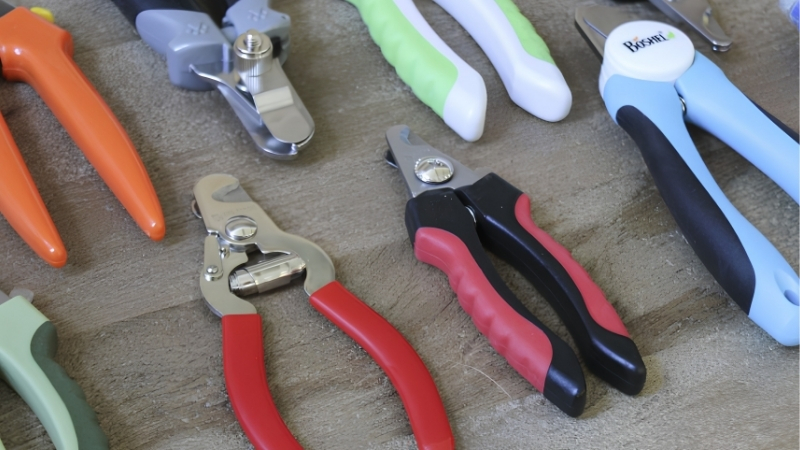
Calm Dogs
A dog that offers a paw and leaves it there lets you use the simplest possible tool. No guard, no rubberised grip, nothing between you and a clean cut. Professional pliers exist for exactly this situation and they are quick, precise and cheap because they carry no extras. The dog nail trimmer best here is the plainest one.
Speed matters more than it sounds. Sixteen claws done briskly is a very different experience for a dog than the same job stretched over ten anxious minutes. A sharp, simple tool in a confident hand is the fastest route through the job, and getting through it briskly is what keeps a calm dog calm throughout.
Anxious Dogs
A dog that pulls back mid-cut turns a guard from a nuisance into genuine insurance. Rubberised handles matter too, because the moment a tool twists in your hand the cut goes crooked and the dog quietly learns something you did not want it to learn about having its nails trimmed at all in the future.
Work in shorter sessions and accept a slower pace. One paw a day is a perfectly respectable schedule. The dog nail trimmer best for an anxious animal is whichever one you can operate one-handed while the other hand keeps hold of the paw without turning the whole business into an outright wrestling match.
Puppies and Seniors
Puppy claws are thin, sharp and need only the tip taking off, which a small trimmer handles easily and a large plier makes clumsy. The aim at this stage is habit rather than length, so short sessions that end well matter considerably more here than how much length you actually managed to remove on the day.
Older dogs bring different problems: thicker, drier claws that split under a dull blade, and joints that resent being held in odd positions. Let the paw rest where it naturally falls rather than lifting it high, and use the sharpest tool you own so the claw parts first time instead of being squeezed repeatedly.
Dog Nail Trimmer Best Picks
The five trimmers below span placid dogs, nervous ones and puppies, in sizes from toy breed to large. All are easy to buy and have been around long enough to have a real reputation rather than a launch-week one. The honest drawback of each one sits alongside what it genuinely does well in daily practice.
| Model | Suits | Drawback |
|---|---|---|
| gonicc | Most dogs | Mid-tier steel |
| JW GripSoft | Anxious dogs | Flexes |
| Boshel | Beginners | Dulls faster |
| Millers | Calm dogs | No safety guard |
| Safari small-dog | Puppies | Not big dogs |
gonicc Clippers
gonicc has become the default middle option: a stainless plier with a semicircular blade, a sliding safety guard and rubberised handles that stay put in a slightly damp grip. It is comfortable to hold, well balanced across the jaws, and forgiving enough for a dog that fidgets a little between claws.
The steel sits a step below the professional tools, so after a couple of years of fortnightly use the edge softens and cutting starts to feel like squeezing. The guard also has to be retracted for accurate work on dark claws, which rather undercuts the main reason many people buy it in the first place.
JW Pet GripSoft
The GripSoft is built for nervous hands rather than nervous dogs, though it helps with both. A rubberised handle stops it rotating in use, a visible guard makes over-cutting far less likely, and the shape stays controllable when a paw is snatched back unexpectedly in the middle of a half-finished cut.
There is rather more plastic in the body than a professional plier carries, and it shows on genuinely thick claws: the jaws flex a little and the cut goes ragged rather than clean. Excellent on small and medium dogs, and plainly the dog nail trimmer best left behind once you go on to own a much larger breed.
Boshel Clippers
Boshel packages a stainless plier with a sliding quick guard and a small file tucked into the handle, at a price that makes it easy to try. For a first-time owner it removes a great deal of anxiety, and the small file is genuinely useful for smoothing the sharp forward edge that is left behind afterwards.
The steel is softer than the professional tools here, so the edge fades within a year of regular use and the tool begins pushing rather than slicing. The guard must also come off for precise work on dark claws. A sensible place to begin trimming, though not really a place to stay for very long at all.
Millers Forge
If a groomer owns one trimmer it is usually this one, and it has stayed unchanged for years because there is nothing to improve. The blades meet precisely, the pivot does not develop play, and a thick claw parts with a snap instead of the crunch that quietly teaches dogs to dread the whole procedure.
Nothing protects you from cutting too deep, which is exactly why professionals prefer it and why a nervous owner should probably start elsewhere. The smooth handles can also slip in a damp grip, so dry your hands first and take rather thinner slices than your own instinct suggests you actually need to.
Safari small-dog
Safari makes its trimmers in size-specific versions, and the small-dog model is genuinely different rather than simply a shrunken shell. The narrower jaw lets you see the claw you are cutting, which is very nearly the whole battle on a toy breed or on a very young puppy with thin and delicate claws.
It is exactly as limited as that suggests. Ask it to cut a retriever claw and it will flex, slip or leave a ragged edge, so households with dogs at both ends of the scale end up owning two tools. Within its own narrow range, though, very little else on the market is anywhere near as precise as this.
Session Questions
Equipment is the smaller half of this job. How long you work, how you hold the paw and what happens afterwards decide whether your dog cooperates next month. These come up constantly at the grooming table, whichever dog nail trimmer best happens to suit the particular animal sitting in front of you.
Session length
Shorter than you think. Two or three minutes of calm work beats fifteen minutes that end with a struggling dog, because the last thirty seconds are what gets remembered. If your dog is still relaxed when you finish, you have quietly set up the next session rather than quietly damaging it in advance.
One paw at a time?
For a dog that finds the whole business difficult, yes. One paw a day spreads sixteen claws across four calm sessions instead of one bad one, and the schedule still keeps up with growth. Dogs that genuinely do not mind can have the lot done in one sitting with whichever dog nail trimmer best fits them.
Do treats actually help?
They help most when they arrive during handling rather than afterwards as compensation. Feed while you hold the paw, feed after each claw, and the paw handling itself starts predicting something good. Treats given only at the very end reward getting through it, rather than staying relaxed throughout.
See more:
- Best rated cat nail clippers
- Best cat nail trimmer
- Best scent dog shampoo
- Best cat nail scissors
- Best cat nail clipper
Final Thoughts
The dog nail trimmer best for your household is the one that matches your dog’s nerve as much as its size. Calm dogs suit a plain professional plier, anxious ones suit a guarded tool with a grippy handle, and puppies suit something genuinely small. Keep the blade sharp and keep every session genuinely short.
