
Key takeaways
- Table of Contents 7 sections 10 min read 1 Quick Verdict 2 Side by Side 3 Where Diamond Wins 4 Where Sanding Band Nail Grinders Wins 5 Cost Over 5 Years 6 Which One for Your Home 6.1 Small apartment…
What's inside
Choosing between a diamond bit and a sanding band nail grinder is less about buying the “better” tool and more about matching the abrasive to the nails in your household. Diamond-coated grinder heads are permanent, reusable attachments with a textured metal surface. Sanding bands are disposable sleeves that slide over a rubber or metal drum and are replaced as they wear out.
For home use in 2026, the real decision usually comes down to four things: whether you are trimming human nails, pet nails, acrylic or gel enhancements; how often you will use the tool; how sensitive the user or pet is to vibration and heat; and whether you prefer low ongoing costs or a low upfront purchase price. A diamond attachment costs more initially but can last years. Sanding bands cost very little to start, offer more grit choices, and make it easy to use a fresh abrasive surface for each person or pet.
As an Amazon Associate we earn from qualifying purchases at no extra cost to you. Product prices and availability are accurate as of the date shown and are subject to change.


One quick terminology note: a diamond nail-grinder bit is not fine jewelry. It uses an industrial diamond abrasive coating, not the kind of stones found in a 10.00 ct. TW graduated round-cut diamond tennis necklace priced at $13,599 or 4-carat lab-grown diamond stud earrings such as the Houston Diamond District pair priced at $1,999. Its value lies in durability and controlled filing rather than sparkle.
Quick Verdict
Choose a diamond nail grinder head if you want a durable, reusable attachment for regular natural-nail or pet-nail maintenance and do not mind cleaning it after use. It is especially practical for a household with one or two consistent users, or for pet owners who use a grinder every few weeks.
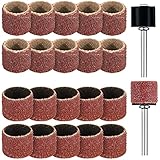
Choose sanding bands if you need flexibility, want to work with acrylic, gel, or thicker artificial nail product, or prefer a fresh abrasive sleeve for every manicure or pet. They are also the easiest and least expensive entry point. A multipack such as CPOXITI’s 190-piece set, listed at $6.99, gives a home user several grit choices without much commitment.
For many homes, the most useful setup is not strictly one or the other: use a fine diamond bit for routine smoothing and a sanding-band drum for occasional shaping or product removal.
Side by Side
| Buying factor | Diamond grinder head | Sanding band grinder |
|---|---|---|
| Comfort | Usually produces steady, controlled filing with less need to swap parts; choose a fine grit for sensitive natural nails. | Can feel smooth with fine bands, but a worn or coarse band may create more friction and heat. |
| Durability | Commonly lasts 1 to 5 years at home with proper cleaning and light pressure. | Each sleeve may last one to several sessions, depending on grit, pressure, and nail material. |
| Typical price range | $8 to $35 for a single quality bit; $20 to $60 for multi-bit kits. | $5 to $15 for 50 to 200 bands and a drum; replacement sleeves are inexpensive. |
| Maintenance | Needs brushing, washing when manufacturer-approved, drying, and occasional sanitizing. | Discard the used sleeve; clean the reusable drum between uses. |
| Space needed | One bit typically measures about 0.1 to 0.25 inch wide and 1.5 inches long. | A 1/2-inch drum plus a small box of bands takes little space, though bulk packs need a drawer or organizer. |
| Look | Metallic, professional-looking, and visually tidy in a compact manicure kit. | Practical rather than decorative; bands are often brown, black, or colored by grit. |
| Resale | Little meaningful resale value because personal-care bits are hygiene-sensitive. | No resale value; these are consumable supplies. |
| Best for | Natural nails, regular pet nail smoothing, cuticle-area work with an appropriate fine bit, and low-waste routines. | Acrylic and gel shaping, occasional heavy filing, shared household use, and beginners who want grit options. |
| Common grit choices | Fine, medium, and coarse diamond coatings; fine is generally the safest starting point for natural nails. | Typically 80, 100, 120, 180, and 240 grit; higher numbers are finer. |
Where Diamond Wins
Diamond heads excel in consistency. The abrasive surface is bonded to a metal bit, so the tool does not loosen or soften as quickly as a disposable sleeve. That makes it useful for small, frequent touch-ups: smoothing a sharp edge, rounding a pet nail after clipping, or maintaining a natural manicure without bringing out a full set of supplies.
They are also a strong choice for low-waste households. Rather than throwing away a band after one or two sessions, you can clean the bit and return it to its case. A typical home nail drill uses about 15 to 35 watts, and the bit itself adds virtually no storage burden. A small zip case measuring roughly 6 by 4 inches can hold a drill, charging cable, and several diamond attachments.
For pet care, a fine or medium diamond drum can be less disruptive than a coarse sleeve when used patiently. The important qualifier is technique: use short touches of one to two seconds, then lift the tool away. Continuous pressure can heat any abrasive surface, including diamond. Keep hair away from the spinning attachment, and stop if a pet shows distress or if the nail feels warm.
Diamond also suits owners who dislike restocking. If you maintain one person’s natural nails twice a month, a $15 to $25 diamond bit can be a sensible buy because it may cover years of routine filing. It is not maintenance-free, however. Nail dust and pet-nail debris can clog the textured surface, reducing effectiveness. A small cleaning brush should be part of the setup.
Where Sanding Band Nail Grinders Wins
Sanding bands win on versatility and hygiene convenience. You can choose a grit based on the task, then replace the sleeve when it becomes loaded with dust or after a single user. Fine 180- or 240-grit bands are generally better for light shaping and smoothing. Medium 120-grit bands are useful for quicker nail shortening, while 80-grit bands are aggressive and best reserved for artificial product removal or thicker pet nails when used carefully.
They are particularly useful for acrylic, builder gel, and gel extensions. Those materials can wear down an abrasive surface faster than bare nails, so the ability to slip on a fresh sleeve is valuable. A set with several grits gives a home user a more manageable progression: reduce bulk with a medium grit, refine the shape with a finer grit, and finish by hand with a soft nail file.
Cost is another advantage. A $6.99 assortment with 190 bands can support many sessions, even allowing for single-use handling. For pet-focused tools, packages such as Leelosp’s 22-piece 1/2-inch, 60- and 100-grit dog nail grinder band and drum set, priced at $12.99, may make sense for owners with larger dogs or thick nails. Confirm that the drum diameter and shank fit your grinder before ordering; common bands are 3/8 inch or 1/2 inch, while many manicure drills use a 3/32-inch shank for the mandrel.
The drawback is that bands wear. As the grit dulls, users may press harder, which increases heat and reduces control. Replace a band as soon as it looks smooth, discolored, torn, or clogged. Disposable does not mean careless: use low speed for natural nails and avoid holding the spinning drum in one place.
Cost Over 5 Years
For a light-use natural-nail household, a diamond setup is usually the lower-cost path over five years. Assume one $20 fine diamond bit, a $5 brush, and perhaps one $20 replacement bit during that period. The total is approximately $25 to $45, excluding the drill itself.
A sanding-band setup may begin with a $7 to $12 kit containing a drum and mixed sleeves. If you use two to four bands per month for household manicures and replace bulk packs every 12 to 18 months, expect about $30 to $70 over five years. The range rises if several people use the tool or if bands are treated as single-use supplies.
For acrylic or gel removal, sanding bands may actually be the more economical working tool despite repeat purchases. A diamond bit can work, but repeated heavy product removal can reduce its cutting efficiency and may lead you to replace a more expensive attachment sooner. A realistic mixed setup—one $20 diamond bit plus $30 to $50 in sanding-band refills—lands around $50 to $80 over five years.
Which One for Your Home
Small apartment
Choose a fine diamond bit if your main goal is compact, low-clutter natural-nail care. It fits in a tiny drawer, produces no pile of used sleeves, and is ready whenever a nail snags. Add a small manual file for finishing. If you wear gel or acrylic regularly, keep a compact 50-piece pack of 180-grit sanding bands alongside it.
Family with kids or pets
Sanding bands are often the easier household choice because you can designate a new band for each person or pet. Use fine grit for children’s natural nails and never use a high-speed drill on a child who cannot sit still. For pets, a diamond head is excellent for routine smoothing, but keep a separate pet-only attachment and never share it with human nail care.
Rental
Either option works well because neither requires installation or wall storage. A low-wattage cordless drill with a 6- to 8-inch storage case is renter-friendly. Choose sanding bands if you only expect occasional use and do not want to clean tools in a small bathroom sink. Choose diamond if you value fewer disposable supplies.
Long-term home
Buy both. A durable diamond bit handles routine upkeep, while a sanding-band drum covers heavier shaping, artificial nails, and situations where a clean disposable sleeve is preferable. Store the system in a labeled lidded box, ideally 8 by 6 by 3 inches or larger, with separate compartments for human and pet tools.
FAQ
Are diamond nail grinder bits safe for natural nails?
Yes, when paired with a fine grit, low speed, light pressure, and constant movement. They can thin or heat natural nails if held in one spot. Beginners should practice on a paper towel or an inexpensive artificial nail tip before working on their own nails.
What grit sanding band should I use at home?
Start with 180 or 240 grit for natural nails and gentle finishing. Use 120 grit for faster shaping only if you are comfortable controlling the drill. Reserve 80 or 100 grit mainly for acrylic, gel product removal, or robust pet nails, and use it sparingly.
Can I use the same grinder attachment for people and pets?
No. Keep human and pet attachments separate for hygiene. Even after cleaning, separate bits and drums reduce cross-contamination and make your supplies easier to organize.
Do diamond bits or sanding bands make less mess?
Neither eliminates dust; the amount depends more on speed, pressure, and what is being filed. Diamond bits can create fine dust during routine smoothing, while sanding bands can produce more visible debris during acrylic or gel removal. Work over a towel or dust collector, wipe down the surface afterward, and clean the attachment according to its care instructions.


Write Your Review
No reviews yet. Be the first to share your experience!