
Key takeaways
- Assuming a higher number is longer. Clipper blade numbers generally leave less hair as the number increases. A #30 is much closer than a #10.
- Choosing by length alone. A blade may leave the right amount of hair but still be too wide for the paw. Width and maneuverability are essential between the toes.
- Using a body blade between the toes. Standard blades can be difficult to angle safely in tight spaces. A narrow toe blade is often easier to control.
- Trimming over dirty or wet hair. Dirt dulls blades, while wet hair can pull and clog the cutting teeth. Wash, dry, and brush the paw first.
- Ignoring heat. Touch the blade against your inner wrist periodically. If it feels hot to you, it is too hot for the dog.
- Replacing blades without checking compatibility. Confirm the clipper brand, model, blade style, and attachment before buying a replacement pack.
What's inside
Choosing the right blade for a dog’s paws is less about getting the shortest possible cut and more about balancing visibility, comfort, and control. Paw pads are uneven, curved, and close to delicate skin, so a blade that works well on the body may be too wide or aggressive between the toes.
The Short Answer
For most dogs, a #10 blade is the best starting point for trimming hair around paw pads. It leaves approximately 1/16 inch (1.5 mm) of hair and provides a practical balance between cleanliness and skin protection. A narrow 5/8-inch toe blade, such as the YAZIYIR 5/8 Wide Toe Pet Dog Grooming Detachable Blade, is another strong choice for reaching between toes and around small paw pads.
As an Amazon Associate we earn from qualifying purchases at no extra cost to you. Product prices and availability are accurate as of the date shown and are subject to change.


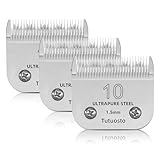

Use a #15 blade only when you need a closer finish and have good control. A #30 or #40 blade may be useful for professional-style pad work, but these blades leave very little hair and can irritate or nick skin if used carelessly. For occasional home grooming, a low-noise paw trimmer with a narrow head, such as the oneisall model with LED lighting, can be easier to handle than a full-size detachable-blade clipper.
Always use a clean, cool blade. Clippers become hot during use, and heat—not just sharpness—is a common cause of paw irritation.
Standard Sizes
Clipper blade numbers indicate the approximate length of hair left behind. The exact result can vary with coat texture, blade brand, clipper pressure, and whether the coat is clean and fully dry.
| Blade size | Hair left | Hair left in centimeters | Best paw use |
|---|---|---|---|
| #10 | 1/16 in | 0.16 cm (1.5 mm) | General paw pads, first-time home grooming |
| #15 | 3/64 in | 0.12 cm (1.2 mm) | Closer trimming on thick or fast-growing paw hair |
| #30 | 1/50 in | 0.05 cm (0.5 mm) | Very close professional-style pad trimming |
| #40 | 1/100 in | 0.03 cm (0.25 mm) | Specialty finishing; generally not a first choice at home |
| 5/8 toe blade | About 3/32 in | About 0.24 cm (2.4 mm) | Narrow trimming between toes and around small pads |
The blade’s physical width matters as much as its cutting length. A standard detachable blade is commonly about 1 3/4 inches wide (4.4 cm), while a 5/8 toe blade is about 5/8 inch wide (1.6 cm). Narrow blades are easier to position on small feet, toy breeds, and between closely spaced toes.
Compatibility is also important. A blade advertised as compatible with Andis, Wahl, and Oster clippers may fit several models, but not every clipper uses the same attachment system. The 3 Pack 10 Clipper Blade Compatible with Andis, Wahl and Oster Dog Clippers, for example, is described as a #10-style option. Replacement ceramic blades, such as the Grimgrow six-pack, can reduce replacement cost, but buyers should confirm the clipper model and blade mount before ordering. Example replacement prices range from about $14 to $33, depending on whether the purchase includes a complete trimmer or several replacement blades.
How to Measure Your Space
- Measure the paw, not just the dog. With the dog standing calmly, measure across the widest part of the paw from outside edge to outside edge. A small paw under 2 inches (5.1 cm) wide usually benefits from a narrow blade or paw trimmer.
- Measure the gap between the toes. Spread the toes gently without forcing them apart. If the space is less than 1/2 inch (1.3 cm), a full-width blade may be awkward and a 5/8-inch toe blade can offer better control.
- Check pad exposure. Look at how far the hair extends over the pads. If only a thin fringe is visible, a #10 blade may be sufficient. Heavy overgrowth may require trimming the outer hair with scissors first, followed by the clipper.
- Measure the coat length above the paw. Hair that blends into the leg can be left slightly longer than the pad hair. Use a #10 or #15 on the pad and a longer guard comb on the top of the foot if a gradual transition is desired.
- Match the blade width to your control. The blade should cover the target area without forcing you to twist the wrist. For a small dog, a narrow head around 1/2 to 5/8 inch wide may be more manageable than a 1 3/4-inch detachable blade.
- Test a small area. Make one short pass, then inspect the skin and the remaining hair. This helps you decide whether to stay with that blade or move to a closer size.
By Room or Use Case
Small dogs and toy breeds
Small paws are usually easiest to trim with a 5/8-inch toe blade or a compact paw trimmer. A #10 blade is appropriate when the paw is large enough to keep the cutting edge flat against the hair. For very small feet, a full-size clipper can feel bulky even if the blade itself is suitable. A compact trimmer priced around $14 to $30 may provide better visibility and one-handed control.
Medium and large dogs
A #10 detachable blade is a practical general-purpose choice for medium and large paws. The wider blade can cover the pad area efficiently, reducing the number of passes. Use the blade only where the coat is flat enough to see the skin clearly, and switch to a narrow toe blade around the edges and between the toes.
Long-haired or curly-coated dogs
Curly and long hair can hide the pads, particularly when damp or packed with debris. Dry and comb the coat first. If the hair is severely overgrown, use blunt-tip grooming scissors to remove excess length from the top, keeping the blades parallel to the paw. Then use a #10 blade to refine the pads. A #15 may be appropriate for a closer finish, but it should not be pressed into folded skin.
Thick paw-pad hair
Thick hair between the pads may be easier to remove with a narrow 5/8 toe blade. Work from the outside toward the center in short strokes. Do not dig the blade into the webbing. If the hair is matted, stop and separate the mat rather than pulling it tight against the skin.
Sensitive skin or occasional grooming
For dogs with easily irritated skin, begin with a #10 blade or a trimmer with a guarded, narrow cutting head. Leave a small amount of hair rather than aiming for a completely bare pad. Run the clipper at a moderate pace, check its temperature frequently, and pause after each paw.
Common Sizing Mistakes
- Assuming a higher number is longer. Clipper blade numbers generally leave less hair as the number increases. A #30 is much closer than a #10.
- Choosing by length alone. A blade may leave the right amount of hair but still be too wide for the paw. Width and maneuverability are essential between the toes.
- Using a body blade between the toes. Standard blades can be difficult to angle safely in tight spaces. A narrow toe blade is often easier to control.
- Trimming over dirty or wet hair. Dirt dulls blades, while wet hair can pull and clog the cutting teeth. Wash, dry, and brush the paw first.
- Ignoring heat. Touch the blade against your inner wrist periodically. If it feels hot to you, it is too hot for the dog.
- Replacing blades without checking compatibility. Confirm the clipper brand, model, blade style, and attachment before buying a replacement pack.
FAQ
Is a #10 blade the best size for dog paws?
For many dogs, yes. A #10 leaves about 1/16 inch (1.5 mm) and is close enough to keep pad hair tidy without being as aggressive as a #30 or #40. A narrow 5/8-inch toe blade may be better for small paws or tight spaces.
Can I use a #30 blade on paw pads?
You can, but it is a close-cutting blade that leaves about 0.5 mm of hair. It requires a steady hand and careful temperature checks. For routine home grooming, a #10 is usually more forgiving.
What blade should I use between a dog’s toes?
A 5/8-inch toe blade or compact paw trimmer is generally easiest to control. Use short strokes and keep the blade flat against the hair. Avoid pushing the cutting edge into the webbing or folds of skin.
How often should paw hair be trimmed?
Many dogs need a light trim every two to six weeks, depending on how quickly the hair grows and whether it extends beyond the pads. Trim when hair covers the pad surface, collects debris, or causes the dog to slide on smooth flooring.


Write Your Review
No reviews yet. Be the first to share your experience!