
Key takeaways
What's inside
Best large dog toenail clippers need enough leverage to cut a thick nail cleanly in one pass, because a blade that crushes or splits is what teaches a dog to hate the whole process. This guide covers the mechanics, the sizing, and five tools that handle heavy nails.
As an Amazon Associate we earn from qualifying purchases.


As an Amazon Associate we earn from qualifying purchases.
🛒 Best Price Today on Amazon
Prime members get fast, free shipping on everything above, plus member-only deals. New members get a 30-day free trial — cancel anytime.
How to Choose the Best Large Dog Toenail Clippers
A rottweiler’s nail is several times thicker than a terrier’s, so the best large dog toenail clippers are built differently from the ones sold for small breeds. Blade design, steel quality and jaw capacity all matter here in a way they do not on a small dog, and getting them right makes the job quick.
Scissor Style Versus Guillotine
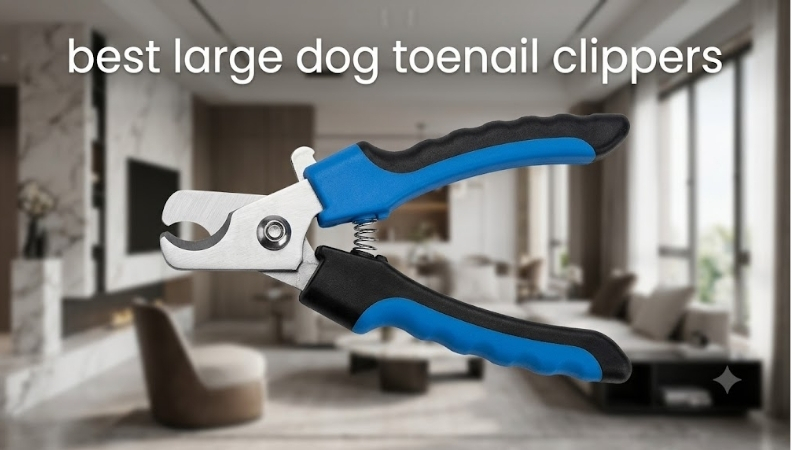
Scissor or plier-style clippers cut from both sides at once, which is why they dominate for large breeds. The leverage handles thick nails without crushing, you can see exactly where the blades sit before closing them, and they cope with the curved nails older dogs develop.
Guillotine clippers push the nail through a hole and cut with a single blade. They are precise on small and medium nails and many groomers still prefer them, but the design struggles with genuinely thick nails and the replaceable blade dulls faster under that load.
Blade sharpness matters more than style either way. A dull blade compresses the nail before cutting, which hurts, and a dog that has felt that once becomes considerably harder to handle at the next session no matter which design you switch to.
Jaw Capacity and Blade Steel
Capacity is the specification most buyers skip entirely. Clippers made for large breeds have a wider jaw opening and thicker blades, and using a medium tool on a mastiff or great dane means forcing the cut, which splits the nail rather than slicing through it.
Stainless steel blades hold an edge far longer than cheaper alternatives, which is what keeps cuts clean over months of use. Blades cannot usually be sharpened at home on scissor-style clippers, so build quality here directly determines how long the tool stays comfortable to use.
Handle design affects control as much as comfort. Non-slip grips and a locking mechanism for storage are worth having, and a spring that returns the handles smoothly reduces hand fatigue when you are working through sixteen nails plus dewclaws in one sitting.
Safety Stops and the Quick
The quick is the blood vessel and nerve running inside the nail, and cutting it hurts and bleeds. Safety stops on many clippers limit how much nail passes through the blades, which is genuinely useful for beginners even though experienced handlers usually remove or ignore them.
Black nails are the real difficulty, since the quick is invisible from outside. Trimming small slivers rather than one large cut, and watching the cut surface for a chalky white ring turning to a small dark dot in the centre, is the standard way to stay safe.
Good light makes more difference than any gadget. Trimming outdoors on a bright day, or under a lamp rather than in a dim hallway, lets you read the cut surface properly, which is the whole skill when the nail gives you no colour clue at all.
Frequency, Overgrown Nails and Bleeding
The quick grows longer as the nail does, which is why badly overgrown nails cannot be shortened in one session. Trimming a small amount weekly encourages the quick to recede over several weeks, and only then can the nail reach a sensible length safely.
Regular short trims also keep the dog calmer. A dog handled every week learns that the best large dog toenail clippers mean thirty seconds and a treat, whereas one trimmed twice a year associates the tool with a long uncomfortable session.
Keep styptic powder within reach before you start. If you do catch the quick, applying pressure with the powder stops the bleeding in most cases, and bleeding that will not stop after a few minutes is a reason to phone your vet rather than to keep trying.
Top Picks: Best Large Dog Toenail Clippers for Heavy Nails
Every tool in this best large dog toenail clippers lineup handles thick nails, and the differences come down to blade design, safety features and how they feel in a large hand. Professional-style tools cost little more than budget ones and last considerably longer under regular use.
| Clipper | Style | Safety stop | Best for |
|---|---|---|---|
| Millers Forge Nail Clipper | Plier style | No | Groomers and confident owners |
| Safari Professional Nail Trimmer | Plier style | Yes | All-round large breed use |
| Resco Original Deluxe | Guillotine | Replaceable blade | Medium to thick nails |
| JW Pet Gripsoft Deluxe | Plier style | Yes | Comfort and grip |
| Epica Professional | Plier style | Yes | Budget-conscious buyers |
Millers Forge Nail Clipper
This is the tool that turns up in more grooming salons than any other, and the reason is simple mechanics. The plier design cuts thick nails cleanly in one pass, the blades stay sharp through heavy use, and the whole thing is light enough to work quickly.
There is no safety stop, which is why groomers like it and beginners sometimes do not. If you are still learning where the quick sits on a black nail, the lack of a guard means taking smaller slivers and working more slowly than you might with a guarded tool.
Safari Professional Nail Trimmer, Large
Owners who want professional cutting quality with a guard fitted should start here. The stainless blades handle large breed nails without forcing, the safety stop limits how much nail passes through, and the size is correct for a labrador, shepherd or larger.
The safety stop that helps beginners becomes an obstacle later, since it limits how much you can take in one cut. Some owners simply remove it once they are confident, which works but leaves you with a plain plier clipper at a mid-range price.
Resco Original Deluxe Nail Clipper
Guillotine clippers still have loyal users, and this is the classic example. The replaceable blade means the tool can be refreshed rather than replaced, the cut is precise once you learn the angle, and it suits medium to thick nails on a cooperative dog.
Genuinely thick nails on a giant breed are outside its comfort zone, where a plier design does the job with less effort. The guillotine approach also requires threading the nail through the hole, which some dogs tolerate far less patiently than a side approach.
JW Pet Gripsoft Deluxe Nail Trimmer
Grip is the underrated factor when you are holding a large paw with one hand. The moulded non-slip handles make this comfortable through a full set of nails, the safety stop reassures nervous owners, and the blades are sharp enough for most large breed nails.
It is not quite as effortless on very thick nails as a professional plier clipper, so a great dane or mastiff will expose its limits. Build quality is good rather than exceptional, meaning it will need replacing sooner under weekly salon-level use.
Epica Professional Pet Nail Clipper
Budget-conscious owners get a surprising amount of tool here. The stainless blades cut large nails cleanly, the safety guard is removable, and the price makes it an easy first purchase for someone unsure whether they will keep doing nails at home at all.
Blade life is shorter than the premium alternatives, so expect to replace it sooner if you trim every week. The handles are also less refined in the hand, which matters more than you would think on a large dog that needs the whole job done quickly.
Frequently Asked Questions
Owners of large dogs ask the same questions about trimming frequency, black nails, and what to do when the dog objects to having its feet handled at all, which is common in dogs that were never introduced to it properly as puppies.
How often should large dog nails be trimmed?
Every three to four weeks suits most dogs, though those walked mainly on pavement wear their nails down naturally and need it less often. If you can hear nails clicking on a hard floor, they are already longer than they should be.
How do I trim black nails safely?
Take small slivers rather than one confident cut, and watch the cut surface. A chalky white ring means you can continue, while a small dark dot appearing in the centre means the quick is close and it is time to stop on that nail.
What if the nails are already overgrown?
Trim a small amount weekly rather than attempting to fix it in one session. The quick has grown out with the nail, so it needs several weeks to recede, and the best large dog toenail clippers cannot shorten that process safely.
Should I use human nail clippers?
No, they are the wrong tool entirely. Human clippers are not built for the thickness or curve of a dog’s nail, so they crush and split rather than cutting cleanly, which hurts the dog and leaves a rough edge that catches on carpet afterwards.
See More:
- Best robot vacuum dog hair
- Best robot vacuum cleaner for dog hair
- Best robotic vacuum cleaner for dog hair
- Best dog deshedding shampoo
Final Thoughts
The best large dog toenail clippers are the ones that cut a thick nail cleanly in a single pass, which usually means a plier-style tool with quality stainless blades. Keep styptic powder nearby, trim little and often, and take smaller slivers on black nails.


Write Your Review
No reviews yet. Be the first to share your experience!