
Key takeaways
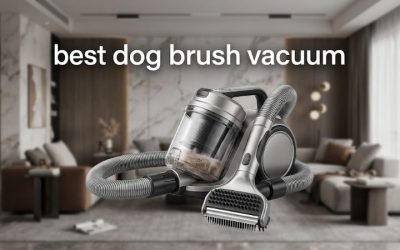
Best grooming vacuum kit searches spike every autumn, and the appeal is obvious: brush the dog and capture the hair in the same motion. These systems genuinely work, but only if the suction, the noise level, and the attachment set match the coat you are actually dealing with at home. Coat type decides the rest.
Our top picks
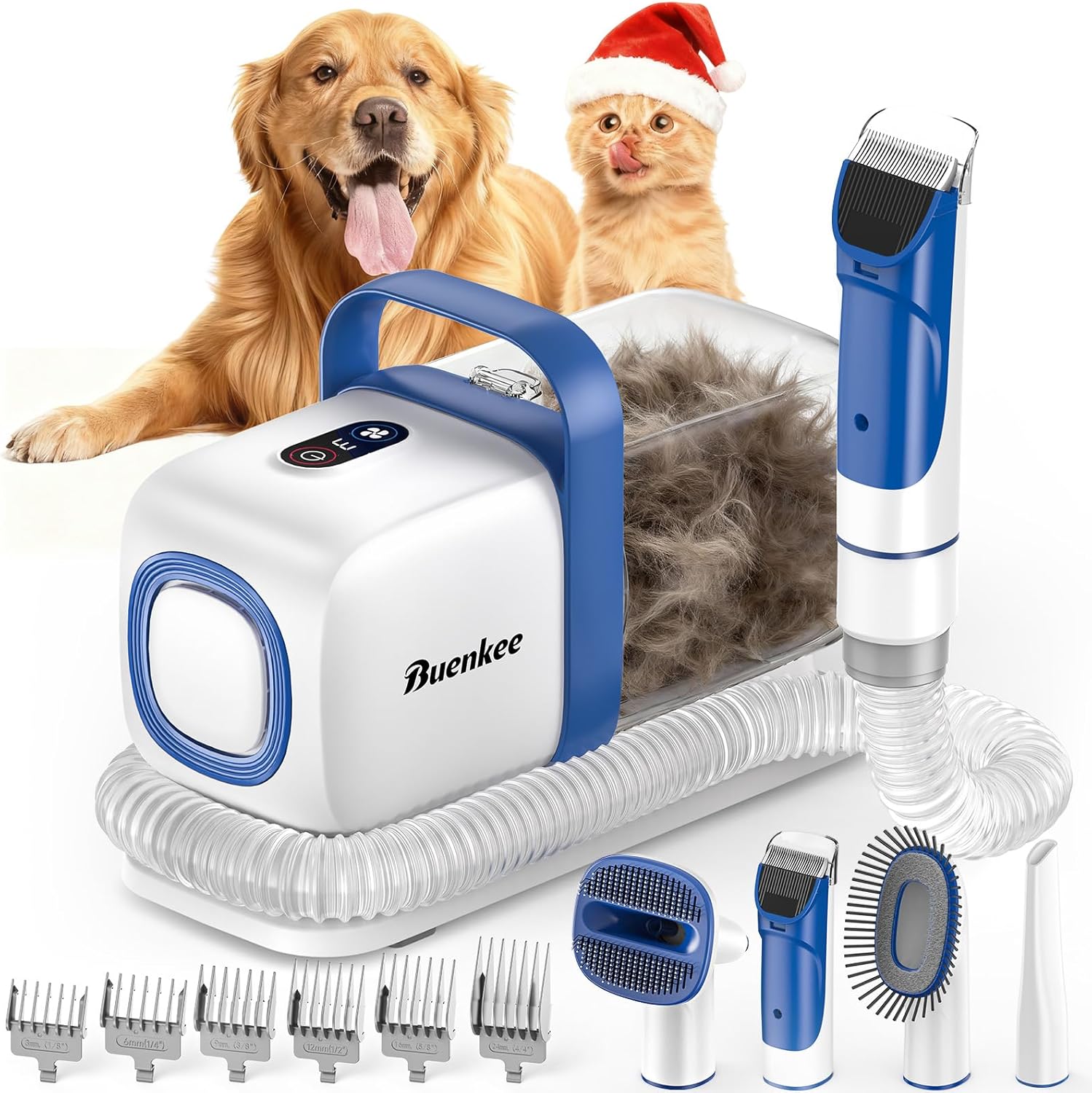
 oneisall Dog Grooming Vacuum
- Target Audience: Pet owners
- Specific Uses For Product: Pet grooming
- Hair Type: All, Thick, Coarse
 Dog Grooming Kit
- Recommended Uses For Product: Pet Hair Grooming
- Target Audience: Pets (Dogs, Cats)
- Specific Uses For Product: Nail Grinding, Pet Grooming
 oneisall 8-in-1 Dog Grooming Vacuum & Dryer
- Set Name: 8-in-1 Dog Grooming Kit
- Charging Time: 3 Hours
- Battery Description: Lithium-Ion



As an Amazon Associate we earn from qualifying purchases at no extra cost to you.
As an Amazon Associate we earn from qualifying purchases.
By Laura Simmons
Laura Simmons writes about at-home pet grooming gear and coat care routines for Heads to Tails Grooming.
🛒 Best Price Today on Amazon
Prime members get fast, free shipping on everything above, plus member-only deals. New members get a 30-day free trial — cancel anytime.
Start 30-Day Prime Free Trial →See Today’s Amazon DealsHow to Choose the Best Grooming Vacuum Kit
These kits pair a canister vacuum with grooming heads that pull hair straight into the airflow. The variables that decide whether one is useful are suction strength, how loud it runs, how much dust it holds, and whether the attachments suit your dog’s coat type. In a best grooming vacuum kit, attachment counts matter least of all.
Suction Strength and Coat Type
Suction in this category is usually quoted in kilopascals, and figures around 10 to 14 kPa are typical for pet-specific units. Double-coated breeds need the higher end, because undercoat comes away in volume and weaker suction leaves it clinging to the brush head instead. Match the figure to the coat you own.
Short smooth coats are far less demanding, since there is simply less hair to move per pass. If you own a Boxer rather than a Husky, a mid-range unit will feel entirely adequate and you can spend the difference on a better deshedding tool instead. Spending the difference on a better rake often makes more sense.
Noise Levels and Dog Tolerance
This is where most kits succeed or fail in practice. Manufacturers commonly quote around 60 decibels, which is far quieter than a household vacuum but still noticeable, and a dog that will not stand for it makes the whole purchase pointless. A dog that will not stand for it makes the whole kit worthless.
Introduce the unit gradually rather than switching it on beside a nervous dog. A week of short sessions with food, starting with the machine running across the room, converts most dogs, and the ones it does not convert were never going to accept it in one go. Patience during the first week decides everything here.
Attachments Worth Having
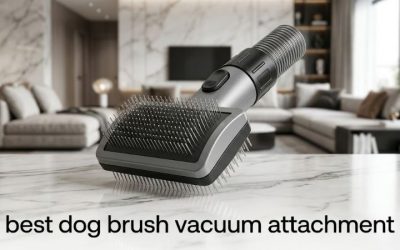
A deshedding head, a slicker-style brush head, a clipper, and a straight nozzle cover the realistic jobs. Anything beyond that tends to sit in the box, so judge kits on the quality of those four rather than on the total number of pieces listed on the packaging. Four good heads beat twelve mediocre ones.
Check the head width against your dog. A wide deshedding head speeds up a large breed considerably, while owners of small dogs or cats usually find it clumsy around the legs and face, where a narrower head does far more useful work. Head width is the specification most buyers forget to check at all.
Dust Capacity, Filters and Cleaning
Canister capacity of around one to three litres is common, and a double coat in full blow fills the smaller end quickly. Emptying mid-session is not a disaster, but a larger canister means fewer interruptions during the twenty minutes when the dog is actually cooperating. Emptying mid-session is a minor irritation.
Filters need rinsing regularly, and suction drops noticeably when they clog with fine undercoat. Check whether replacement filters are readily available before buying, since a kit with no spare parts supply becomes disposable the moment the original filter wears out. Suction loss is nearly always a filter problem.
Top Picks: Best Grooming Vacuum Kit
The six below range from the well-established pet grooming systems to a tool that attaches to a vacuum you may already own. Choose on suction and noise first, then on whether the attachment set covers the coat in front of you. No best grooming vacuum kit removes the need for a decent undercoat rake.
| Kit | Type | Best For | Price Tier |
|---|---|---|---|
| Neakasa P2 Pro | All-in-one canister | Heavy double coats | Premium |
| Neakasa P1 Pro | All-in-one canister | All-round value | Mid |
| Oneisall Dog Grooming Vacuum | All-in-one canister | Quiet operation | Mid |
| Homeika Dog Grooming Kit | All-in-one canister | Budget entry | Budget |
| Dyson Pet Grooming Tool | Vacuum attachment | Existing Dyson owners | Mid |
| Afloia Dog Grooming Vacuum | All-in-one canister | Small dogs and cats | Budget |
Neakasa P2 Pro
The strongest suction in this group and the most complete attachment set, which together make it the option for Huskies, Shepherds, and anything else that drops a full undercoat twice a year. The clipper attachment is genuinely usable rather than a token inclusion. The clipper head is genuinely usable here.
It is the most expensive kit here and the canister still needs emptying during a heavy session on a large dog. The unit is also bulky to store, which matters in a flat where it will live in a cupboard rather than a utility room. Storage space is worth measuring carefully before ordering something this bulky.
Neakasa P1 Pro
The older model remains the value benchmark, with suction adequate for most coats and the same broad attachment set. For a household with one medium-sized shedding dog, the practical difference from the newer version is smaller than the price gap suggests. For one medium shedding dog it remains the sensible buy.
Suction drops off faster as the filter loads, so rinsing it more often matters here than on the newer unit. The noise level is also slightly higher, which is worth considering if your dog is on the nervous side about appliances generally. Rinsing the filter often closes most of the gap to the newer model.
Oneisall Dog Grooming Vacuum
This one prioritises quiet running, which makes it the pick for dogs that flinch at appliances. It handles medium coats comfortably and the brush heads are well finished, with rounded pin tips that do not scratch skin during a long session. Nervous dogs are exactly the market that this one is aimed at.
The trade-off is suction, which struggles with a dense double coat in full blow. The canister is also on the smaller side, so owners of large shedding breeds will be emptying it more often than they would like during autumn. Owners of Huskies and Shepherds should be looking at the stronger units instead.
Homeika Dog Grooming Kit
The budget entry point, with a reasonable attachment set and enough suction for short and medium coats. For owners testing whether the concept suits their dog before committing to a premium unit, it answers the question at a fraction of the cost. As a way to test the concept cheaply, it does the job well.
Build quality reflects the price, with lighter plastics and a shorter expected life than the established brands. Replacement filters can also be harder to source, which is the detail that turns a cheap kit into a disposable one after a year or two. Check filter availability before committing to the brand at all.
Dyson Pet Grooming Tool
If you already own a compatible Dyson, this attachment turns it into a grooming vacuum for a fraction of the price of a dedicated kit. The bristles retract to release collected hair straight into the airflow, and the suction available is well beyond any pet-specific unit. Existing Dyson owners should start here.
The noise level is the problem, since a full-size vacuum is considerably louder than a purpose-built grooming canister, and many dogs will not tolerate it. It also only performs one job, so there is no clipper or nozzle for the rest of the routine. Noise is the deciding factor rather than performance.
Afloia Dog Grooming Vacuum
A compact unit with narrower heads that suit small dogs, cats, and awkward areas around the face and legs. It is quiet, light to hold through a session, and priced low enough to sit alongside a larger kit rather than replacing one. It works well as a second unit alongside something with more suction.
Suction and canister capacity are both limited, so it is unsuited to a large double-coated dog. Owners of a Golden Retriever will find themselves emptying it constantly and still not keeping up with what a proper rake would remove in ten minutes. Large double coats are simply beyond what it was built to handle.
Frequently Asked Questions
Owners considering one of these kits usually want to know whether it replaces the tools they already own, and how their dog is likely to react to a motor running beside it. Most people considering the best grooming vacuum kit want to know whether it replaces their existing tools, so these answers start there.
Does a grooming vacuum replace brushing?
Not entirely. The best grooming vacuum kit captures hair as you groom, but the brush heads are less effective than a dedicated undercoat rake on a heavy coat. Most owners use both, doing the heavy removal with a rake and the capture work with the vacuum. Using both together is what most owners settle on.
Will my dog tolerate the noise?
Many will, with a proper introduction over a week or two. Start with the unit running across the room while feeding, then move closer in stages. Dogs that are already sound-sensitive or afraid of household vacuums are the least likely to accept one. Sound-sensitive dogs are the ones least likely to come round.
Can I use it on a cat?
Some cats accept it, though far fewer than dogs, and the narrower attachments are essential if you try. Introduce it even more slowly than you would with a dog, and abandon the idea if the cat shows real distress rather than mild suspicion. Stop the moment a cat shows real distress rather than mild suspicion.
How often should I clean the filter?
After every session or two, depending on how much hair you collect. Fine undercoat blocks filters quickly, and the drop in suction is gradual enough that owners often blame the machine when a two-minute rinse would have restored full performance. Two minutes of rinsing restores performance owners assume is lost.
See More:
- Best dog brush for havanese
- Best dog brush for boxers
- Best brush for matted dog hair
- Best dog shampoo and conditioner for yorkie
- Best dog shampoo for human allergies
Final Thoughts
The best grooming vacuum kit for your household depends on coat density and on how your dog feels about appliances, so weigh suction and noise before attachment counts. Introduce it gradually, rinse the filter often, and keep a proper rake for the heavy work during coat blow. The rake still does the heavy lifting.
Write Your Review
No reviews yet. Be the first to share your experience!