
Best dog flea comb rankings usually stop at how many fleas a comb catches, which ignores the reason most get thrown away: bent or missing teeth within a season. This guide focuses on build quality, steel, and tooth attachment, then compares five combs on how well they survive real use.
Our top picks




As an Amazon Associate we earn from qualifying purchases at no extra cost to you.
As an Amazon Associate we earn from qualifying purchases.
By Laura Simmons
🛒 Best Price Today on Amazon
Prime members get fast, free shipping on everything above, plus member-only deals. New members get a 30-day free trial — cancel anytime.
Start 30-Day Prime Free Trial →See Today’s Amazon DealsHow to Choose the Best Dog Flea Comb by Build Quality
Flea combs are cheap enough that nobody researches them properly, which is why most households own three broken ones. Four construction details predict whether a comb lasts one flea season or five. The best dog flea comb on a shelf is rarely the one with the loudest product listing.
Steel Quality and Corrosion Resistance
Stainless steel teeth are non-negotiable, because a flea comb spends its working life dipped in soapy water and then left damp on a bathroom shelf. Plated or coated teeth rust at the base within a season and the roughened surface starts snagging coat. Rust also transfers onto light-coloured coats.
Solid stainless teeth also hold their alignment better under pressure. Cheap thin-gauge metal splays outward after a few months of use on a thick coat, and once the spacing widens past about a millimetre the comb stops functioning as a flea comb at all. Splayed teeth are the failure owners notice last.
Dry the comb properly rather than dropping it wet into a drawer. That one habit does more for comb lifespan than paying twice as much for a premium model with the same tooth gauge and the same attachment method. Storage habits outlast build quality in most busy family households.
Tooth Attachment to the Handle
This is the single most common failure point. On many handled combs the metal tooth bar is pressed into a plastic body, and repeated tapping to dislodge fleas works the teeth loose until they slide out under finger pressure with no resistance at all. Once one goes, the rest follow within weeks.
Combs with teeth embedded tightly into the grip, or one-piece handle-free designs, avoid the problem entirely. If you already own a comb with a loosening tooth bar, clear it in a cup of soapy water rather than knocking it against the sink edge. That single habit doubles the life of most best dog flea comb designs.
Grip Type and Control Under Wet Conditions
Rubber-handled combs stay controllable with wet, soapy hands, which is exactly the condition you use them in. Bare plastic handles turn slippery, and a comb that twists mid-stroke pulls coat and teaches the dog to dodge the next session. Control matters more than tooth count on a wet dog.
Handle-free combs give the most direct feedback and store flat in a travel kit, but they need more finger strength across a full-body pass on a large dog. Groomers favour them; owners with any grip weakness usually prefer a contoured handle. Try both formats before buying a set of one kind.
Set Size Versus Single Premium Comb
Multi-packs make sense for multi-dog and foster households, where a dedicated comb per animal limits cross-contamination and losing one is not a problem. The individual combs are lighter and bend more easily, so treat them as annual consumables. Losing one from a six-pack costs nothing worth worrying about.
A single well-made comb makes more sense for a one-dog home doing routine checks. Spending a little more on tooth gauge and attachment quality is the difference between replacing it yearly and still using it in five years. Tooth gauge is really where the extra money actually goes here.
Peak buying season runs from late spring into the hottest months, when flea activity is highest and warm autumns keep the season running longer than it used to. Buying before that surge avoids paying more for the same basic tool in July. Stock on the popular models thins out mid-season.
Top Picks: Five Combs Rated on Construction
The table below compares tooth type, handle format, and durability outlook across five widely available combs, followed by individual notes covering what each one does well and where it falls short. Construction, not catch rate, decides which best dog flea comb is still usable next summer.
| Comb | Tooth Format | Handle | Durability Outlook |
|---|---|---|---|
| Coastal Pet Safari Double Row | Double row metal | Contoured plastic | Good, avoid tapping |
| Yumflan Fine Tooth Stainless | 1.0 mm stainless | Rubber grip | Strong |
| Master Grooming Tools Contoured | Single row, 3-inch | Ergonomic | Strong |
| PrimePets Handle-Free Comb | Dense stainless | None | Very strong |
| weback 4-Comb Set | Short and long teeth | Mixed | Moderate |
Coastal Pet Safari Double Row Flea Comb
The double-row layout catches what a single row misses, and the same tightly packed teeth make it unexpectedly good at lifting cat hair off upholstery and carpeted cat trees. The contoured shape sits securely in the palm through a long session. It doubles as a useful upholstery tool between grooms.
Long-term owners describe teeth loosening where the metal meets the plastic handle, especially after repeated tapping to clear fleas. It is a genuine design weakness rather than a batch problem, so treat the comb gently and clear it in liquid instead. Handled that way it remains an excellent performer.
Yumflan Fine Tooth Stainless Steel Flea Comb
Precision 1.0 mm tooth spacing combined with a rubber handle makes this the best-built single comb here for fine and short coats. The steel holds alignment well, and the grip stays controllable when your hands are wet and soapy after a bath. Grip is the specification most listings never mention.
That fine spacing is unusable on a heavy double coat, where it snags rather than passes. It is a specialist detection comb, not an all-rounder, and households with a thick-coated dog will need a second, wider-toothed option alongside it. Fine spacing and thick coats are simply incompatible.
Master Grooming Tools Contoured Grip Flea Comb
The three-inch head and properly shaped grip make this the comb that survives longest in a busy household, mostly because it is comfortable enough that you use it correctly rather than rushing. Control around the face and ears is the best in this group. Precision work is where the narrow head justifies itself.
The narrow head means more passes on a large dog, which lengthens every session. For a Great Dane or a heavy-coated shepherd, the extra time adds up quickly compared with a full-width comb covering the flanks in half the strokes. Session length adds up quickly across several dogs.
PrimePets Handle-Free Flea Comb
Densely packed stainless teeth in a one-piece body remove the handle joint entirely, which is where most combs fail. It stores flat in a drawer or travel kit and lets you cover a whole dog quickly without the leverage issues a handle introduces. For durability alone it is arguably the best dog flea comb in this comparison.
Working without a handle demands more finger pressure and gives less reach under a belly or between back legs. The teeth are also very fine, so it is best suited to short and medium coats rather than a dense double coat. Double-coated breeds will need sectioning first regardless.
weback 4-Comb Set
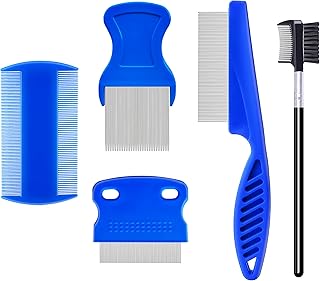
The set pairs short-tooth combs for short-haired dogs and cats with long-tooth versions for longer coats, plus a double-sided option, and the teeth are embedded tightly in the grips to resist rusting and pulling out. That attachment method is the set’s strongest feature. Nothing here works loose during the first season of use.
Four combs at this price means each is lighter than a single premium tool, and the longer teeth flex under pressure on a thick coat. It is a sensible starter kit rather than a lifetime purchase for one carefully chosen comb. New owners benefit most from having options to compare.
Frequently Asked Questions
The questions below focus on the practical side of owning and maintaining a comb, from cleaning method to how often the tool should be replaced during a heavy season. Maintenance decides lifespan far more than the price originally paid, which is why maintenance habits matter here.
How should I clean a flea comb between strokes?
Dip it in a cup of warm water with a little dish detergent, which drowns the fleas and clears the teeth in one action. Avoid tapping the comb on a hard surface, since that is what loosens teeth in handled combs over time. Detergent also kills the fleas rather than releasing them.
How often should a flea comb be replaced?
A well-made stainless comb should last several years with proper drying. Replace immediately once teeth are missing or visibly bent, because a gap in the row lets fleas through and bent teeth scratch the skin on every pass. Run a fingertip along the whole tooth row monthly to check for gaps.
Can the same comb be used on cats and dogs?
Physically yes, but use separate combs per animal during an active infestation to limit transfer of fleas and eggs between pets. Cats have thinner skin, so favour rounded or finer teeth and use noticeably lighter pressure than on a dog. Cats also object far more quickly to a heavy hand.
Is a metal comb better than a plastic one?
For flea work, yes. Stainless teeth hold their spacing under pressure, while plastic teeth flex apart just enough to let fleas slip through. Plastic combs are acceptable for a quick face check but not for a serious full-body flea inspection. Steel is the defining feature of any best dog flea comb worth owning.
See More:
- Best smelling dog shampoo and conditioner
- Best dog mite shampoo
- Hartz Groomer’s Best Soothing Oatmeal Dog Shampoo
- Best professional dog nail grinder
- Best cat brush medium hair
Final Thoughts
Choosing the best dog flea comb is mostly a question of construction: stainless teeth, secure attachment to the handle, and a grip that stays controllable when wet. Buy one well-made comb for a single dog, or a set for multiple animals, and clear it in soapy water rather than tapping it against the sink.









Write Your Review
No reviews yet. Be the first to share your experience!