
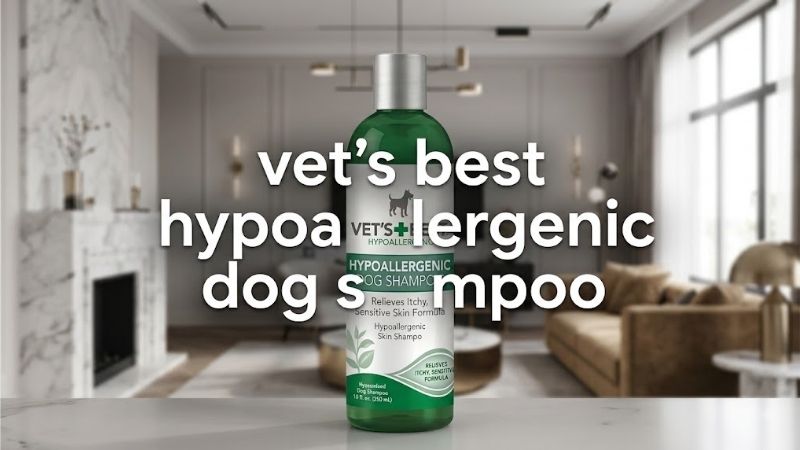
Vet’s Best Hypoallergenic Dog Shampoo takes the opposite approach to the brand’s Allergy Itch Relief formula: fewer active botanicals, no soap, and a much shorter ingredient deck. That simplicity is the point, because on genuinely sensitive skin every additional ingredient is another variable you cannot rule out.
Our top picks

 Veterinary Formula Clinical Care Hypoallergenic Free &
- Scientifically formulated hypoallergenic dog shampoo with gentle coconut-based…
- For pets with known allergies or sensitivity to…
- Free of soap, this tearless shampoo promotes healthy…
 Veterinary Formula Clinical Care Antiseptic & Antifungal
pH-balanced formula is designed to be paraben and soap free
Suitable for use on both dogs and cats over 12 weeks
Twice-weekly use schedule tapers to weekly for maintenance
Requires a 5 to 10 minute soak for full effect
Spot-checking a small area first is recommended


 Veterinary Formula Clinical Care Antiparasitic & Antiseborrheic
pH-balanced formula is designed to support dogs safely
Oatmeal and allantoin ingredients are included for gentle hydration
Coal tar and salicylic acid formula targets flakes and odor
Medicinal scent signals active ingredients but is not fragrance-free
Some initial flaking is expected as a normal part of use

As an Amazon Associate we earn from qualifying purchases at no extra cost to you.
As an Amazon Associate we earn from qualifying purchases.
By Laura Simmons
Sensitive skin that keeps flaring needs a veterinary assessment. A gentle shampoo removes variables; it does not treat an allergy or an infection. Persistent flaring is a diagnosis question rather than a shopping one, and the sooner it is asked the sooner the dog is comfortable.
🛒 Best Price Today on Amazon
Prime members get fast, free shipping on everything above, plus member-only deals. New members get a 30-day free trial — cancel anytime.
Start 30-Day Prime Free Trial →See Today’s Amazon DealsHow to Judge Vet’s Best Hypoallergenic Dog Shampoo Against Alternatives
Vet’s Best Hypoallergenic Dog Shampoo carries a term that is not regulated on pet products, so it describes an intention rather than a standard. What actually matters is what has been left out of the bottle, and four things separate a genuinely gentle formula from one that only carries the word on the label.
Soap-Free Construction and Why It Matters
Vet’s Best describes Vet’s Best Hypoallergenic Dog Shampoo as a gentle, soap-free formula built around plant-based ingredients including aloe vera and vitamin E. Soap-free matters practically as well as chemically: these formulas rinse out faster, and leftover residue is one of the most common causes of post-bath itching.
Soap also strips topical flea and tick treatments far more readily. Vet’s Best states that this shampoo will not affect those products, which is genuinely useful for a dog on a monthly spot-on where a badly timed bath can otherwise waste most of a treatment cycle.
The trade-off is lather. Soap-free formulas foam modestly, and owners routinely interpret that as the product not working and use twice as much as necessary. Use less than instinct suggests and spend the extra time working it down to the skin instead. Lather volume is a poor proxy for cleaning power.
Fragrance Load and Elimination Testing
Fragrance is the ingredient most worth removing when you are trying to work out what a dog reacts to. This formula is lighter on botanicals than the brand’s Allergy Itch Relief version, which contains tea tree, citronella, and lavender oils alongside a herbal fragrance blend.
For a proper elimination approach, simplify everything at once: one gentle shampoo, no conditioner, no sprays, no wipes, for a full month. Reintroduce products one at a time afterwards. Changing three things simultaneously is why most owners never identify the actual trigger. Patience is the whole method here.
Contact Time and Bathing Technique
Vet’s Best Hypoallergenic Dog Shampoo instructs users to lather and massage for three to five minutes so the product penetrates the coat and reaches skin. On a dense coat that interval is a minimum rather than a target, and rushing it is the most common reason a gentle shampoo appears to do nothing.
Rinse until the water runs completely clear, then rinse the belly, armpits, and behind the ears again. Those areas hold residue, and they are exactly where a sensitive dog starts scratching a day or two after the bath, which owners then blame on the formula itself. Residue is far more common than genuine ingredient reactions.
Demand for sensitive-skin products climbs through spring pollen season and again in winter when indoor heating dries skin out. Buying ahead of either peak avoids the seasonal price rise, and grooming discounts are usually deepest around Prime Big Deal Days in early October.
When Gentle Is Not Enough
A hypoallergenic shampoo removes variables and soothes mild irritation. It does not treat an infection, a food allergy, or an established atopic condition, and no bottle on a shelf does. That distinction is the single most useful thing an owner can understand about this category.
Hot spots, hair loss, a yeasty smell, ear problems, or itching that returns within a day of bathing all point past shampoo entirely. Bring a list of what you have already tried to the appointment, because that history genuinely helps a veterinarian narrow the possibilities faster.
Top Picks: Vet’s Best Against Five Gentle Alternatives
The comparison below sets the Vet’s Best bottle alongside five alternatives, from fragrance-free naturals to a vet-directed medicated wash. The table lists what each formula leaves out and who it suits before the individual assessments and their drawbacks. No alternative to vet’s best hypoallergenic dog shampoo suits every sensitive dog equally.
| Product | Key Points | Size | Best For |
|---|---|---|---|
| Vet’s Best Hypo-Allergenic | Soap-free, aloe, vitamin E | 16 oz | Sensitive skin baseline |
| earthbath Hypo-Allergenic | Fragrance free, soap free | 16 oz | Elimination testing |
| Burt’s Bees Oatmeal Shampoo | Oat flour, honey, low scent | 16 fl oz | Budget gentle option |
| Pawtitas Organic Oatmeal | Organic, light fragrance | 16 fl oz | Natural ingredient decks |
| Arm & Hammer Soothing Oatmeal | Oatmeal, baking soda | 20 fl oz | Dryness plus odour |
| Curaseb Medicated Shampoo | Chlorhexidine, ketoconazole | 16 oz | Vet-directed use |
Vet’s Best Hypo-Allergenic Dog Shampoo
Vet’s Best Hypoallergenic Dog Shampoo is the sensible baseline for a dog with sensitive skin and no diagnosis yet. Soap-free, tearless, built on aloe vera and vitamin E, safe to use as often as needed, and compatible with topical flea and tick treatments, it removes several variables without costing much more than a supermarket bottle.
It is a gentle cleanser rather than a treatment, so a dog with an active skin problem will see little change. The formula also carries a light fragrance rather than none, which means it is not the right choice if you are running a strict elimination trial. Light fragrance is still fragrance for testing purposes.
earthbath Hypo-Allergenic Fragrance Free Shampoo
For a genuine elimination approach this is the better tool, because removing fragrance entirely takes out the ingredient most likely to be causing a contact reaction. It is soap-free, plant-derived, and rinses quickly, and the coat feels noticeably soft afterwards despite the minimal formula.
The complete absence of scent disappoints owners who expect a dog to smell fresh after bathing, and it costs more per ounce than the Vet’s Best bottle. It also lathers very modestly, which tempts overuse and empties a 16 oz bottle faster than expected. Use half what instinct suggests and work it in longer.
Burt’s Bees Oatmeal Shampoo for Dogs
Colloidal oat flour and honey in a short ingredient list with almost no fragrance make this the cheapest way to simplify a sensitive dog’s routine. The recognisable ingredient deck also makes it easy to rule things in or out while you work through possible triggers. Short ingredient lists make results interpretable.
Cleaning power is modest, so a genuinely muddy dog needs two lathers and the bottle empties quickly. It is a comfort wash rather than a problem solver, and owners expecting visible improvement in an itchy dog within a week will usually be disappointed. Skin takes weeks rather than days to settle.
Pawtitas Organic Oatmeal Shampoo
The organic vanilla and almond formula suits owners who want a short, recognisable ingredient list without dropping to the very light cleaning of the Burt’s Bees option. It moisturises well, which helps a sensitive dog whose skin dries out under winter heating.
It sits at the top of this group on price per ounce, the natural fragrance fades within a day or two, and availability is less consistent than the mainstream brands. The added fragrance also makes it unsuitable for a strict elimination trial. Save it for after the trial has finished.
Arm & Hammer Soothing Oatmeal Dog Shampoo
Colloidal oatmeal with baking soda odour control in a 20 fl oz pH-balanced bottle covers dryness and smell together, which suits a sensitive dog that also gets genuinely dirty. It is the easiest option here to justify in a household washing more than one dog regularly.
The formula runs thin and often needs a second lather, and the vanilla coconut scent is sweeter than the label suggests. For a dog with reactive skin the fragrance load is higher than ideal, so it is a value pick rather than a sensitivity pick. Value and sensitivity rarely point at the same bottle.
Curaseb Medicated Shampoo
Chlorhexidine and ketoconazole target the bacterial and yeast problems that often develop on skin that has been itchy for a long time. The 16 oz bottle is well sized for a full course, and used with proper contact time it is far more targeted than any gentle wash here. Targeted actives do what gentleness cannot.
It does nothing about an underlying allergy, is drying with repeated use, and carries a clinical scent that lingers on the coat. It belongs in the cupboard only on veterinary advice rather than as the next bottle to try when gentle formulas have not worked. Medicated washes are prescriptions, not upgrades.
Frequently Asked Questions
These questions come up most often from owners partway through working out what their dog reacts to, particularly around what hypoallergenic actually guarantees and how long to give a new product before judging it. The answers assume you are trialling vet’s best hypoallergenic dog shampoo on a healthy adult dog.
Does hypoallergenic mean my dog cannot react to it?
No. The term is not regulated on pet products and describes an intention to minimise common irritants rather than a tested standard. A dog can still react to any ingredient, which is why fragrance-free formulas are the better choice during an elimination trial. Read what has been left out rather than what is claimed.
How long should I use one shampoo before judging it?
At least four weeks, with nothing else changed at the same time. Skin takes time to settle, and switching after two baths tells you nothing. Keep a simple note of what you used and when, since that record is genuinely useful at a veterinary appointment. A phone note is enough to keep the record.
Can I use it on a puppy?
Check the label for a minimum age. Many gentle adult formulas are acceptable on older puppies, but dedicated puppy shampoos are milder and tearless for a reason. For a young puppy, use a product formulated for that age rather than assuming gentle is sufficient. Age approval is printed on the label for a reason.
Should I stop using conditioner?
During an elimination trial, yes. Conditioners, sprays, and wipes are all additional variables, and leaving them out for a month makes the results interpretable. Reintroduce them one at a time afterwards, spacing each by a couple of weeks. One change at a time is the only interpretable method.
See More:
- Best smelling dog shampoo and conditioner
- Best dog mite shampoo
- Hartz Groomer’s Best Soothing Oatmeal Dog Shampoo
- Best professional dog nail grinder
- Best cat brush medium hair
Final Thoughts
Vet’s Best Hypoallergenic Dog Shampoo is a reasonable, widely available baseline for sensitive skin, provided you give it the three to five minutes of contact time the label specifies. For a strict elimination trial a fragrance-free formula is better still, and skin that keeps flaring belongs with a veterinarian.
Write Your Review
No reviews yet. Be the first to share your experience!