
Key takeaways
What's inside
Best small dog nail clipper choices are about control, not cutting force. A toy or small breed nail is often under 3 mm across, sits close to a visible quick, and splits if the blade is dull or oversized. This guide covers the blade styles, safety features and six specific tools worth considering.
As an Amazon Associate we earn from qualifying purchases.




As an Amazon Associate we earn from qualifying purchases.
🛒 Best Price Today on Amazon
Prime members get fast, free shipping on everything above, plus member-only deals. New members get a 30-day free trial — cancel anytime.
How to Choose the Best Small Dog Nail Clipper
Oversized tools are the most common mistake owners make when shopping for the best small dog nail clipper. A wide jaw blocks your view of the nail, the leverage is far more than a thin nail needs, and the extra force makes an accidental cut into the quick more likely. Small-breed tools trade power for visibility and precision.
Blade Style: Scissor, Plier and Guillotine
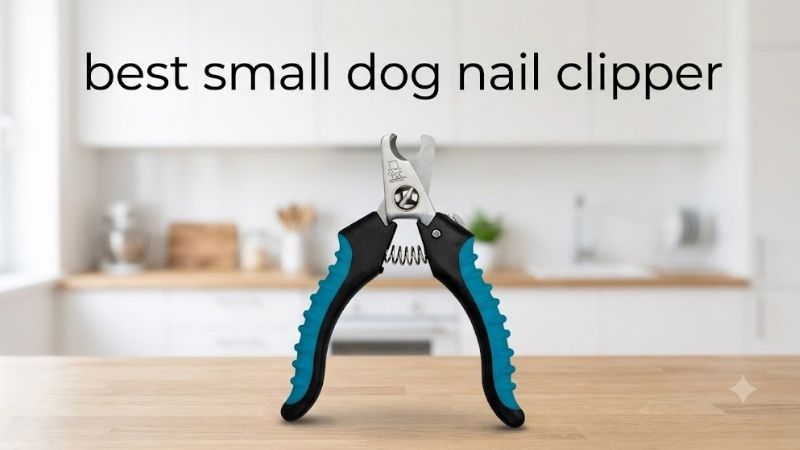
Scissor-style clippers use two curved blades that meet around the nail, giving the clearest view of where you are cutting. They suit small, thin nails and are the easiest style for a nervous owner to aim accurately. Their weakness is leverage, which becomes obvious on thick dewclaws or older dogs.
Plier-style tools add a spring and longer handles for mechanical advantage, while guillotine clippers push the nail through a hole and slice with a sliding blade. Guillotines give a very clean cut on small nails but require you to feed the nail through blind, and the replaceable blade dulls faster than a scissor design. For most households the best small dog nail clipper is a scissor or plier style rather than a guillotine.
Jaw Size and Opening for Nails Under 3 mm
Look for a jaw opening matched to the nail rather than the biggest tool available. On a small breed the cutting aperture should let you see nail on both sides of the blade, which is what lets you stop short of the quick. A jaw sized for a Labrador simply hides a Yorkie nail behind steel, which is why the best small dog nail clipper is defined by aperture rather than by cutting power.
Stainless steel construction matters for edge retention on small blades, which do more cuts per millimetre of edge than large ones. Cheap plated steel dulls within months and starts crushing rather than slicing, which is what causes the split, splintered nails owners often blame on the dog.
Safety Stops, Quick Guards and Grip
A safety stop is a sliding guard that limits how much nail passes into the jaw, and it is genuinely useful for owners still learning where the quick sits. Its limitation is that nail length varies per toe, so the guard should be treated as a beginner aid to reset regularly, not a fixed setting.
Grip quality decides how steady the cut is. Non-slip rubberised handles keep the tool controlled when your hands are damp or the dog pulls, and a locking mechanism keeps the blades closed in a drawer. For arthritic hands, a spring-loaded plier style takes far less effort than scissors.
Grinders as an Alternative to Clipping
Rotary grinders sand the nail down instead of cutting it, which removes the risk of a single bad cut and leaves a smooth edge that will not snag on fabric. For dogs with dark nails where the quick is invisible, grinding a little at a time is the safer approach for an inexperienced owner.
The trade-offs are noise, vibration and time. Many small dogs object strongly to the sound at first and need gradual desensitising, the sanding drum is a consumable, and a full set of four paws takes considerably longer than clipping. Long coat also has to be held clear so it cannot wrap around the spinning drum.
Top Picks: 6 Nail Clippers and Grinders for Small Dogs
The best small dog nail clipper depends on your hands as much as on the dog, so the list below covers all three blade styles plus one grinder, from a professional-grade scissor clipper to a beginner tool with a safety guard. Most small-breed owners are best served by a scissor or plier design with a grinder for finishing.
| Tool | Style | Key Feature | Best For |
|---|---|---|---|
| Millers Forge Nail Clipper | Scissor | Stainless blades | Professional-level precision |
| Safari Professional Small Dog | Scissor | Safety stop | Beginners, toy breeds |
| JW Pet GripSoft Deluxe | Plier | Rubberised grip | Weak or arthritic hands |
| Boshel Nail Clipper | Plier | Guard plus built-in file | All-in-one home kit |
| Resco Original Deluxe | Guillotine | Replaceable blade | Very thin nails |
| Dremel 7300-PT | Rotary grinder | 6,500 / 13,000 RPM | Dark nails, smooth finish |
Millers Forge Pet Nail Clipper
This is the best small dog nail clipper for anyone who wants professional-grade steel, and the tool many groomers and vet techs keep in their own kit. The stainless steel scissor blades hold an edge far longer than plated alternatives, the jaw is sized so you can still see nail either side of the blade on a small breed, and the simple design has almost nothing to fail.
There is no safety guard, which makes it a poor first tool for someone who has never trimmed a nail and cannot yet judge the quick. The handles are also plain plastic without much cushioning, so a full set of four paws on a wriggling dog is less comfortable than a rubberised grip.
Safari Professional Nail Trimmer for Small Dogs
The small-breed version of this trimmer pairs stainless scissor blades with a sliding safety stop, which is the combination most first-time owners should start with. The jaw is genuinely scaled for toy and small breeds rather than being a large tool with a smaller sticker on it.
The safety stop is also its main weakness. It has to be reset as nail length varies between toes, and leaving it at one setting means either under-trimming or a false sense of security. Some users also find the stop obscures the view slightly at the moment of the cut.
JW Pet GripSoft Deluxe Nail Trimmer
The GripSoft is built around its handle. A thick non-slip rubber grip and a spring-loaded plier action mean the tool does most of the work, which matters enormously if you have reduced hand strength or arthritis and are trimming a squirming dog single-handed.
The plier geometry gives more leverage than a small nail actually needs, so a heavy-handed cut can take off more than intended. It is also bulkier than a scissor clipper, which reduces visibility on the smallest nails. Best suited to small dogs at the larger end of the range.
Boshel Dog Nail Clippers
This is the most complete home kit of the group, pairing a plier-style clipper with a safety guard and a nail file stored in the handle. Having the file attached means you actually smooth the cut edge instead of skipping that step, which is what stops freshly cut nails snagging carpet and bedding.
The clipper is designed to cover a wide size range, so the jaw is larger than ideal for the very smallest toy-breed nails. Build quality is a step below professional-grade stainless tools, and the blades soften noticeably faster with frequent use.
Resco Original Deluxe Nail Clipper
The original guillotine design, still made in the United States, and still the cleanest single cut available on genuinely thin nails. The sliding blade shears rather than crushes, and the blade itself is replaceable, so the tool can be refreshed rather than thrown away when the edge finally goes.
Guillotines require feeding the nail through a hole, which means you lose sight of the nail tip at the moment that matters most. They also cut in one orientation only, which is awkward on hind dewclaws, and they are the least suitable style for thick or brittle nails.
Dremel 7300-PT Cordless Pet Nail Grinder
The grinder option, running two speeds at approximately 6,500 and 13,000 RPM with a sanding drum and a guard that limits how much nail is exposed. For dogs with black nails, taking material off gradually and checking the cut face repeatedly is far safer than guessing at a single cut.
Noise and vibration are the honest obstacles, and many small dogs need weeks of gradual introduction before they tolerate it. Sanding bands are consumables, the process takes longer than clipping, and long ear or leg feathering must be held well clear of the rotating drum.
Frequently Asked Questions
Four questions cover almost everything owners ask after buying the best small dog nail clipper for their breed, particularly around finding the quick and dealing with a dog that refuses to cooperate.
How Do I Find the Quick on a Small Dog?
On pale nails the quick is the pink core visible through the nail wall, and you stop about 2 mm short of it. On dark nails, cut thin slices and look at the cut face: pale and chalky means keep going, and a small dark dot appearing in the centre means the quick is directly ahead and you stop.
What Do I Do If I Cut the Quick?
Apply styptic powder with firm pressure for around 30 seconds, and keep the dog calm and still afterwards. Cornstarch works as an improvised substitute if you have no styptic powder. Bleeding that continues beyond a few minutes, or any sign of infection over the following days, warrants a call to your veterinarian.
How Often Should Small Dog Nails Be Trimmed?
Every three to four weeks for most small breeds, more often for indoor dogs that never wear nails down on pavement. Small urban dogs walking on grass and carpet rather than concrete need the most frequent trimming, and this group has grown quickly enough that grooming schedules are shifting to match.
Is Clipping or Grinding Better for a Nervous Dog?
It depends on which sensation the dog objects to. Clipping is over in an instant but delivers a sharp pressure sensation; grinding is gentler per moment but involves sustained noise and vibration. Trial both with treats over several short sessions and let the reaction decide rather than committing to one method.
See More:
- Best way to get rid of dog hair in car
- Best vacuum for hard floors and dog hair
- Best dog clippers for golden doodle
- Best dog clippers for yorkies
Final Thoughts
The best small dog nail clipper for most owners is a stainless scissor-style tool sized properly for a toy-breed nail, with a safety stop while you are learning and a grinder alongside it for smoothing edges and handling dark nails. Sharp blades and short, frequent trims matter far more than which brand sits in the drawer, and both reduce the odds of ever hitting the quick.


Write Your Review
No reviews yet. Be the first to share your experience!