
Key takeaways
- For most at-home targeted recovery, the best cold therapy machine is the Aircast Cryo Cuff IC for simple, quiet compression-free cooling; choose the DonJoy IceMan CLEAR3 for a compact powered cooler, and the Game Ready GRPro 2.1 when adjustable pressure…
For most at-home targeted recovery, the best cold therapy machine is the Aircast Cryo Cuff IC for simple, quiet compression-free cooling; choose the DonJoy IceMan CLEAR3 for a compact powered cooler, and the Game Ready GRPro 2.1 when adjustable pressure and clinical-level control matter. For a dog or cat, use any of these only with veterinary direction, because pad pressure, skin sensitivity, fur, and circulation can change the safe setup.
Best cold therapy machines at a glance
| Machine | Cooling method | Temperature or cooling control | Water and ice | Pad fit | Noise and portability | Best suited to |
|---|---|---|---|---|---|---|
| Aircast Cryo Cuff IC | Gravity-fed cuff with optional motorized cooler | Ice-water cooling; no precise digital temperature setting | Cooler is filled with ice and water; no continuous drain required | Interchangeable cuffs for joints and limbs; select size carefully | Quiet when used by gravity; pump adds low mechanical noise; portable cooler | Owners who want uncomplicated, low-maintenance targeted cooling |
| DonJoy IceMan CLEAR3 | Powered recirculating ice-water cooler | Cold-water circulation; typically runs for several hours per fill | Ice and water required; commonly uses a small cooler reservoir | Uses compatible wrap-style pads in multiple body-area designs | Compact, light enough for room-to-room use; pump hum is noticeable in a quiet room | Frequent home use where a simple powered system is preferred |
| Breg Polar Care Wave | Powered cold-water circulation | Cold-water therapy rather than user-selected electronic temperature control | Ice and water required; replace as the mixture warms | Multiple wraps, including smaller options; fit varies by pad | Portable cooler format; low pump noise, but not silent | Users prioritizing broad pad availability and straightforward operation |
| Game Ready GRPro 2.1 | Active cold therapy plus intermittent pneumatic compression | Manufacturer settings include approximately 34–60°F (1–16°C), with adjustable pressure and treatment cycles | Uses a dedicated water-and-ice reservoir; substantially more water and ice than basic coolers | Specialized wraps provide a close fit across limbs and joints; sizing is critical | Heavier and less convenient to carry; pump and compressor are more audible | Frequent, supervised use when adjustable compression is specifically needed |
Specifications can vary by generation, pad, region, and rental or clinic package. Check the current manual before purchase, particularly for reservoir volume, approved wraps, pressure settings, and electrical requirements.
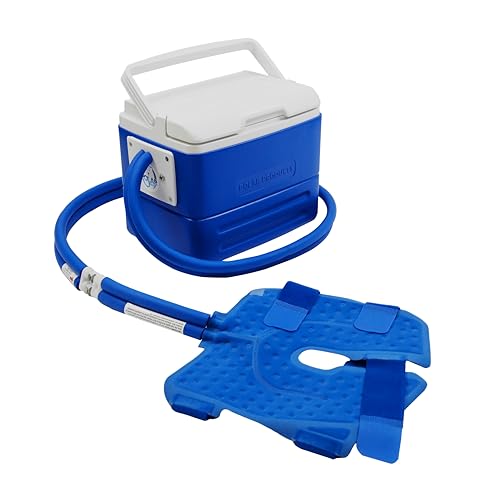
Polar Active Ice 3.0 | 9 QT Cold Therapy Ice Machine | Programmable Timer | Knee & Joint Pad | Cryotherapy Pain Relief System | Ace Bandage Style Compression
Included for 'Best Cold Therapy Machines for Targeted Recovery' because the listing specifies 9 QT Cold Therapy Ice Machine and Programmable Timer, details this guide uses to compare options.
View on Amazon
NEHOO Cold Therapy Ice Machine with Extra Large Knee/Hip Pad, Pain Relief for Post-Surgery Recovery, Programmable Continuous Ice Circulation for Faster Swelling Reduction
Included for 'Best Cold Therapy Machines for Targeted Recovery' because the listing specifies Pain Relief for Post-Surgery Recovery, details this guide uses to compare options.
View on Amazon
NEHOO Cold Therapy Ice Machine with Universal/Knee Pad, Pain Relief for Post-Surgery Recovery, FSA Eligible HSA, Programmable Compression Continuous Ice Circulation for Faster Swelling Reduction
Included for 'Best Cold Therapy Machines for Targeted Recovery' because the listing specifies Pain Relief for Post-Surgery Recovery and FSA Eligible HSA, details this guide uses to compare options.
View on Amazon
ONLYCARE Ice Machine for Knee After Surgery, Portable Cold Therapy Machine
Included for 'Best Cold Therapy Machines for Targeted Recovery' because the listing specifies Portable Cold Therapy Machine, details this guide uses to compare options.
View on AmazonHow the leading choices differ
Aircast Cryo Cuff IC: easiest for occasional targeted use
The Cryo Cuff uses a cooler and cuff system rather than a precision refrigeration unit. Ice and water cool the cuff, while gravity or the optional motorized cooler moves fluid through it. That makes it relatively quiet and easy to transport.
Its main limitation is control. You are managing an ice-water mixture, not selecting an exact temperature on a screen. The cuff also needs to be positioned correctly so it does not become too tight or press on a sensitive area. For a pet, a cuff designed for a human limb may not distribute pressure safely around a furry leg or irregular joint. A veterinarian should approve both the cuff and the fit.
DonJoy IceMan CLEAR3: a practical powered cooler
The IceMan CLEAR3 is a good middle ground for repeated home sessions. The pump circulates chilled water through a wrap, so the pad can remain more consistently cool than a loose ice pack. It is less complicated than a compression system and normally easier to store than a clinical-grade unit.
Expect to refill it with ice and water, wipe the reservoir after use, and tolerate a steady pump hum. The transparent or partially visible reservoir design on this class of machine is useful because cloudy water, residue, or trapped debris is easier to notice before the next session.
Breg Polar Care Wave: choose it for wrap options
The Polar Care Wave follows the same basic ownership pattern: a powered cooler, an ice-water mixture, and a circulation pad. Its advantage is the availability of different wraps, which matters more than a small difference in cooler dimensions when the target area is awkward.
Before buying, confirm that the exact wrap is included. Some packages contain only a cooler and one pad, while others are sold with a body-area-specific wrap. Replacement pads are consumables, and a cheaper machine can become expensive if the correct pad is difficult to source.
Game Ready GRPro 2.1: most adjustable, least simple
Game Ready stands apart by combining cold-water circulation with intermittent pneumatic compression and adjustable treatment settings. Its broad temperature range and multiple pressure or cycle options can be valuable when a clinician has specified them.
That flexibility brings trade-offs: higher purchase or rental cost, more components to clean, a larger footprint, more noise, and more opportunities to select an unsuitable setting. It is rarely the sensible first choice for occasional grooming-related recovery or an unsupervised pet setup.
Decision matrix: which type fits your situation?
| Your situation | Most sensible choice | Why | What to give up |
|---|---|---|---|
| Budget-conscious and using it a few times per month | Gravity-fed cuff or basic ice-water circulator | Lower equipment complexity and modest consumable needs | No precise temperature readout; ice preparation is still required |
| Daily or near-daily use for several weeks | DonJoy IceMan CLEAR3 or Breg Polar Care Wave | Powered circulation saves repeated manual re-wetting of a cold pack | Pump noise, reservoir cleaning, and replacement-pad cost |
| Need compression settings prescribed by a professional | Game Ready GRPro 2.1 | More control over pressure and treatment cycles | Price, weight, noise, and a steeper learning curve |
| Very little storage space | Compact powered cooler with one dedicated wrap | Smaller footprint and fewer loose accessories | Less flexibility if the target area changes |
| Use around a nervous pet | Quiet gravity-fed system, if approved by a veterinarian | Fewer pump sounds and less vibration | Cooling may be less uniform and positioning requires closer supervision |
Temperature range is not the only safety specification
A machine with a lower advertised temperature is not automatically better. Direct cold, a wet pad, tight straps, or prolonged contact can irritate skin. Fur can hide dampness and early redness, while a restless animal may chew tubing or pull a wrap into an unsafe position.
Look for a pad that covers the target area without crossing the neck, chest, or a major joint in an unintended way. The pad should be snug enough to maintain contact but never tight enough to leave deep marks, impair movement, or cause swelling beyond the treated area. Stop if the skin becomes pale, unusually red, hard, painful, or numb, or if the pet becomes distressed. Ask a veterinarian about timing and whether cold therapy is appropriate at all.
Worked ownership calculation: ice and water are part of the cost
Suppose a powered cooler uses approximately 2 quarts of water and 3 pounds of ice per session, and it is used five times weekly for four weeks. That is 20 sessions, or about 10 gallons of water and 60 pounds of ice. If bagged ice costs roughly $3–$5 per 10-pound bag, the ice alone costs about $18–$30 for the month, before electricity, cleaning supplies, and replacement wraps.
This is why a machine that seems inexpensive can cost more to own than expected. If you already make ice at home, your cash cost is lower, but freezer space and preparation time still count. A larger reservoir may reduce refills but increases the amount of water that must be emptied and dried.
Setup and cleaning routine
- Inspect the tubing and pad. Look for pinholes, kinks, split seams, or a loose connector. A small leak can wet fur and bedding.
- Fill to the manual’s level. Use the specified ratio of water and ice. Overfilling can restrict circulation or spill into the pump area.
- Test circulation before fitting the pad. This confirms that water is moving and reduces the time a cold pad sits in one place while you troubleshoot.
- Place a thin protective layer if instructed. Do not add thick fabric that prevents contact or traps moisture. For pets, ask the veterinarian what barrier is appropriate.
- Stay present during use. Watch the skin, the animal’s behavior, the tubing, and the pad position. Never rely on the machine’s timer as a substitute for supervision.
- Drain immediately after the session. Standing water develops odor and residue faster than a reservoir that is emptied promptly.
- Clean and dry every wet component. Follow the manufacturer’s approved cleaning method; leave the reservoir, tubing, and pad open or loosely arranged until fully dry.
What wears out first?
Soft wraps usually show wear before the cooler does. Repeated bending can weaken seams, hook-and-loop closures lose grip, and tubing connectors can become brittle or leak. Pumps may become louder when filters or passages collect debris, while mineral-heavy water can leave deposits inside the circulation path.
Do not use household disinfectants, essential oils, bleach mixtures, or lubricants unless the manual specifically permits them. Residue can damage materials or contact skin during the next session. Keep the cooler dry during storage, protect the tubing from chewing, and record the purchase date so you can distinguish normal pad aging from a pump problem.
Bottom line
Choose the Aircast Cryo Cuff IC for occasional, low-noise, targeted cooling; the DonJoy IceMan CLEAR3 or Breg Polar Care Wave for regular powered ice-water circulation; and the Game Ready GRPro 2.1 only when its adjustable compression and treatment control justify the extra cost and complexity. For a dog or cat, prioritize professional fit and supervision over the coldest setting, longest cooling duration, or most powerful pump.







Write Your Review
No reviews yet. Be the first to share your experience!