
Key takeaways
- Maximum rider weight: Treat the published limit as a ceiling, not a target. Leave a margin for clothing, a backpack, and the extra stress of inclines or uneven ground. Exceeding the limit can reduce performance and put unnecessary strain on the board.
- Wheel size and ground clearance: Larger pneumatic tires generally smooth out cracks and rough pavement better than small solid tires, but they add bulk and may need air-pressure checks. Ask for ground clearance in inches or millimeters; if it is not published, don’t assume the board can handle deep cracks, gravel, or curbs.
- Range and charging: Advertised range is usually a best-case estimate. Rider weight, speed, temperature, hills, tire pressure, and battery age all affect distance. Choose a range with a buffer—rather than planning a ride right up to the claimed maximum—and check the stated charging time.
- Stability and controls: A wide, predictable foot platform and responsive balancing help, but no hoverboard removes the learning curve. A knee-control bar, such as the one on the Ninebot S and S2, provides another point of contact and a different riding posture; it also makes the device larger to store.
- Water resistance: A splash-resistance rating is not permission to ride through puddles, wash the board with a hose, or store it wet. Check the exact model’s rating and manufacturer instructions. Avoid wet surfaces, where tires can lose grip.
- Certification: Look for UL 2272 certification for the complete electrical system of a self-balancing scooter, and confirm the exact model against a recognized certification directory. A seller’s use of “UL compliant” is not the same as independently verified certification.
Best Adult Hoverboards for Safe, Comfortable Riding
The best adult hoverboards are models with a rider-weight rating comfortably above your actual weight, 8.5-inch or larger tires for ordinary outdoor paths, a clearly stated range, and independently verifiable electrical-safety certification. For smoother rides, prioritize wheel size and ground clearance; for dependable buying, verify the exact model’s certification and battery specifications rather than relying on broad safety claims.
Among established options, the Segway Ninebot S2 is a sensible choice for riders who want a higher-capacity, self-balancing personal transporter with an adjustable knee-control bar. The Segway Ninebot S suits riders who prefer a smaller, more portable format. If you want a conventional two-foot hoverboard, compare current models from Gyroor and Hover-1 by their exact wheel, weight-limit, range, and certification specifications; those details can vary substantially across models and versions.

Gyroor G13 All-Terrain Hoverboard with Bluetooth & LED Lights Gift,Black
Included for 'Best Adult Hoverboards for Safe, Comfortable Riding' because the listing specifies Black, details this guide uses to compare options.
View on Amazon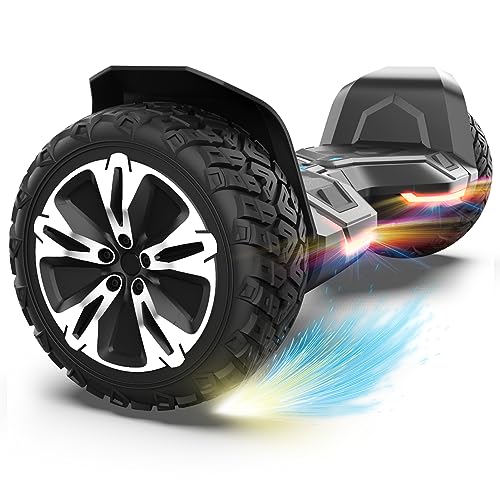
Gyroor Warrior G2 8.5"Off Road SelfBalancing Scooter for Kids Adults, Black
Included for 'Best Adult Hoverboards for Safe, Comfortable Riding' because the listing specifies Black, details this guide uses to compare options.
View on Amazon
Segway Ninebot S2 Electric Self-Balancing Scooter, UL Certified
Included for 'Best Adult Hoverboards for Safe, Comfortable Riding' because the listing specifies UL Certified, details this guide uses to compare options.
View on AmazonWhat matters most for adult riders
- Maximum rider weight: Treat the published limit as a ceiling, not a target. Leave a margin for clothing, a backpack, and the extra stress of inclines or uneven ground. Exceeding the limit can reduce performance and put unnecessary strain on the board.
- Wheel size and ground clearance: Larger pneumatic tires generally smooth out cracks and rough pavement better than small solid tires, but they add bulk and may need air-pressure checks. Ask for ground clearance in inches or millimeters; if it is not published, don’t assume the board can handle deep cracks, gravel, or curbs.
- Range and charging: Advertised range is usually a best-case estimate. Rider weight, speed, temperature, hills, tire pressure, and battery age all affect distance. Choose a range with a buffer—rather than planning a ride right up to the claimed maximum—and check the stated charging time.
- Stability and controls: A wide, predictable foot platform and responsive balancing help, but no hoverboard removes the learning curve. A knee-control bar, such as the one on the Ninebot S and S2, provides another point of contact and a different riding posture; it also makes the device larger to store.
- Water resistance: A splash-resistance rating is not permission to ride through puddles, wash the board with a hose, or store it wet. Check the exact model’s rating and manufacturer instructions. Avoid wet surfaces, where tires can lose grip.
- Certification: Look for UL 2272 certification for the complete electrical system of a self-balancing scooter, and confirm the exact model against a recognized certification directory. A seller’s use of “UL compliant” is not the same as independently verified certification.
Adult hoverboard comparison
Specifications can change between model years and regional versions. The table separates figures commonly published by manufacturers from details you should confirm on the specific unit before buying. Where a value is not reliably consistent across versions, it is marked “verify” rather than guessed.
| Model or type | Rider limit | Wheel size | Claimed range | Charge time | Adult-use trade-off |
|---|---|---|---|---|---|
| Segway Ninebot S2 | Up to 220 lb (100 kg) | 10.5-inch pneumatic tires | Up to 21.7 mi (35 km) | About 4 hours | Large tires and knee-control bar favor a more supported ride, but the unit is bulkier than a foot-only board. Verify certification and regional specifications. |
| Segway Ninebot S | Up to 220 lb (100 kg) | 10.5-inch pneumatic tires | Up to 13.7 mi (22 km) | About 3.5 hours | A compact self-balancing option with a knee-control bar; the shorter stated range makes it better suited to modest outings than long trips. |
| Conventional 8.5-inch hoverboard | Often 220–265 lb (100–120 kg); verify | 8.5 inches, often solid tires | Commonly advertised around 7–12 mi (11–19 km) | Often 2–5 hours; verify | Usually easier to carry and store than a knee-bar model. Comfort, clearance, and realistic range depend heavily on the exact board. |
| Off-road-style hoverboard | Often 220–265 lb (100–120 kg); verify | Typically 8.5–10 inches | Commonly advertised around 7–12 mi (11–19 km) | Often 2–5 hours; verify | Chunkier tires can help on firm, uneven paths, but “off-road” does not mean suitable for mud, sand, steep slopes, or technical trails. |
Segway’s Ninebot S and S2 are self-balancing personal transporters with a knee-control bar, not conventional hoverboards with two independent footpads. They are included because adults comparing stability and comfort may prefer their control layout. For any model, confirm the precise version’s manual, dimensions, weight limit, warranty, battery details, water-resistance rating, and UL 2272 status before purchase.
Choose by the ride you actually plan to take
| Your situation | What to prioritize | Best-fit direction |
|---|---|---|
| First-time rider on smooth, private paths | Beginner or training mode, predictable controls, clear instructions, verified certification | A reputable, certified model with a conservative speed setting; practice in an open, flat area. |
| Rough sidewalks or cracked pavement | Larger tires, published clearance, replaceable tires or tubes, sturdy fenders | A pneumatic-tire model such as the Ninebot S2, if its size and control style suit you. |
| Frequent carrying or limited storage | Low overall weight, compact dimensions, accessible carry handle | A conventional foot-only board may be easier to transport; compare actual product weight before choosing. |
| Longer recreational outings | Extra claimed range, practical charging time, battery warranty and service support | Choose a model with substantial range headroom; don’t plan around the maximum advertised distance. |
| Near the board’s weight limit | Generous capacity margin, stable platform, manufacturer guidance for inclines | Select a higher-capacity model and confirm its limit on the exact version. Avoid steep hills and overloading. |
Make the range claim useful
Suppose a board advertises 12 miles of range, and your planned round trip is 6 miles. That appears to leave 6 miles in reserve, but the claim may assume favorable conditions. A practical planning rule is to use no more than about 60–70% of the advertised range for a routine ride until you know how the board performs with your weight, terrain, and pace. At 60%, a 12-mile claim becomes roughly 7.2 usable planning miles—only a modest buffer for a 6-mile trip. If the route includes hills or rough surfaces, choose more headroom.
Ownership details that affect comfort and lifespan
Tires and battery are the components most likely to shape day-to-day ownership. Pneumatic tires can improve comfort, but punctures and pressure loss require attention; solid tires avoid flats but transmit more vibration. Keep tires at the pressure specified by the manufacturer, and inspect them for cuts or uneven wear. Don’t inflate them to a generic pressure borrowed from another model.
Battery capacity declines with age and repeated charging. Use the supplied charger, charge on a dry, stable surface, and follow the manual’s temperature and storage guidance. Don’t leave a charging board unattended or charge one that has been soaked, damaged, or unusually hot. If it has been exposed to water or shows battery damage, stop using it and contact the manufacturer.
Dust and grit can collect around the wheels and footpads. Wipe the board with a soft, slightly damp cloth only if the manual permits; never immerse it or spray water into the wheel wells or charging port. Avoid carrying it by the fenders, which can crack under twisting force, and don’t ride off curbs: impacts can damage wheels, housings, and battery connections even when the board still powers on.
Safety checks before the first ride
- Verify the exact model’s UL 2272 certification and read the manual’s rider-weight and operating limits.
- Inspect tires, footpads, casing, and charger; don’t ride a board with cracks, loose parts, or battery warning signs.
- Wear a properly fitted helmet and appropriate protective gear. Start on a flat, dry, open surface away from traffic and pedestrians.
- Practice mounting, dismounting, stopping, and turning at low speed. Don’t ride on roads or in places where local rules prohibit these devices.
Bottom line: For an adult prioritizing larger tires and a supported control position, the Segway Ninebot S2 is a compelling option if its maximum load, range, dimensions, and verified certification fit the rider and route. For a compact conventional hoverboard, shop by exact specifications—not the “adult” or “off-road” label—and favor a certified model with comfortable capacity headroom and a realistic range buffer.

Write Your Review
No reviews yet. Be the first to share your experience!