
Key takeaways
What's inside
Best dog nail clipper for black nails matters less than the technique behind it, because no clipper lets you see the quick through a dark nail. This buying guide covers how to read a black nail as you cut, which clipper styles suit the job, and five tools worth considering.
As an Amazon Associate we earn from qualifying purchases.


As an Amazon Associate we earn from qualifying purchases.
🛒 Best Price Today on Amazon
Prime members get fast, free shipping on everything above, plus member-only deals. New members get a 30-day free trial — cancel anytime.
How to Choose the Best Dog Nail Clipper for Black Nails
On a pale nail the quick is visible as a pink line and the decision is easy. On a black nail nothing shows through, so the entire method changes: you take very small slices and read the cut surface after each one, which means the clipper needs to cut cleanly and predictably.
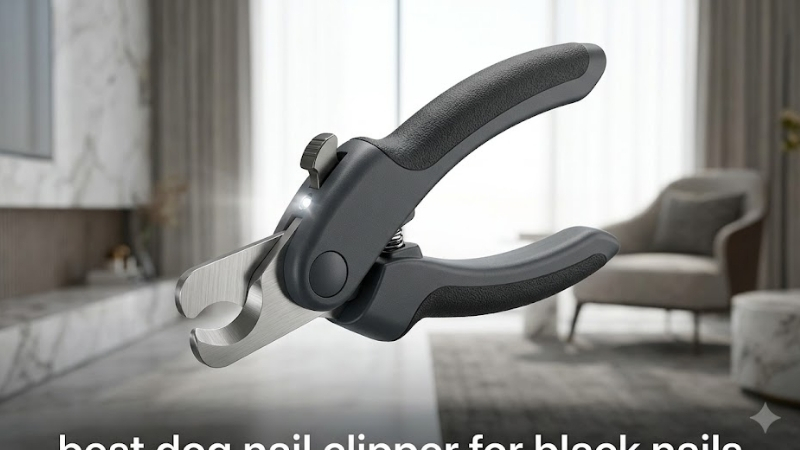
Reading a Black Nail as You Cut
Start at the tip and remove a thin slice, then look straight at the cut end rather than at the side of the nail. The first thing you see is a dry, chalky white surface, which means there is still plenty of nail ahead of the quick, so you can safely take another slice off it.
As you get closer, a small grey or black dot appears in the centre of that white surface, often surrounded by a paler ring. That dot is the leading edge of the quick showing through, and it is the reliable signal to stop work on that nail and move on to the next toe.
A pink tinge anywhere in the centre means you are at the quick already and should stop immediately. Working in good light with the paw held steady makes all of this considerably easier, and a head torch is a genuinely useful and inexpensive addition to any grooming kit.
Scissor Style Versus Guillotine
Two mechanisms dominate the shelf, and the best dog nail clipper for black nails is almost always the scissor style, for reasons that come down entirely to how thin a slice each design allows you to take before you commit to making the cut itself.
Scissor or plier-style clippers cut from both sides and give the most control over slice thickness, which is exactly what black nails need. They also handle thick nails on large breeds without flexing, and most professional groomers use this style for precisely those reasons.
Guillotine clippers push the nail through a hole and a single blade slices upward. They are quick on small and medium nails and many owners find them intuitive, but the blade dulls sooner, thick nails resist the mechanism, and the fixed hole limits how thin a slice you can take.
Blade Quality, Size and Safety Guards
Sharp stainless blades cut cleanly rather than crushing, and crushing is what causes the splitting and the discomfort that turns a dog against nail trims. Check whether replacement blades are available, since a guillotine with no replacements becomes disposable within a couple of years.
Size the clipper to the dog rather than buying the largest available. Safety guards limit how much nail passes through the blade and are genuinely useful for a nervous beginner, though experienced hands often remove them because they obstruct the view of the cut surface.
Grinding as an Alternative or a Finisher
Plenty of owners end up combining methods, and the best dog nail clipper for black nails often works alongside a grinder rather than instead of one, with each tool handling the part of the job that it happens to do better than the other one manages to.
A grinder removes material gradually, which suits black nails well because there is no single committed cut. Many owners clip the tip and then grind the last stretch, reading the surface as they go, which combines the speed of a clipper with the caution a dark nail deserves.
Grinders also round the edge that a clipper leaves sharp, which is kinder on floors and legs. Keep styptic powder within reach whichever method you use, take a little every three to four weeks rather than a lot occasionally, and the quick gradually recedes over the months.
Top Picks: Four Clippers and One Grinder
The best dog nail clipper for black nails is a sharp scissor-style tool sized correctly for the dog, plus a light source and patience. These five cover the realistic options including one grinder, and each entry names a genuine limitation alongside the situation it suits best.
| Tool | Style | Suits | Limitation |
|---|---|---|---|
| Millers Forge Nail Clipper | Scissor style | Medium to large breeds | No safety guard |
| Safari Professional Trimmer | Scissor style | All sizes, thick nails | Guard obscures the cut |
| Pecute Clippers with LED | Scissor style | Pale nails mainly | Light does little on black |
| Resco Original Deluxe | Guillotine | Small and medium nails | Struggles on thick nails |
| Dremel 7300-PT | Grinder | Finishing black nails | Noisy, needs introduction |
Millers Forge Nail Clipper
Ask a groomer for the best dog nail clipper for black nails and this is the answer you will hear most often, which says a great deal about a tool whose design has changed very little across several decades of steady professional use.
This is the clipper that turns up in more grooming kits than any other, and the reason is simple reliability. The scissor action gives real control over slice thickness, the blades stay sharp through a great deal of use, and the handles give enough leverage for thick nails.
There is no safety guard, which experienced users prefer because nothing obstructs the view of the cut surface. For a nervous beginner working on black nails that absence is a genuine drawback, so pair it with good light and a commitment to taking very small slices at first.
Safari Professional Stainless Steel Trimmer
Safari’s professional trimmer suits owners who want a guard while learning. The stainless blades cut cleanly, the sizing options cover small through to large breeds, and the build tolerates the force needed for a labrador’s nails without the handles flexing under pressure.
The guard is the double-edged feature. It prevents taking too much in one cut, which is exactly what a beginner needs, but it also blocks the view of the nail end that black-nail technique depends on, so many owners remove it once their confidence has properly built up.
Pecute Dog Nail Clippers with LED
Clippers with a built-in light have become popular, and on pale or translucent nails the illumination genuinely helps you see the quick. The clipper itself is a competent scissor-style tool, and the light is a useful addition for dogs with a mix of pale and dark nails on one paw.
On genuinely black nails the light penetrates very little, whatever the listing suggests, so anyone buying it specifically for dark nails will be disappointed. Judge it as a clipper first and treat the LED as a small convenience for whichever pale nails are on the same paw.
Resco Original Deluxe
The guillotine design has been around for decades and remains popular for small and medium dogs. The mechanism is quick, the replaceable blade means the tool lasts, and many owners find the action more intuitive than a scissor style when they are working on a wriggling dog.
Thick nails on large breeds resist the mechanism, and the fixed hole limits how thin a slice you can take, which matters on black nails where thin slices are the whole method. The blade also dulls sooner than a good scissor style and needs replacing periodically to cut cleanly.
Dremel 7300-PT Nail Grinder
For black nails specifically, grinding removes the moment of commitment that makes clipping stressful. Taking material off gradually lets you check the cut surface constantly, and the rounded finish is kinder on wooden floors, furniture and legs than a clipped edge ever is.
It is noisier than a clipper and it vibrates, so it needs introducing gradually over a couple of weeks rather than appearing at a nail session unannounced. Grind in short bursts of two or three seconds per nail, since friction generates heat quickly on a nail held against the wheel.
Frequently Asked Questions
Four questions come up constantly from owners of dogs with dark nails, and the first one explains why this is harder than it looks. The best dog nail clipper for black nails is only ever half of the answer, and the technique described in these replies is the other half of it.
How do I know where the quick is on a black nail?
You read the cut surface rather than looking through the nail. Chalky white means keep going, and a small grey or black dot appearing in the centre means stop. Take thin slices, check after every one, and work in good light with the paw held steady against a solid surface.
What should I do if I cut the quick?
Apply styptic powder or cornflour with firm pressure for a minute or two and stop the session there rather than continuing. Keep an eye on the toe for the rest of the day, and contact your veterinary practice if the bleeding does not stop or the toe becomes swollen.
Is grinding safer than clipping for black nails?
It is more forgiving, since material comes off gradually and you can check constantly rather than committing to a cut. It is slower and noisier, so many owners clip the tip with a scissor-style clipper and finish with a grinder, which combines the advantages of both methods.
How often should black nails be trimmed?
Every three to four weeks, taking a little each time. Frequent small trims encourage the quick to recede, which lets the nail be kept shorter over the following months, whereas one long session every few months keeps the quick long and makes every trim riskier than it needs to be.
See More:
- Dog grooming shears best
- Best dog clippers for poodles
- Best dog clippers for doodles
- Best dog brush for poodle
- Best dog brush for great pyrenees
Final Thoughts
The best dog nail clipper for black nails is a sharp scissor-style tool sized for your dog, used with good light and very thin slices while you watch the cut surface for the grey dot. Add a grinder for the final stretch, keep styptic powder nearby, and trim little and often.


Write Your Review
No reviews yet. Be the first to share your experience!