
Key takeaways
- Choosing a closer blade automatically: Shorter is not always better. A #30 or #40 can expose delicate skin and leaves little room for uneven hand movement.
- Confusing blade width with blade number: A narrow head helps with control, while the blade number determines approximate hair length. You need to consider both.
- Using a guard between the pads: Guards can catch on tight spaces and may not reach the hair evenly. Use a purpose-built paw trimmer instead.
- Clipping a dirty or wet paw: Dirt can dull the blade, and wet hair may clog the cutter. Clean and dry the paw first.
- Ignoring blade heat: Clippers can become hot during use. Check the blade against your inner wrist regularly, and pause if it feels hot.
- Trimming too much: The goal is to clear excess hair, not shave the entire paw. Leave the pads untouched and avoid digging into the grooves between them.
What's inside
The Short Answer
For trimming the hair between a dog’s paw pads, start with a #10 clipper blade, which leaves approximately 1/16 inch (1.5 mm) of hair. It is the most practical all-purpose size for paw pads because it removes excess hair without cutting extremely close to the skin. A #15 blade, leaving about 3/64 inch (1.2 mm), gives a slightly closer finish and can work well for experienced groomers.
Use a #30 blade, which leaves approximately 1/50 inch (0.5 mm), only when you need a very close professional-style trim and have good control of the clipper. A #40 blade is even closer and is generally better reserved for trained professionals. For most at-home grooming, a small paw trimmer with a narrow head, rounded edges, and a fixed cutting length of roughly 1 to 2 mm is the safer choice.
As an Amazon Associate we earn from qualifying purchases at no extra cost to you. Product prices and availability are accurate as of the date shown and are subject to change.

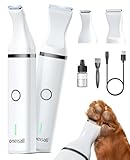


The ideal size also depends on your dog’s coat, paw shape, tolerance for noise, and how much hair is growing over the pads. Trim only the hair that extends beyond or between the pads. Never press a moving blade into the pad itself.
Standard Sizes
Clipper blade numbers refer mainly to the approximate length of hair left behind, not the physical size of the blade. The table below covers the sizes most relevant to paw grooming.
| Blade size | Approximate hair left | Approximate hair left in inches | Best use for dog paws |
|---|---|---|---|
| #10 | 1.5 mm | 0.059 in, about 1/16 in | Best general-purpose paw and pad trim |
| #15 | 1.2 mm | 0.047 in, about 3/64 in | Closer trim for experienced users |
| #30 | 0.5 mm | 0.020 in, about 1/50 in | Very close finish; use with extra caution |
| #40 | 0.25 mm | 0.010 in, about 1/100 in | Professional or specialty work, not a beginner size |
Many consumer paw trimmers do not use interchangeable A5-style blades. Instead, they have a compact fixed head or a narrow ceramic blade with a stated cutting length. Look for a cutting range of approximately 1 mm to 2 mm, or about 0.04 inch to 0.08 inch. A wider grooming clipper can be difficult to maneuver around small toes, while a narrow head measuring roughly 0.6 to 1 inch (1.5 to 2.5 cm) across is easier to control.
Guard combs add length above the blade. A 3 mm guard leaves approximately 1/8 inch of hair, and a 6 mm guard leaves approximately 1/4 inch. Guards are useful around the top of the paw, but they may not pass smoothly between the pads. For that area, a bare #10 blade or a purpose-built paw trimmer is usually more practical.
For a basic home setup, expect approximately $10 to $25 for a small rechargeable paw trimmer. Examples include the oneisall Low-Noise Dog Paw Trimmer with LED Light at about $13.99, the oneisall Dog Paw Trimmer with Double Blades at about $19.99, and the Mcbazel Pet Micro Precision Trimmer at about $9.80. Replacement ceramic blade sets, such as a six-pack from Grimgrow priced around $28.99, can make sense when a compatible trimmer is used frequently. Prices can change by seller and package contents.
How to Measure Your Space
- Measure the paw width. With your dog standing calmly, measure across the widest part of the paw from the outside of one toe to the outside of the opposite toe. Small dogs may have paws less than 1.5 inches (3.8 cm) wide, while medium and large dogs commonly measure 2 to 4 inches (5.1 to 10.2 cm). This measurement helps you choose a trimmer head, not a blade number.
- Measure the hair overgrowth. Look at the paw from below. Note how far the hair extends past the paw pads or forms a fringe around the toes. If it extends only 1/8 inch (3 mm), a narrow trimmer will be enough. Longer, matted growth may need to be gently loosened with a comb before clipping.
- Identify the pad gaps. Check the spaces between the large central pad and the smaller toe pads. These gaps can be narrow, especially on small breeds. A blade head about 1/2 to 3/4 inch (1.3 to 1.9 cm) wide may be easier to guide than a full-size clipper blade.
- Check the skin condition. Look for redness, cracks, swelling, thorns, cuts, or signs of infection. Do not groom over an injured or inflamed area. Contact a veterinarian if your dog is limping, licking one paw constantly, or has a painful-looking pad.
- Match the blade to your experience. Choose #10 or a 1.5 to 2 mm fixed trimmer for a first attempt. Move to #15 only if you can keep the blade flat and your dog remains still. Avoid #30 and #40 blades unless you have professional instruction.
By Room or Use Case
Everyday home maintenance
A #10 blade or a fixed 1.5 to 2 mm paw trimmer is the best choice for routine maintenance. It removes slippery hair that can reduce traction on hardwood, tile, and vinyl floors while leaving a small amount of protection over the skin. Trim every few weeks or when hair begins to cover the pad surface.
Small dogs and cats
Choose a compact trimmer with a head no wider than about 1 inch (2.5 cm), preferably closer to 1/2 inch (1.3 cm) for very small paws. A narrow head can reach the spaces between toes without forcing the paw into an awkward position. LED lighting may improve visibility, but it does not replace bright room lighting or careful handling.
Large dogs and thick coats
Large paws may be easier to handle with a standard clipper and a #10 blade, provided the blade can be controlled around the toes. Thick, curly, or fast-growing hair may require several short passes. Do not use a dull blade to force through dense hair; it can pull the coat and make the dog resist future grooming.
Dogs with sensitive feet
Use the shortest grooming session possible and begin with a cool, quiet rechargeable trimmer. A #10 blade is usually preferable to a closer #30 because it leaves a little more protection. Keep the blade moving, make light contact, and stop if the skin becomes warm or your dog shows discomfort.
Between professional grooming visits
A home trimmer is useful for tidying hair that grows beyond the pads, but it should not replace a full grooming appointment when the coat is severely matted or the nails are overgrown. A guarded setting around the top of the paw can blend the trim, while the bare narrow blade handles only the pad area.
Common Sizing Mistakes
- Choosing a closer blade automatically: Shorter is not always better. A #30 or #40 can expose delicate skin and leaves little room for uneven hand movement.
- Confusing blade width with blade number: A narrow head helps with control, while the blade number determines approximate hair length. You need to consider both.
- Using a guard between the pads: Guards can catch on tight spaces and may not reach the hair evenly. Use a purpose-built paw trimmer instead.
- Clipping a dirty or wet paw: Dirt can dull the blade, and wet hair may clog the cutter. Clean and dry the paw first.
- Ignoring blade heat: Clippers can become hot during use. Check the blade against your inner wrist regularly, and pause if it feels hot.
- Trimming too much: The goal is to clear excess hair, not shave the entire paw. Leave the pads untouched and avoid digging into the grooves between them.
FAQ
Is a #10 blade safe for dog paws?
A #10 blade is the usual starting point for paw grooming when used carefully. It leaves about 1.5 mm, or 1/16 inch, of hair. Keep the blade flat, use light pressure, and trim only visible overgrowth around and between the pads.
Should I use a #30 blade between my dog’s paw pads?
A #30 blade can produce a very close finish, but it is less forgiving and may irritate sensitive skin. It is best for experienced groomers. Most owners can get a clean, practical result with a #10 blade or a fixed 1 to 2 mm paw trimmer.
What size paw trimmer is best for a small dog?
Choose a narrow head approximately 1/2 to 3/4 inch (1.3 to 1.9 cm) wide, with a cutting length near 1.5 to 2 mm. A compact, low-noise design can be easier to position around small toes.
How often should I trim paw hair?
Check the paws weekly and trim when hair begins to cover the pads, collect debris, or touch the floor while your dog walks. Depending on breed and growth rate, that may be every two to six weeks. Stop and seek veterinary advice if you notice pain, bleeding, swelling, or persistent licking.


Write Your Review
No reviews yet. Be the first to share your experience!