
Key takeaways
- Table of Contents 7 sections 9 min read 1 Quick Verdict 2 Side by Side 3 Where Ceramic Blades Wins 4 Where Steel Blades Dog Clippers Wins 5 Cost Over 5 Years 6 Which One for Your Home 6.1 Small…
What's inside
Choosing between ceramic and steel blades for dog clippers is less about finding a universally superior material and more about matching the tool to your home, your dog, and your grooming routine. A ceramic cutter can stay cooler during a long trim, which is useful for thick coats and nervous dogs. Steel blades are usually easier to sharpen, replace, and match across popular clipper brands.
The real decision is whether you value cooler operation and reduced heat transfer or lower ownership cost and simpler maintenance. Your dog’s coat, grooming frequency, storage space, tolerance for noise and vibration, and willingness to replace parts all matter. In 2026, both blade types are widely available, but compatibility remains more important than the material printed on the package.
As an Amazon Associate we earn from qualifying purchases at no extra cost to you. Product prices and availability are accurate as of the date shown and are subject to change.



Quick Verdict
Choose ceramic blades if you groom for extended periods, have a thick- or double-coated dog, or want a blade that feels cooler against the coat during use. Ceramic cutters are especially appealing for at-home grooming sessions that last 30 minutes or longer, because they generally transfer less heat than an all-steel cutting set.
Choose steel blades if you want the lowest long-term cost, broad compatibility, easy sharpening, and plentiful replacement options. Steel is the practical choice for occasional grooming, first-time owners, and households that want one clipper system that can be repaired rather than replaced.
One important detail: many “ceramic blades” are hybrid sets. The moving cutter is ceramic, while the stationary comb is steel. That design can reduce heat at the moving cutting edge, but it does not make the entire blade assembly heatproof. Check the manufacturer’s instructions and test the blade on your wrist frequently during a long trim.
Side by Side
| Factor | Ceramic blades | Steel blades |
|---|---|---|
| Comfort | Usually stays cooler during extended clipping; still requires temperature checks | Can warm faster, especially on dense coats or at high speed |
| Durability | Hard cutting edge resists wear but can chip or crack if dropped | May dull sooner but is less prone to brittle breakage |
| Price range | About $20–$60 for many replacement cutters or sets | About $10–$45 for common replacement blades |
| Maintenance | Needs brushing, cleaning, and oiling; sharpening options can be limited | Easy to clean, oil, and sharpen through many professional services |
| Space needed | Typically the same 2–4-inch blade footprint as a steel equivalent | Typically the same compact footprint; storage depends on the clipper system |
| Look | Often white, cream, or dark ceramic against a metal comb | Usually silver, black, or coated metal |
| Resale | Can appeal to buyers seeking cooler-running equipment, but compatibility is crucial | Usually easier to resell because replacement parts and brand fit are familiar |
| Best for | Long sessions, thick coats, and owners prioritizing cooler cutting | Routine trims, multiple dogs, tight budgets, and easy servicing |
Where Ceramic Blades Wins
Ceramic’s main advantage is heat management. Ceramic does not conduct heat in the same way as steel, so the moving cutter often remains cooler for longer. That can make a noticeable difference when trimming a large dog, shaping a dense coat, or working slowly around paws and legs. Less heat does not eliminate the need for breaks, but it may reduce interruptions during a careful grooming session.
A ceramic cutting edge is also very hard. When used correctly, it can retain its sharpness well and produce a smooth cut through clean, dry coat. This is useful for owners who groom every few weeks and want consistent performance without immediately sending a blade out for sharpening.
For home users, ceramic can be a comfort feature as much as a performance feature. Dogs that become restless when a hot blade touches the coat may tolerate a cooler blade better. The benefit is greatest when the clipper has an adjustable speed, a clean air path, and a motor that does not overheat.
However, ceramic rewards careful handling. Dropping the blade onto a tile floor, forcing it through mats, or twisting it sideways can chip the ceramic component. A chipped edge may snag hair and should be replaced rather than used until it fails completely. Ceramic blades can also be harder to sharpen locally, so replacement may be the practical repair.
Do not confuse ceramic dog-clipper cutters with generic ceramic utility blades. For example, Zirconia Ceramic Blades, a 10-pack of utility blades priced at $16.90, and the Lanties 10 Pack Ceramic Utility Blades, priced at $12.99, are made for utility knives and box cutters. Their shape, mounting system, and edge geometry are not a substitute for a compatible dog-clipper blade.
Where Steel Blades Dog Clippers Wins
Steel wins on availability and repairability. Major clipper brands commonly offer steel blades in multiple tooth patterns, cutting lengths, and finishes. A replacement may cost roughly $10–$45, depending on the brand, blade size, coating, and whether it is a detachable professional blade or a small replacement cutter.
Steel is also more forgiving in a busy home. If a blade is dropped, it may bend or lose its edge, but it is less likely to fracture suddenly than ceramic. Many sharpening services can restore steel blades, often for approximately $8–$15 per blade before shipping. That option can extend the useful life of a quality steel blade for years.
Steel is the better choice when several people share one clipper or when you groom more than one dog. You can keep a second blade ready, rotate blades while one cools, and find replacements at pet-supply stores or through the clipper manufacturer. A steel blade may heat faster, but sensible technique helps: clean the teeth, apply clipper oil as directed, remove packed hair, and take short breaks.
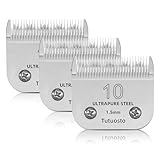
Compatibility still matters. A three-pack of clipper blades compatible with Andis, Wahl, and Oster dog clippers is listed at $32.99, while the Tutuosto 10 Clipper Blade listing for those brands is $13.99. These prices illustrate why package count, blade size, and stated compatibility deserve attention. A low price is not a bargain if the blade does not fit your model or leaves the desired coat length.
Cost Over 5 Years
For a realistic home budget, compare the complete system rather than one replacement blade. A basic steel setup may include a $60–$150 clipper, one or two $15–$35 replacement blades, $5–$15 of oil and cleaning supplies, and one sharpening service every year or two. A moderate five-year total is about $150–$350, assuming the motor lasts and the owner performs routine cleaning.
A ceramic setup may cost $80–$200 for the clipper and compatible ceramic cutter, with replacement cutters commonly adding $20–$60 each. Add approximately $5–$15 for maintenance supplies and perhaps one replacement after accidental damage or normal wear. A reasonable five-year range is about $180–$400.
These are ownership estimates, not guarantees. Heavy use, professional-grade equipment, severe matting, multiple dogs, and shipping costs can push either total higher. Steel can be cheaper when sharpening is available nearby. Ceramic can be competitive when cooler operation reduces the need to stop and swap blades during frequent, lengthy grooming sessions.
Which One for Your Home
Small apartment
Choose steel if you groom occasionally and have limited storage. A compact detachable-blade clipper, one general-purpose blade, and a 6-by-8-inch storage container can cover most routine trims. If your apartment lacks a convenient grooming area, the lower replacement cost and easy availability of steel are practical advantages. Choose ceramic instead if noise, heat, or long grooming sessions are the main concerns.
Family with kids and pets
Steel is usually the sensible household choice because it is easier to replace and less costly when equipment is handled by multiple people. Store blades in a closed case, unplug the clipper before cleaning, and keep oil away from children. If you groom several dogs or a thick-coated pet, consider buying a ceramic spare for long sessions while keeping a steel blade for everyday work.
Rental
For renters, portability and low replacement risk matter. Steel offers more options if a blade is lost, damaged, or incompatible with a new clipper. Look for a model weighing about 12–24 ounces and using detachable blades that can be stored in a small case. Ceramic is worthwhile if you cannot easily visit a groomer and need to complete longer trims at home with fewer heat-related pauses.
Long-term home
Invest in the system you will maintain. A quality steel clipper with replaceable and sharpenable blades is the strongest value for owners who expect to groom for many years. A ceramic cutter is a useful upgrade for frequent, extended sessions, particularly when your dog has a dense coat. Many long-term owners benefit from keeping both: steel for general use and ceramic as a cooler-running backup.
FAQ
Are ceramic dog-clipper blades sharper than steel?
Not automatically. Sharpness depends on manufacturing quality, edge design, maintenance, and the coat being cut. Ceramic can retain an edge well, while steel is easier to sharpen and restore. A clean, properly tensioned steel blade can cut better than a neglected ceramic one.
Do ceramic blades stay completely cool?
No. A ceramic cutter generally heats more slowly or transfers less heat than an all-steel cutting edge, but friction, motor heat, coat density, and clipper speed still raise the temperature. Check the blade against the inside of your wrist every few minutes and keep a spare blade available.
Can I put a ceramic cutter on any dog clipper?
No. The cutter must match the clipper’s blade assembly, drive mechanism, size, and brand specifications. Confirm the exact model number before buying. Generic ceramic utility blades for knives are not compatible with dog clippers.
Which blade is safer for home grooming?
Neither material is automatically safer. Safe grooming depends on a clean blade, appropriate cutting length, calm handling, proper lighting, and frequent heat checks. Ceramic may improve comfort during long sessions, while steel’s easier maintenance can make it the safer practical choice for owners who prefer simple repairs.


Write Your Review
No reviews yet. Be the first to share your experience!