
Key takeaways
- Stainless setup: One $15-$35 blade plus one replacement at the same price equals approximately $30-$70. Add about $10-$20 for blade oil and cleaning supplies, for a five-year total of roughly $40-$90.
- Ceramic setup: One $35-$70 blade plus one replacement equals approximately $70-$140. Add about $10-$20 for maintenance supplies, for a five-year total of roughly $80-$160.
What's inside
Choosing between ceramic and stainless dog clipper blades is less about finding a universally “better” material and more about matching the blade to your grooming routine. The real decision is whether you value cooler, quieter cutting during long sessions or prefer lower upfront cost, broad compatibility, and easy replacement.
Ceramic blades are commonly made with a ceramic moving cutter paired with a stainless-steel comb. They are not usually made entirely from ceramic, since the comb needs the strength and precise tooth shape of metal. Stainless blades use metal for both the moving cutter and comb. Both types can produce a clean cut when sharp, properly adjusted, and used with a suitable clipper.
As an Amazon Associate we earn from qualifying purchases at no extra cost to you. Product prices and availability are accurate as of the date shown and are subject to change.



For a home groomer who trims one small dog every few weeks, stainless may be the sensible buy. For dense coats, multiple pets, or long grooming sessions, ceramic can make the process more comfortable. Here is how the trade-off looks in 2026.
Quick Verdict
Choose ceramic if your dog has a thick coat, you groom for 30 minutes or more at a time, or you are especially concerned about blade heat. Ceramic cutting edges generally transfer less heat during extended use and can stay sharp for a long time when handled carefully.
Choose stainless if you want the lowest purchase price, easy access to replacement blades, and a blade that is straightforward to sharpen or replace. Stainless is also a practical choice for occasional trims, touch-ups, and households that want several blade lengths on hand.
Neither material eliminates maintenance. Hair, moisture, dirty coats, incorrect oiling, and accidental drops can damage either type. A ceramic cutter can chip if it hits a hard surface, while a stainless cutter may heat faster or lose its edge sooner during demanding use.
Side by Side
| Factor | Ceramic | Stainless |
|---|---|---|
| Comfort | Often more comfortable during long sessions because the cutter typically heats more slowly | Comfortable for short trims; may require more frequent cooling breaks |
| Durability | Hard cutting surface resists wear, but the ceramic edge can chip if dropped | Resists impact better and is easier to realign, sharpen, or replace |
| Price range | About $25-$80 per replacement blade, depending on brand and size | About $10-$50 per replacement blade |
| Maintenance | Needs cleaning and light oiling; avoid impacts and harsh handling | Needs cleaning, oiling, and rust prevention, especially after damp grooming |
| Space needed | Usually the same as stainless: roughly 2-5 inches long per stored blade | Usually the same; a small case can hold several blade sizes |
| Look | Often has a dark, polished, or contrasting cutter that looks premium | Traditional silver-metal appearance with familiar grooming-tool styling |
| Resale | Can appeal to buyers seeking cooler-running equipment, but condition matters greatly | Broad compatibility and lower replacement costs can make used sets easier to sell |
| Best for | Thick coats, multiple dogs, and extended grooming sessions | Occasional grooming, beginners, tight budgets, and backup blades |
| Compatibility | Available for many professional clippers, but confirm the exact model and blade style | Widely available for common Andis, Wahl, and Oster systems |
Where Ceramic Wins
The biggest advantage of ceramic is heat management. A blade moving rapidly through a dense coat can become uncomfortably warm, particularly when the clipper is used continuously. Ceramic does not guarantee a cold blade, and the clipper motor, blade tension, coat condition, and room temperature all matter. However, ceramic moving cutters are generally chosen because they can slow the buildup of heat compared with an all-metal cutting set.
That matters for dogs that need time-consuming grooming. A large dog, a heavily coated breed, or a matted coat that has been safely prepared may require several passes. A cooler blade can mean fewer interruptions and less temptation to rush. You should still check the blade against the inside of your wrist regularly and keep a second blade available.
Ceramic is also very hard and wear-resistant. With clean, dry fur and correct oiling, the cutting edge can remain effective through many grooming sessions. This is especially useful when you would rather buy one quality blade than replace inexpensive blades frequently.
For a home grooming station, ceramic can reduce the number of cooling sprays and blade swaps needed during a session. Store it in a protective case, keep it separate from loose metal tools, and never toss it into a drawer where the teeth can strike scissors or clipper guards.
One important distinction: products marketed as “ceramic” may still include a stainless comb and other metal components. Read the construction details rather than assuming the entire blade is ceramic. Also, do not apply automotive ceramic products to a clipper blade. Items such as TEC582 Ceramic Detail Spray, priced at $28.49 for a gallon, and Griot’s Garage Ceramic 3-in-1 Wax, priced at $17.59 for a 22-ounce bottle, are intended for vehicle surfaces, not grooming equipment or skin contact.
Where Stainless Dog Clipper Blades Wins
Stainless blades win on accessibility and value. They are sold in many lengths and styles, and replacement options are easy to find for popular professional clippers. A new groomer can assemble a useful set without spending as much as they might on several ceramic cutters.
They are also more forgiving around accidental drops. Stainless can bend, nick, or dull, but it is less likely than ceramic to chip from a short fall onto a hard floor. Many stainless blades can be sharpened by a qualified service, although sharpening quality varies and a badly damaged blade may be cheaper to replace.
Stainless is a strong option for quick sanitary trims, paw and face work, and occasional full-body grooming. If your dog is small, has a manageable coat, and receives professional grooming most of the time, the additional heat resistance of ceramic may not justify the cost.
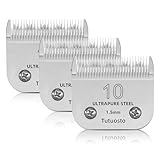
Replacement bundles can make stainless especially economical. For example, a three-pack of 10 clipper blades compatible with Andis, Wahl, and Oster clippers is listed at $32.99, while the Tutuosto 10-blade option is listed at $13.99. Compatibility must be checked carefully: “compatible” does not always mean every length, latch, hinge, or clipper model will fit. A bargain blade is not a bargain if it leaves a gap, pulls hair, or fails to lock securely.
Cost Over 5 Years
A realistic five-year budget depends more on use than on material. Consider a home groomer who trims one dog six times per year, for 30 sessions total. Assume one primary blade, routine cleaning supplies, and one replacement during the period.
- Stainless setup: One $15-$35 blade plus one replacement at the same price equals approximately $30-$70. Add about $10-$20 for blade oil and cleaning supplies, for a five-year total of roughly $40-$90.
- Ceramic setup: One $35-$70 blade plus one replacement equals approximately $70-$140. Add about $10-$20 for maintenance supplies, for a five-year total of roughly $80-$160.
For heavy use, the difference can narrow. A groomer working on two dogs every week may wear through stainless blades more quickly or pay for sharpening several times. Ceramic may cost more initially but reduce replacement frequency. Conversely, one accidental drop can turn a ceramic blade into an expensive replacement, so durability depends on storage as well as cutting performance.
Most home users should avoid buying a large collection immediately. Start with the blade length recommended for your clipper and coat, then add a second length only after you know what your dog needs. A ventilated case measuring about 8 by 5 inches can hold several standard blades without taking much cabinet space.
Which One for Your Home
Small apartment
Choose stainless if you groom briefly and need an affordable, compact setup. Apartment owners often benefit from a single versatile blade, a small cleaning brush, and a case rather than a full grooming cabinet. If noise and long sessions are concerns, ceramic can be worthwhile, but the blade material will not make the motor itself quiet.
Family with kids and pets
Stainless is usually the practical starting point because replacement is inexpensive and accidental drops are more likely in a busy household. Store any blade in a latched case, unplug the clipper before changing blades, and keep hot equipment away from children. If several pets share grooming equipment, ceramic may pay off through cooler operation during back-to-back sessions.
Rental
Stainless offers the best balance of low cost and flexibility for renters who may move or have limited storage. A compatible three-pack can provide backups without a major investment. Ceramic is still sensible if you groom a large, thick-coated dog indoors and want fewer cooling interruptions, but protect it from falls on tile or concrete.
Long-term home
Either option can work well in a permanent grooming station. Choose ceramic for frequent grooming, dense coats, and a preference for premium equipment. Choose stainless if you value easy sourcing, multiple blade lengths, and the ability to replace or sharpen parts economically. In a dedicated drawer or cabinet, keep blades dry, lightly oiled, and separated so their teeth do not collide.
FAQ
Are ceramic dog clipper blades better than stainless?
They are better for some uses, not all. Ceramic is often preferable for extended grooming because it can manage heat well, while stainless is usually less expensive, easier to replace, and more forgiving if dropped. Fit, sharpness, and maintenance affect results as much as material.
Do ceramic blades stay cool?
No blade stays cool indefinitely. Ceramic cutters may heat more slowly, but friction, coat density, clipper speed, and room temperature still matter. Check the blade frequently, use manufacturer-approved coolant when needed, and keep a spare blade available.
Can I use ceramic spray or car wax on dog clipper blades?
No. Automotive products, including ceramic detail sprays and SiO2 waxes, are formulated for vehicle finishes and should not be used on grooming blades or near a dog’s skin. Use clipper oil and cleaning products specifically labeled for grooming equipment.
How often should dog clipper blades be replaced?
Replace a blade when it pulls hair, leaves uneven patches after cleaning and adjustment, shows damaged teeth, or develops rust that cannot be removed safely. Light home use may allow a blade to last several years; frequent grooming may require replacement or professional sharpening sooner.


Write Your Review
No reviews yet. Be the first to share your experience!