

Best dog toe nail clippers come down to one decision most owners never consciously make: which cutting action you want. Plier, guillotine and scissor tools handle nails differently, and the wrong one turns a two-minute job into a wrestling match. Here is how the three compare, with five tools worth owning.
As an Amazon Associate we earn from qualifying purchases.
By Laura Simmons, professional dog groomer and pet care writer
Cutting Styles
Every clipper on the market uses one of three actions, and the differences are practical rather than cosmetic. Choosing among the best dog toe nail clippers really means choosing a style first and a brand second. Nail thickness and your own confidence with the tool should drive that decision, not the price.
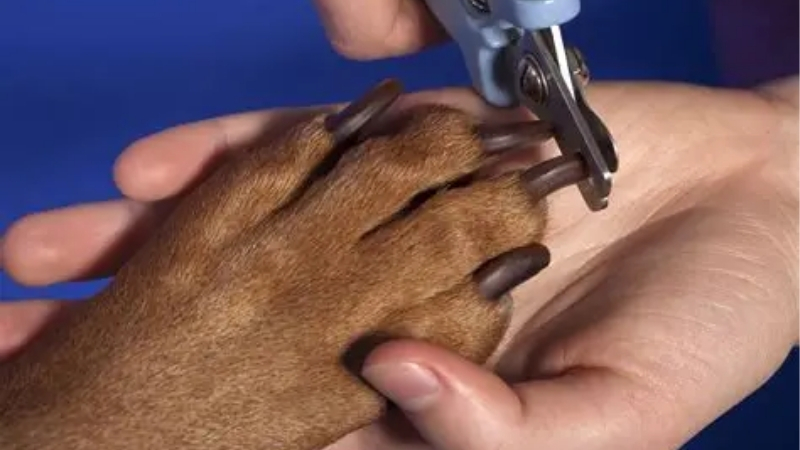
Pliers
A plier closes two curved blades onto the nail from opposite sides, splitting it cleanly in the middle. That symmetry is why it handles thick claws without crushing, and why the tool works at whatever angle your dog happens to offer the paw. It is the standard on almost every grooming table in the country.
The compromise is visibility and nerve. Nothing stops the blades closing further than you intended, so the cut depth is entirely down to your judgement. Most owners get comfortable within a few sessions, but the first few attempts on a black-nailed dog can feel uncomfortably close to pure guesswork.
Guillotines
A guillotine feeds the nail through a fixed hole, then drives a single blade across it. Owners who find plier jaws hard to aim often prefer the ring, because the nail is captured before anything moves. On thin nails the cut is quiet and tidy, which is why guillotines still sit among the best dog toe nail clippers.
Thick nails are where it falls down. The single blade has to shear through the whole nail rather than split it, which needs more hand strength and dulls the edge faster. Orientation matters too: the blade must cut from underneath, or the tool crushes the nail against the ring rather than shearing it.
Scissors
Scissor-style trimmers look like small shears with a notched blade, and they exist for thin nails: puppies, toy breeds, cats and dewclaws that have curled round on themselves. The fine tips reach into places a full-size plier simply cannot reach without pinching the surrounding skin of the toe itself.
They are not a general-purpose tool. Ask a scissor trimmer to cut a Rottweiler nail and it will flex, slip or leave a ragged edge. Many households end up owning a plier for the main claws and a small scissor tool purely for dewclaws, because no single pair of the best dog toe nail clippers covers every job.
The 5 Best Dog Toe Nail Clippers
The best dog toe nail clippers below span all three cutting styles, so the shortlist works whether your dog has thin puppy nails or thick weight-bearing claws. All are easy to find and have been made long enough to earn a genuine reputation. Each entry names the honest drawback as well as the strength.
| Model | Style | Main drawback |
|---|---|---|
| Millers Forge Nail Clipper | Plier | No safety guard |
| Resco Original Deluxe | Guillotine | Blade replacements |
| Epica Professional | Plier | Guard blocks view |
| JW Pet GripSoft Deluxe | Plier | Flexes |
| Hertzko | Plier | Edge softens |
Millers Forge Nail Clipper
If a groomer owns one clipper, it is usually this one. The Japanese stainless blades stay aligned, the pivot does not develop play, and thick nails part with a clean snap instead of a crunch. Nothing about the design is clever, which is precisely why it keeps outlasting far more elaborate and expensive tools.
There is no guard and no stop, so every cut depends on your own judgement of depth. The plastic handles are also smooth, which matters more than it sounds when a nervous dog snatches its paw back mid-cut. Dry hands and deliberately thin slices solve both of those problems well enough in daily practice.
Resco Deluxe
Resco is the guillotine most people mean when they say guillotine. Made in the United States for decades, it takes replaceable blades rather than being thrown away blunt, and the ring holds the nail steady while you line the cut up, which suits shaky hands. Ideal for thin and medium claws on a cooperative dog.
It is the wrong tool for a large breed with heavy nails, where the single blade has to do too much work. Fitting the head backwards is a common mistake that crushes rather than cuts, and blades wear noticeably faster than a plier’s do, so it is worth keeping a spare blade or two waiting in the drawer.
Epica Professional
Epica builds a solid stainless plier with a semicircular blade and a sliding safety guard, sold at a mid-range price. It has real heft, the handles are generously sized for adult hands, and it copes with medium and large nails without any noticeable flex through the jaws even under a really heavy load.
The guard is the sticking point. In place it blocks your view of exactly the part of the nail you need to see, and most owners eventually slide it back permanently. The tool is also on the large side, so a household with only a toy breed or a small puppy will find it clumsy to aim accurately at a single small nail.
JW Pet GripSoft Deluxe Nail Trimmer
The GripSoft is designed for people who are anxious about the job. A rubberised handle stops it twisting in a sweaty grip, the guard makes over-cutting far less likely, and the whole thing feels controllable rather than surgical. That confidence is worth a great deal during the first few nervous sessions.
The body carries more plastic than a professional plier, and it shows when you ask it to cut a genuinely thick nail: the jaws flex slightly and the cut goes ragged. Excellent on small and medium dogs, and something you will simply grow out of if you happen to own a large breed with genuinely heavy claws.
Hertzko Clippers
Hertzko sells a straightforward stainless plier with a quick guard and non-slip handles, at a price low enough to keep a second pair in the car. For routine maintenance on small and medium nails it does the job without fuss, and the quick guard slides clear easily on the occasions you need the full view.
The steel does not hold an edge the way the premium tools do, so after a year of regular use the cut starts to feel like it is pushing rather than slicing. That is the honest cost of the low price, and it remains a fair trade provided you replace the tool in time rather than persevere with a blunt one.
Trimming Problems
Most difficulties with nails are not about which brand you bought. Dark nails, a dog that resents paw handling and brittle claws account for the overwhelming majority of failed sessions. The best dog toe nail clippers help a great deal, but technique is what actually solves all three of those problems.
Dark nails
Take repeated thin slices instead of one confident cut, and look at the freshly cut face each time. When a small grey or white oval appears in the centre, the quick is immediately behind it and you stop. A small torch held against the nail will sometimes reveal the quick even on the very darkest claws.
Paw handling
Stop trimming for a week and simply handle the paws while your dog eats something good, a few seconds at a time. Then introduce the clippers without cutting. One nail a day rather than sixteen in a sitting is slower on paper and much faster in practice, whichever of the best dog toe nail clippers you own.
Split nails
Brittle, flaking nails often point to a dull blade crushing rather than cutting, so try a sharper tool first. If the nails themselves are splitting near the base or look discoloured, that becomes a veterinary question rather than an equipment one, and it is worth checking before you carry on trimming.
Final Thoughts
The best dog toe nail clippers for your household depend on nail thickness first and brand second. A plier handles almost everything, a guillotine excels on thin nails, and a small scissor tool earns its place for dewclaws. Keep the blade sharp, cut little and often, and the whole job stays uneventful.
