
Best persian cat brush comparisons usually rank tools by how much hair comes out, which says very little about whether the brush is reaching the layer that matters. This guide judges six tools on the specifications that actually predict performance: pin length, tooth spacing, tip finish, and pad flex.
Our top picks
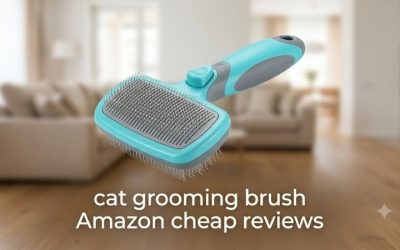
 Swihauk Self Cleaning Slicker Brush
Release-bottom design helps clear collected hair with one press
Soft, round-tipped bristles are designed to avoid hurting the pet
Stainless steel construction is built for sturdy, long-term use
Large size may be less maneuverable for small pets or tight spots
Press-button cleaning mechanism adds a moving part that could wear over time


 Aumuca Cat Brush for Shedding
- Hair Type: All
- Item Dimensions L x W x H: 4.05"L x 1.54"W x 9.64"H
- Bristle Material: Stainless Steel
 Docrok Pet Grooming Combo
2-in-1 rake and comb combo covers dematting and deshedding in one set
Soft, protective edges are designed to avoid hurting the pet
Stainless steel teeth and TPR handle add durability and comfort
Geared toward medium and long-haired coats, less so short fur
Combo tools need periodic cleaning to clear trapped hair


As an Amazon Associate we earn from qualifying purchases at no extra cost to you.
As an Amazon Associate we earn from qualifying purchases.
By Laura Simmons
🛒 Best Price Today on Amazon
Prime members get fast, free shipping on everything above, plus member-only deals. New members get a 30-day free trial — cancel anytime.
Start 30-Day Prime Free Trial →See Today’s Amazon DealsHow to Judge the Best Persian Cat Brush on Specification
A persian coat is the deepest and densest in the domestic cat world, which puts real engineering demands on a tool designed for animals with far thinner fur. Four measurable properties separate a brush that works on this coat from one that only looks the part. Specifications predict performance better than reviews.
Pin Length Against Coat Depth
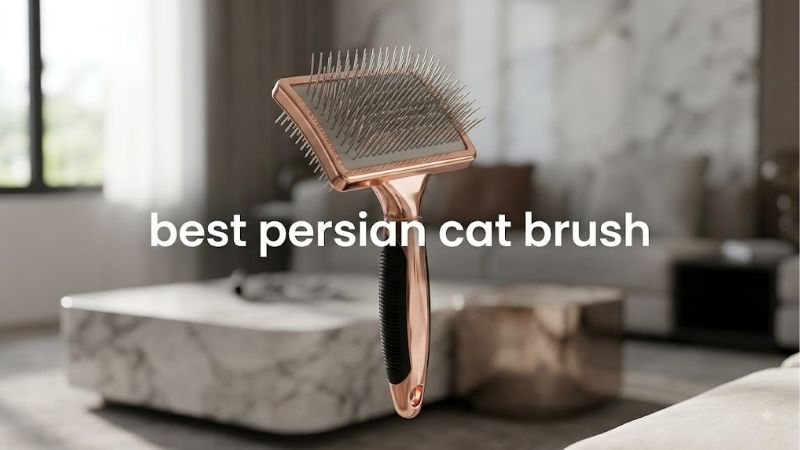
A persian coat kept at full length can reach several inches, and most cat brushes carry pins well under 20 mm. That mismatch is the single biggest reason owners find felting on a cat they have brushed daily: the tool never reached the layer where matting starts. Depth of reach is the whole question here.
The best persian cat brush is usually a long-pinned slicker built for dog coats, which closes that gap. Chris Christensen uses 27 mm bent pins, independently measured at around 26.5 mm, and the smallest Baby size is compact enough to use on a cat while still carrying the full pin length of the range. Small head, full reach is a rare combination.
Length brings a trade-off in firmness. Pins that long are stiffer than a typical cat brush, which means pressure has to be genuinely light and strokes short. On cat skin that discipline matters more than it would on a dog with a thicker hide. Technique has to change with the tool.
Tooth Spacing on Combs
The comb is what tells you whether a brush did its job, and spacing decides whether it can pass through the coat at all. Double-sided designs solve this by pairing coarse teeth for the first pass with fine teeth for detail work near the face and ruff. One comb genuinely replaces two.
The GoPets layout, with 12 teeth on the coarse side and 20 on the fine, is a good illustration of that split. Start coarse, always: dragging a fine comb into a dense persian coat catches immediately and costs you the cat’s cooperation for the rest of the session. Coarse first, fine second, every time.
Tip Finish and Pad Flex
Cat skin is significantly thinner than dog skin, so tip finish is not a detail. Pins should be smoothed or rounded, and any tool that leaves pink tracks after a normal-pressure pass is too aggressive regardless of how impressive the hair pile looks afterwards. Watch the skin rather than the volume removed.
The pad behind the pins matters equally. A flexible cushion pad lets pins give when they meet a shoulder blade or hip, which is where slicker burn happens on cats brushed against a rigid backing. Check for that flex before buying anything long-pinned. Pad flex is rarely mentioned and always matters.
Cat grooming tools see their sharpest demand through the spring coat change, when increasing daylight triggers a three to six week release of winter undercoat. Buying ahead of that window avoids the seasonal price rise, and discounting is usually deepest around Prime Big Deal Days in October.
Self-Cleaning Mechanisms and Session Length
A persian produces an extraordinary volume of shed undercoat, and clearing a pad by hand every few strokes is what makes owners abandon a daily routine. Push-button retraction turns that into a two-second job, which has more effect on outcomes than most specifications do. Convenience is what makes a daily routine stick.
The trade-off is pin quality: retracting mechanisms use shorter, softer pins than a fixed professional pad. That makes self-cleaning brushes excellent for volume on the body coat and inadequate for the deep work, which is why most persian owners end up owning both types. Two brushes cover what one cannot.
Top Picks: Six Tools Rated on Specification
The six below are assessed on reach and construction rather than on how much hair they produce in one session. The table lists the key specification before the individual assessments, and every entry closes with the weakness that matters most on a dense coat. No single best persian cat brush covers reach, volume, and verification.
| Tool | Key Specification | Reach | Watch Out For |
|---|---|---|---|
| Chris Christensen Baby G | 27 mm bent pins | Deep | Firm pins on cat skin |
| Safari Self-Cleaning Slicker | Fine angled pins | Surface to mid | Pinch when clearing |
| Steel Greyhound-Style Comb | Coarse and fine ends | Full depth | Snags if rushed |
| Hertzko Long Rounded Blade Comb | Long stainless teeth | Deep, tangles | Needs a careful hand |
| FURminator for Long Hair Cats | Short capture edge | Undercoat only | Easy to overuse |
| Hertzko Pin Brush | Rounded-tip pins | Surface | Little undercoat removal |
Chris Christensen Baby G
On specification this is the best persian cat brush here that genuinely reaches the bottom of a full persian coat, pairing 27 mm bent pins with a flexible cushion pad and a head around 2⅜ inches square that fits the armpits and the area behind the ears where matting begins. Reach and head size rarely coexist elsewhere.
The pins are firm because they were designed for dense dog coats, so on thinner cat skin the technique has to change: light pressure, short strokes, and constant attention to the skin underneath. It is also expensive for a brush of this size. On a daily routine the cost spreads quickly.
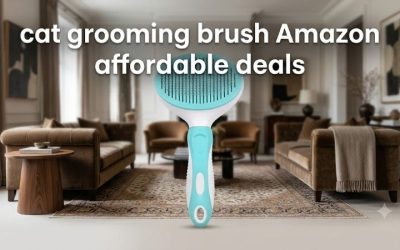
Safari Self-Cleaning Slicker Brush
Comfortable to hold with a retraction button that needs very little force, this is the practical choice for daily volume work on the body coat, and the easiest tool here for anyone with wrist pain or arthritis to keep using consistently. Comfort decides whether the brush gets used.
The pins are short, so on a full-length coat it works the surface while the deepest layer stays untouched. The cleaning mechanism can also catch a finger when clearing collected hair, which is annoying rather than dangerous but happens often enough to note. It is an irritation rather than a fault.
Steel Greyhound-Style Comb
No best persian cat brush routine is complete without a one-piece steel comb with coarse teeth at one end and fine at the other is the honest check on every session, and the tool professional groomers rely on most. Full-length teeth pass from skin to tip, which is exactly what a slicker cannot verify on its own. Full-length teeth are the point of the tool.
It catches and pulls if you rush or start on the fine end, and on a badly tangled coat that costs you the cat’s cooperation immediately. It also removes far less loose hair per stroke than a slicker, so it verifies rather than replaces the brushing step. Verification and removal are separate jobs.
Hertzko Long Rounded Blade Undercoat Comb
Long stainless teeth with fine rounded ends and an anti-slip comfort grip make this the tool for a coat that has already started tangling rather than one that is merely shedding. It works through knots, dander, and trapped dirt in the same pass. It is a dematting tool before anything else.
Long teeth on thin cat skin demand a careful hand, because a tool that works through tangles will reach skin if driven too hard. It is also less efficient at bulk undercoat removal than a slicker, so it complements the routine rather than anchoring it. Keep it for coats that tangle as well as shed.
FURminator deShedding Tool for Long Hair Cats
During the spring coat change this removes more loose undercoat per stroke than anything else here, and the release button ejects the collected hair cleanly. Choose the long-hair version matched to your cat’s body length rather than the largest option available. Sizing to body length matters more than reach.
The capture edge is short, so it addresses the undercoat and not the full coat depth, and repeated passes over one area thin the coat and irritate skin. Limit it to once or twice weekly during the shed and stop when it comes back empty. Seasonal use makes one tool last for years.
Hertzko Pin Brush
Rounded end pins that cannot scratch make this the gentle finishing brush for a persian, laying the outer coat flat and distributing skin oils after the deeper work is done. It is also the safest tool to introduce to a kitten or a cat that resists handling. Tolerance built early lasts a lifetime.
It removes very little loose undercoat, so it cannot control shedding through a coat change and should never be the only brush in the house. On a full-length persian coat it works the top layer and nothing beneath it. Finishing is its role rather than removal.
Frequently Asked Questions
These questions come up most often from persian owners comparing tools after a shave-down, and from those trying to work out which specification actually explains why their previous brush failed. The answers assume a healthy adult cat and a best persian cat brush used daily.
Why do most cat brushes fail on a persian?
Pin length. Standard cat brushes carry pins well under 20 mm, and a persian coat is several times deeper than that. The tool works the surface convincingly while felting develops underneath, which is why the coat looks fine right up until a groomer finds the mats. Surface appearance is a poor guide on this coat.
Is a dog brush safe to use on a cat?
A long-pinned slicker can be, provided the pad flexes, the tips are smoothed, and you use noticeably lighter pressure than you would on a dog. Watch the skin closely, and stop immediately if you see any pink marking after a normal-pressure pass. Cat skin is thinner than most tools assume.
Do I need both a slicker and a comb?
Yes. The slicker handles volume and the comb verifies depth, and on a persian that verification is not optional because the coat density hides everything. Owners who use only a slicker are consistently surprised by matting that has been building quietly for weeks. Density hides everything from view.
How do I choose between the tools here?
Start with a self-cleaning slicker for the body, a steel comb to check the work, and a small long-pinned slicker for the armpits and ears. Add a deshedding tool only for the spring coat change, and use a soft pin brush if the cat resists everything else. Build the kit gradually rather than all at once.
See More:
- Best smelling dog shampoo and conditioner
- Best dog mite shampoo
- Hartz Groomer’s Best Soothing Oatmeal Dog Shampoo
- Best professional dog nail grinder
- Best cat brush medium hair
Final Thoughts
Judged on specification, the best persian cat brush is a long-pinned slicker with a flexible pad for the problem zones, backed by a self-cleaning slicker for volume and a full-depth steel comb to prove the work is done. Pin length is the specification that predicts everything else.



Write Your Review
No reviews yet. Be the first to share your experience!